The model of combining housing co-ops with community land trusts could show a new path forward for increasing housing stability.


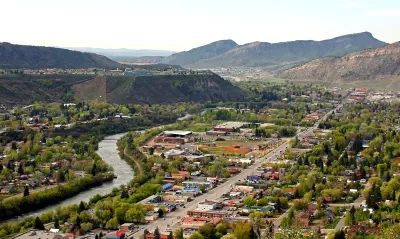
According to an article by Kirbie Bennett and Jamie Wanzek in High Country News, a Colorado manufactured housing community offers “one model for how to preserve affordable housing, with the potential to reshape housing in the West in a way that allows residents to guide the discussion.”
When threatened with a buyout by a notorious institutional investor, residents of the Westside Mobile Home Park banded together to make their own offer. “With the support of Elevation Community Land Trust, Westside’s residents were able to purchase their park, becoming one of the six community land trusts in Colorado. It was the first time that Elevation applied the community land-trust model to a mobile home park.”
The Durango example is unique because “It’s generally uncommon for housing co-ops to partner with community land trusts,” in large part because they tend to exist in different places. “Now owned jointly by its residents and Elevation, the park operates as a community land trust, which removes land from the real estate market and transforms it into community-owned property.”
As Planetizen has noted in the past, manufactured housing has long served as a key source of affordable housing around the country. “Across the country, 22 million people live in manufactured homes. While nearly 80% of residents own their mobile homes, Esther Sullivan, an associate professor of sociology at University of Colorado-Denver, notes that only 14% own the land beneath their homes.” Increasingly, corporate owners are buying up these parks and raising the land lease rates on residents who can’t afford the rent increases.
“In years to come, residents, with the help of the land trust, intend to redevelop the park by removing the trailers and transforming the units into homes. The co-op and land trust are currently in the early stages of redeveloping the park, and residents are leading those discussions.”
Read the full story: How a mobile-home park saved its community from a corporate buyout

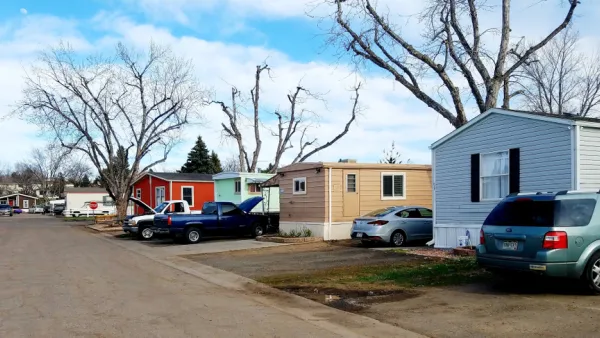
New Loan Fund Will Help Mobile Home Residents Purchase Land
A Colorado law makes it easier for residents to buy the mobile home parks they live in to protect against sharp rent increases.
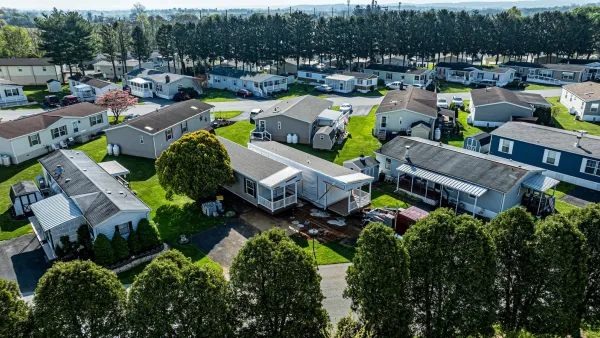
Should the public sector buy mobile home parks?
One writer argues that the crisis facing the nation's mobile home owners warrants public intervention.

Poor Conditions in Mobile Home Parks Put Residents at Risk
Failing infrastructure, poor water and air quality, and predatory owners endanger the health of manufactured home residents, many of whom are elderly and low-income.

Planetizen Federal Action Tracker
A weekly monitor of how Trump’s orders and actions are impacting planners and planning in America.

California plans to bury El Niño’s downpour
If the state plays its cards right, it may be able to store a billion acre-feet of El Niño’s water in aquifers.

Chicago breaks ground on $3 billion megadevelopment
The new neighborhood, titled Foundry Park, will one day host 3,700 residences.

California High-Speed Rail Authority CEO resigns after $600,000 scandal
Under Ian Choudri, the authority used taxpayer dollars to fund first class flights and trips to nightclubs.

Want to study the Missouri River? Soon, you may need unanimous approval from 10 states
Legislation would require 10 governors’ permission to study or build projects moving water outside the basin.

Desperate measures: Advocates weigh draining Lake Powell to fill Colorado River
Draining the reservoir could reduce evaporation losses by a couple hundred thousand acre-feet.

FREE Course: Walkable City 1: Why Walkability?
After describing his path towards focusing on walkability as the essence of good planning, Jeff Speck marches through his five principal reasons for making more walkable places.
Reinventing Malls: Planning Alchemy—Turning Gray Fields Into Gold
The course focuses on the opportunities and imperatives that shape reinvention of mall sites.

City of Rosemead
Rutgers University, Edward J. Bloustein School of Planning and Public Policy
One Hundred Miles
Hunter College, City University of New York (CUNY)
The Architects Foundation
University of Cincinnati Online
City of Cambridge
Montrose County
The Pocatello Development Authority