For many children who grow up without access to pools or lakes, access to swimming lessons and facilities can provide lifesaving skills.


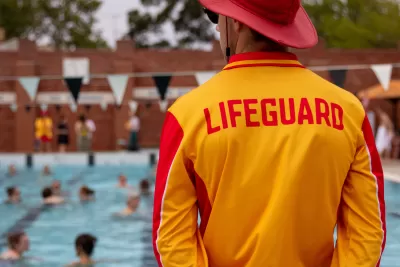
Far from just being a fun way to cool down on a hot summer day, public pools can help children learn key skills that could save their lives, writes Mara Gay in The New York Times.
An estimated 4,000 people die by drowning in the United States each year—an average of 11 every day. Yet “the United States is, for a majority of its citizens, a swimming desert where, according to a Red Cross survey, more than half of the population lacks basic swimming abilities and millions are without access to safe places to enter the water.”
Now, a coalition of experts published the nation’s first Water Safety Action Plan, “a much-needed, 10-year national road map to reduce drowning.” As Gay explains, “Some recommendations, like increasing the use of life jackets in lakes, oceans and rivers, could be carried out by states and local governments. Others — like the creation of a public health surveillance system to collect better data around drowning — are worthy of urgent action from the White House and Congress.”
Gay suggests U.S. cities should also build more public pools, create other safe places to swim, and subsidize swim lessons and support lifeguarding jobs. Of the more than 10 million pools in the United States, only 309,000 are public, forcing people into crowded beaches and sometimes dangerous bodies of water. “Like libraries and parks, [public pools] are an essential piece of social infrastructure in a democracy.”
Read the full story: More Public Pools Could Save Thousands of Lives

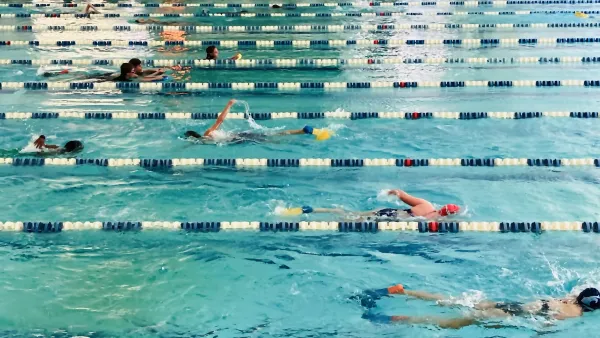
Jim Crow Robbed America of Public Pools. It’s Time to get Them Back.
Disparity amongst who can and can’t swim in America isn’t an accident — and it's deadly. Let’s reclaim the community pool as an essential public space.
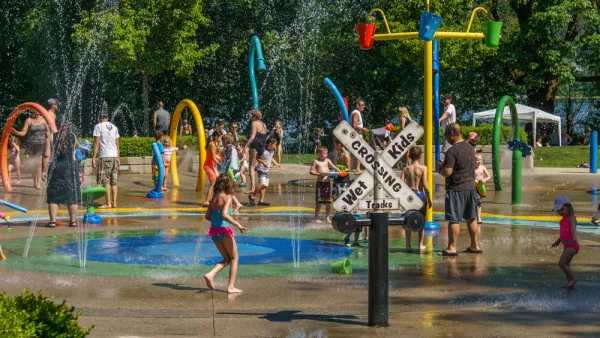
In a Warming World, Water-Based Recreation Isn’t a Luxury — It’s a Necessity
Increasing access to pools, splash pads, and lakes is not just about fun — it is about health, equity, and resilience in a warming world.
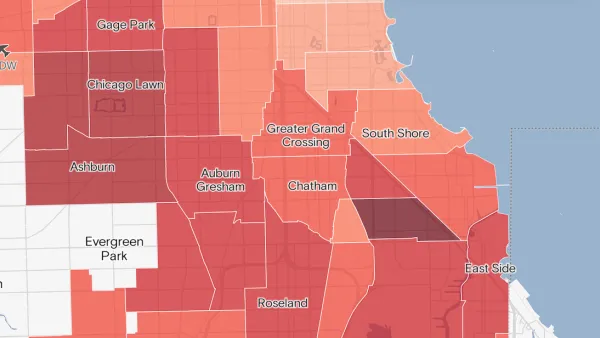
84% of Chicago's Pipes Contain Lead — and They're Not Equally Distributed
The city’s Black and Latino communities are most impacted, but the issue is widespread across the city’s water distribution network.

Planetizen Federal Action Tracker
A weekly monitor of how Trump’s orders and actions are impacting planners and planning in America.

The state-sanctioned urbicide of Austin
People don’t kill cities. Freeways do.

US to reduce Colorado River water deliveries to Mexico
A new Colorado Treaty amendment reduces Mexico’s Colorado River water allocation by 250,000 acre feet.

NYC cools commuters with city's first rain garden above a bus stop
New York City officials say the plants in the rain garden can absorb 16 gallons of rainwater during heavy storms.

Brightline West’s future may rely on $6 billion federal loan
The company has until Nov. 2 to make a $400 million equity investment into its proposed high-speed rail line.

LA Metro’s ultimatum: no extra buses for LA28 if federal funding isn’t imminently secured
If Metro does not provide additional buses, LA28 organizers will have to find a new way to manage Olympic traffic. LA28’s budget does not include a line item for transit.

FREE Course: Walkable City 1: Why Walkability?
After describing his path towards focusing on walkability as the essence of good planning, Jeff Speck marches through his five principal reasons for making more walkable places.
Reinventing Malls: Planning Alchemy—Turning Gray Fields Into Gold
The course focuses on the opportunities and imperatives that shape reinvention of mall sites.

Eagle County Government
Harvard University Graduate School of Design
Nashville Planning Department
The Architects Foundation
University of Cincinnati Online
The Pocatello Development Authority
The Urban Renewal Agency of the City of Pocatello
Journal of the American Planning Association