The city council will vote on a proposal to eliminate single-family only zoning in favor of rules that would allow up to six units per residential lot.



“Vancouver housing could become radically more dense if the city allows up to six homes per lot for the half of its land traditionally reserved for single-detached dwellings, as council votes this week on whether to send the change to public hearing,” according to an article by Frances Bula in The Globe and Mail.
Under the proposed new rules, multi-unit buildings will be allowed to take up a larger percentage of lots than before. Theresa O’Donnell, Vancouver’s head planner, said “This is rezoning the 52 per cent of the city that’s effectively been off the table for years.”
If approved by the city council, the proposal will go to public hearing and could take effect next January.
“The city’s projections indicate that a single-detached-house property that sells for $2.8-million now could become home to four smaller homes that sell for $1.1-million apiece – still not cheap, but less than the single house,” Bula adds.
“Some housing advocates have criticized the new policy as being unlikely to get a lot of take-up because it will be much more challenging for average homeowners to finance a fourplex or sixplex, compared with a laneway house,” known as an accessory dwelling unit in the United States. Local builders say they predict demand will be high, citing the rise in demand for duplexes when the city legalized them in 2019.
FULL STORY: Vancouver considering eliminating single-family residential zoning rules


Missoula Approves Zoning Reform Emphasizing More Diverse Housing, Walkability
The city’s new zoning code, map, and development standards will guide more expansive housing options and improved walkability.
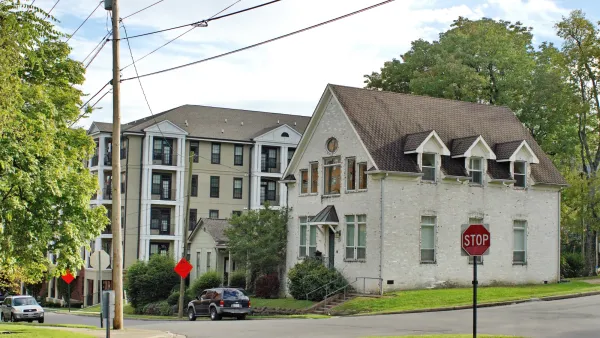
Nashville Allows More Detached ADUs, Courtyard Apartments
The city has been considering a series of zoning reform bills designed to diversify housing options.
Poll: 2/3 of Virginians Don’t Trust Local Governments to Address Housing Crisis
Three-quarters of residents say the state needs to do more to address housing supply and affordability.

Planetizen Federal Action Tracker
A weekly monitor of how Trump’s orders and actions are impacting planners and planning in America.

The state-sanctioned urbicide of Austin
People don’t kill cities. Freeways do.

US to reduce Colorado River water deliveries to Mexico
A new Colorado Treaty amendment reduces Mexico’s Colorado River water allocation by 250,000 acre feet.

5 New England states march closer to 800 megawatt wind energy project
Securing federal approval for the project may be complicated under the Trump administration, which has historically been hostile towards domestic wind power.

Baltimore to break ground on $50 million Transit Priority Project
The project will bring faster bus trips, safer streets and better bike connections to Baltimore.

Airbnb launches $250 million 'last-dollar financing' housing accelerator, makes first investment in Austin
The company will put $6.4 million towards affordable housing development in Texas’ capital.

FREE Course: Walkable City 1: Why Walkability?
After describing his path towards focusing on walkability as the essence of good planning, Jeff Speck marches through his five principal reasons for making more walkable places.
Reinventing Malls: Planning Alchemy—Turning Gray Fields Into Gold
The course focuses on the opportunities and imperatives that shape reinvention of mall sites.

Eagle County Government
Harvard University Graduate School of Design
Nashville Planning Department
The Architects Foundation
University of Cincinnati Online
The Pocatello Development Authority
The Urban Renewal Agency of the City of Pocatello
Journal of the American Planning Association