A detailed description of how noise impacts health and wellbeing.


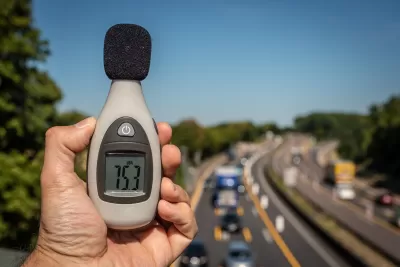
A New York Times article by Emily Baumgaertner, Jason Kao, Eleanor Lutz, Josephine Sedgwick, Rumsey Taylor, Noah Throop and Josh Williams highlights the dangers of noise pollution such as traffic and airplane sounds to public health.
We’ve all been told to limit the volume on our headphones to protect our hearing. But it is the relentless din of daily life in some places that can have lasting effects throughout the body.
As the authors explain, this isn’t exclusively a problem in big, noisy cities. “Even people who live in relatively peaceful rural and suburban communities can be at risk. The sudden blare of trains that run periodically through D’Lo, Miss. (population: less than 400), can be especially jarring to the body because there is little ambient noise to drown out the jolt.”
The article details the effects noise can have on the human body and mind. “The endocrine system can overreact, causing too much cortisol, adrenaline and other chemicals to course through the body,” for example. Noise can contribute to higher blood pressure, inflammation in arteries, and other risk factors for heart disease.
As the science around noise pollution becomes more clear, cities can take steps to reduce harmful noise. The practice was established at the federal level in 1972 with the Noise Control Act issued by the Environmental Protection Agency (EPA), an office that was later defunded under the Reagan administration.
Meanwhile, “The European Union requires member nations to monitor and assess sound levels across regions and to produce new action plans every five years to address communities at greatest risk.” Some countries have installed noise-detecting cameras, quiet hours, and other mitigation measures.
FULL STORY: Noise could take years off your life. Here’s how.

Using Tech to Control Noise Pollution
Several cities are piloting programs that use machine learning to identify and understand urban noise patterns and enforce noise ordinances.
Noise as a Public Health Hazard
New ways of measuring the effects of sound on human health are helping communities fight back against noise pollution.
Sound Equity: The Unequal Impacts of Covid’s ‘Great Silence’
During the pandemic, many neighborhoods became quieter than ever—but not everyone experienced the benefits equally.

The state-sanctioned urbicide of Austin
People don’t kill cities. Freeways do.

US to reduce Colorado River water deliveries to Mexico
A new Colorado Treaty amendment reduces Mexico’s Colorado River water allocation by 250,000 acre feet.

New Jersey’s second-largest city bans standalone data centers
Jersey City will continue to allow co-location facilities, such as those meant for research institutions that store their own data.

Amtrak not solely to blame for New Jersey commuter rail's unreliability, report finds
A new study from the Garden State Initiative found that NJ Transit’s budget grew 20% across a 4 year period, but reliability declined significantly over the same period.

EPA erases limits on planet-warming pollution from power plants
Under Monday’s plan, power plants would still have some limits on how much mercury, arsenic and other contaminants they can emit.

Phoenix announces new on-demand transit service, more frequent RAPID buses
Both new services will launch in October, and are part of Phoenix's Project Effective Access Solutions for Easing Congestion.

FREE Course: Walkable City 1: Why Walkability?
After describing his path towards focusing on walkability as the essence of good planning, Jeff Speck marches through his five principal reasons for making more walkable places.
Reinventing Malls: Planning Alchemy—Turning Gray Fields Into Gold
The course focuses on the opportunities and imperatives that shape reinvention of mall sites.

Eagle County Government
Harvard University Graduate School of Design
Nashville Planning Department
The Architects Foundation
University of Cincinnati Online
The Pocatello Development Authority
The Urban Renewal Agency of the City of Pocatello
Journal of the American Planning Association