Does low-income residents staying put in large metro areas, relative to higher-income groups, mean that low-income households are missing out on affordable housing options? Freddie Mac researchers think so.


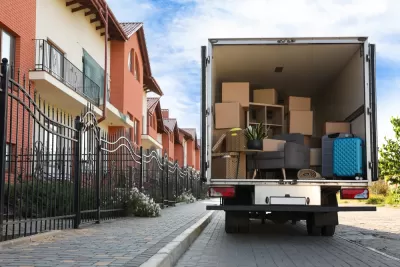
Since the beginning of the pandemic, “low-income homebuyers are 25% less likely than moderate- and high-income homebuyers to move out of the top 25 largest metro areas by population,” according to new research by Freddie Mac. Moreover, “those who do move are more likely to move shorter distances.”
The research examined accepted loan applications between from 2018 to 2022, using data from Freddie Mac’s Loan Product Advisor® (LPA), according to a website created by Freddie Mac to share the research.
Among the key findings of the research is an increased pace of moving out of the 25 cities largest metros in the country. “Our analysis of the loan application data suggests that migration out from the top 25 largest metro areas increased for the overall population.”
But, according to the research, “Fewer low-income homebuyers moved out of large metro areas. Moreover, their net migration slowed more sharply after many restrictions related to COVID-19 were lifted or relaxed in March 2022.”
Lower-income movers were also more likely to move to rural areas and less likely to move to mid-sized metro areas, according to the research.
“One possible explanation for the difference in rates of migration between low-income and moderate- and high-income homebuyers is the flexibility of work opportunities for those groups,” according to the article.
Rama Yanamandra, Macro and Housing Economics Manager at Freddie Mac is quoted in the article saying that while many low-income households choose to live in larger metro areas for proximity to jobs, they might be missing out on more affordable housing options in more distant locations. The headline of the article also touts that low-income people are “More Likely to Miss Potential Cost Savings,” due to staying in larger metro areas.
While the research could have been the latest entry in the ongoing “urban exodus” narrative about shifting patterns of American life since the pandemic, Freddie Mac researchers go a step further in implying that equity suffers as a result of the relative lack of migration by low-income households. That framing of course, ignores, willfully or not, the large body of research about the additional costs of moving to suburban and rural communities, generated by increased transportation costs and lack of proximity to essential services and jobs.
Planetizen blogger Todd Litman has written extensively about the unexpected costs of automobile dependency. Here are a few articles written by Litman on the subject from the past five years:
- Unaffordability is a Problem but Sprawl is a Terrible Solution (February 2017)
- Multimodal Transportation for Economic Freedom, Opportunity, and Security (August 2017)
- Houses Appreciate. Cars Depreciate. Walkable Urban Neighborhoods Help Families Build Wealth. (August 2017)
- True Affordability: Critiquing the International Housing Affordability Survey (March 2018)
- Understanding Location-Efficient Affordability Impacts (April 2018)
- Better Planning with More Comprehensive Transportation Cost Analysis (December 2019)
- Automobile Dependency: An Unequal Burden (December 2020)
- The Housing Affordability Recipe (May 2021)Cities and Automobile Dependence: What Have We Learned? (December 2021)
- Study: Lifetime Cost Of Small Car $689,000; Society Subsidizes 40 Percent of This (February 2022)
FULL STORY: Low-Income Homebuyers Are Less Likely to Migrate from Cities, More Likely to Miss Potential Cost Savings


Measuring the Urban Exodus
New data reveals truths about one of the biggest questions to emerge from the pandemic: Did the public health risks and economic disruptions of 2020 and 2021 spur an urban exodus away from the urban cores of large metropolitan areas?
Busting the 'Urban Exodus' Myth, Again
New numbers from the Census Bureau show that fewer Americans moved in 2020 than ever before, belying dire predictions about the death of cities and the hollowing out of urban neighborhoods.
Two Stories From 2020: Which Is True?
Have all cities lost people due to COVID-19, or just a few high-cost ones?

The state-sanctioned urbicide of Austin
People don’t kill cities. Freeways do.

US to reduce Colorado River water deliveries to Mexico
A new Colorado Treaty amendment reduces Mexico’s Colorado River water allocation by 250,000 acre feet.

New Jersey’s second-largest city bans standalone data centers
Jersey City will continue to allow co-location facilities, such as those meant for research institutions that store their own data.

Amtrak not solely to blame for New Jersey commuter rail's unreliability, report finds
A new study from the Garden State Initiative found that NJ Transit’s budget grew 20% across a 4 year period, but reliability declined significantly over the same period.

EPA erases limits on planet-warming pollution from power plants
Under Monday’s plan, power plants would still have some limits on how much mercury, arsenic and other contaminants they can emit.

Phoenix announces new on-demand transit service, more frequent RAPID buses
Both new services will launch in October, and are part of Phoenix's Project Effective Access Solutions for Easing Congestion.

FREE Course: Walkable City 1: Why Walkability?
After describing his path towards focusing on walkability as the essence of good planning, Jeff Speck marches through his five principal reasons for making more walkable places.
Reinventing Malls: Planning Alchemy—Turning Gray Fields Into Gold
The course focuses on the opportunities and imperatives that shape reinvention of mall sites.

Eagle County Government
Harvard University Graduate School of Design
Nashville Planning Department
The Architects Foundation
University of Cincinnati Online
The Pocatello Development Authority
The Urban Renewal Agency of the City of Pocatello
Journal of the American Planning Association