Los Angeles is poised to approve a trio of long-planned zoning code updates—for the neighborhoods of Boyle Heights, Downtown, and Hollywood—as the first test cases for a new citywide zoning code update known as re:code LA.



The Los Angeles City Planning Commission in April approved the Boyle Heights Community Plan Update, clearing the way for a City Council vote that would enact one of the city’s first applications of a zoning code update in the works for the past decade, known as re:code LA. The Boyle Heights Community Plan update will soon be joined by community plans for Downtown Los Angeles and Hollywood as the initial applications of the city’s new zoning code.
A recent article by Steven Sharp for Urbanize LA opens with details about the Boyle Heights Community Plan update. Sharp writes, with more detail in the source article:
Since the onset of the update effort, the Planning Department has opted to shift growth in Boyle Heights toward commercial boulevards and transit corridors like Soto Street, 1st Street, and Whittier Boulevard, while maintaining the existing profile of the lower-scale residential neighborhoods of the predominantly renter neighborhood. Likewise, the proposed update maintains existing industrial zones adjacent to the L.A. River.
As for the application of the city’s new zoning code, Sharp adds the following details:
The plan, as one of the first out the gate following re:code LA, also enacts several elements of L.A.'s new zoning code. These include form and frontage districts which shape the height and massing of new construction - for example a provision to maintain the two-story massing of the Cesar Chavez Avenue business corridor, while shifting the mass of new construction to the rear of sites.
Sharp provides a similar amount of detail to the Central City and Central City North community plans, also known as DTLA 2040, noting that the DTLA 2040 plan recently advanced out of council committee and will appear before the council with a provision that calls for mandatory inclusionary zoning. “Likewise, the DTLA 2040 plan includes its own community benefits program - a base-bonus system which will replace the existing Transfer of Floor Area rights program which has shaped much of the skyline. Instead, developers will be able to build beyond the base zoning of their properties through providing a range of incentivized uses such as public open space and affordable housing.”
The source article, linked below, also includes details about the Hollywood Community Plan update. This particular corner of the city has proven very difficult to plan for in the past—with litigation and controversy interrupting and even overturning a previous iteration of the Hollywood Community Plan.
“Housing growth within Hollywood would be concentrated along existing transit lines and commercial hubs- including Hollywood and Sunset Boulevards. The Media District, mostly located south of Santa Monica Boulevard to the west of Vine Street, is expected to be reinforced as an employment hub, with greater height limits and new incentives for media uses,” writes Sharp.
FULL STORY: Community plan updates move forward for Boyle Heights, DTLA, Hollywood

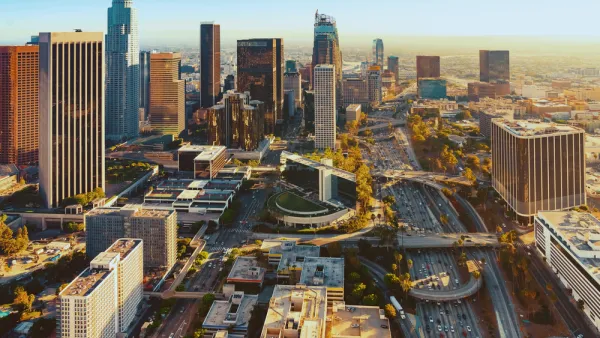
City Council Controversy Threatens L.A.’s Proposed Downtown Plan
A Los Angeles Times editorial explains how political intrigue is spilling over into planning frustration in the city of Los Angeles.
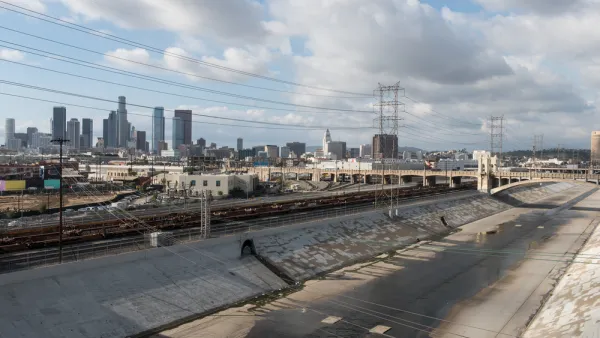
A Sneak Peek at the New Plan (and Zoning Code) for Downtown Los Angeles
The Los Angeles Department of City Planning has released a draft of the DTLA 2040 plan. In addition to the changes it proposes for the downtown area, it's the first community plan update to roll out the city's new zoning code.
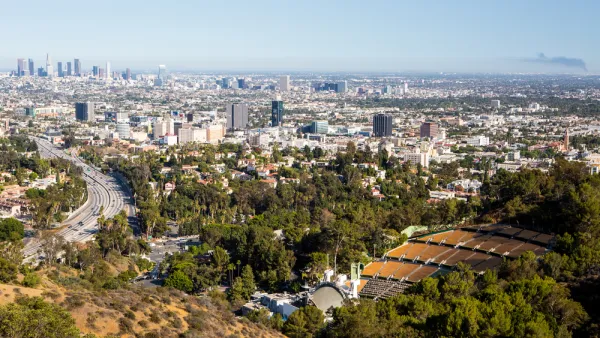
New Hollywood Community Plan Draft Released
One of the most controversial community planning documents in Los Angeles history was approved by the city in 2012 and thrown out by a judge in 2013. The new draft environmental impact report for the plan is now publicly available.

Planetizen Federal Action Tracker
A weekly monitor of how Trump’s orders and actions are impacting planners and planning in America.

The state-sanctioned urbicide of Austin
People don’t kill cities. Freeways do.

US to reduce Colorado River water deliveries to Mexico
A new Colorado Treaty amendment reduces Mexico’s Colorado River water allocation by 250,000 acre feet.

Mamdani overhauls NYC's Vision Zero plan with 100 new policy goals
The overhaul aims to reduce traffic deaths and make streets safer for pedestrians, cyclists and drivers through lower speed limits, new safety infrastructure and more.

Amtrak not solely to blame for New Jersey commuter rail's unreliability, report finds
A new study from the Garden State Initiative found that NJ Transit’s budget grew 20% across a 4 year period, but reliability declined significantly over the same period.

EPA erases limits on planet-warming pollution from power plants
Under Monday’s plan, power plants would still have some limits on how much mercury, arsenic and other contaminants they can emit.

FREE Course: Walkable City 1: Why Walkability?
After describing his path towards focusing on walkability as the essence of good planning, Jeff Speck marches through his five principal reasons for making more walkable places.
Reinventing Malls: Planning Alchemy—Turning Gray Fields Into Gold
The course focuses on the opportunities and imperatives that shape reinvention of mall sites.

Eagle County Government
Harvard University Graduate School of Design
Nashville Planning Department
The Architects Foundation
University of Cincinnati Online
The Pocatello Development Authority
The Urban Renewal Agency of the City of Pocatello
Journal of the American Planning Association