Arlington County is the latest jurisdiction in the country to effectively end single-family zoning.



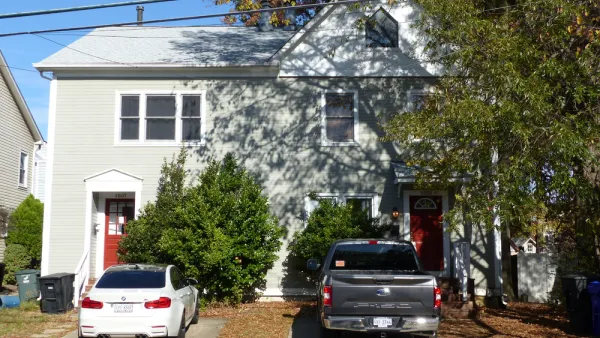
Arlington County, Virginia yesterday approved a new missing middle housing plan that will make it easier to build townhouses, duplexes, and small buildings with up to four, even six, residential units on lots previously designated only for single-family detached housing.
“This push to relax zoning rules, first implemented in cities such as Minneapolis and Portland, Ore., marks something of a departure from Arlington’s existing ‘smart growth’ philosophy, which encouraged density along mass-transit lines but generally kept it to a minimum everywhere else,” reports Ted Armus Armus for the Washington Post.
With the County Board vote, Arlington County becomes the first jurisdiction in the D.C. region to end single-family zoning—a form of zoning reform that is becoming more common around the country as locations reverse a century-long preference for sprawling single-family development patterns. The plan will not end single-family development altogether, but it does open up neighborhoods previously restricted to single-family detached housing alone to new forms of development. With the vote, the County Board did adopt amendments to the county’s zoning code and general plan, according to the county website for the Missing Middle Housing Study.
Arlington County Board Chair Christian Dorsey is quoted by Armus crediting the decision to a desire to move beyond the “discriminatory noise” of the county’s previous exclusionary zoning practices. But, housing costs are extremely high in Arlington County. The median home price in Arlington was $645,000 last month, nearly double the national figure, according to Armus.
The county’s new “Expanded Housing Options” (EHOs) take a notable step beyond some of the previous examples of zoning reform from the country, for example in Portland, Oregon; Minneapolis; and Gainesville, allowing up to six units on some lots.
A lot more discussion of the political debate surrounding yesterday’s historic vote are included in the source article, linked below.
The Planetizen archive also presents more historical background on the Missing Middle Housing Study that preceded the vote.
FULL STORY: Arlington ends single-family-only zoning

Missing Middle Housing Study Launches in Arlington County, Virginia
Missing Middle Housing, the kinds of additional density that can be added with limited construction on a footprint the size of traditional single-family homes, is gaining momentum in the D.C. region.

Arlington ‘Missing Middle Housing’ Plan Faces Scrutiny
A proposal to legalize more housing types in northeastern Virginia has prompted vigorous debate among stakeholders.

Zoning Reform Gains Momentum in Northern Virginia
Arlington County and Alexandria are moving forward with actions that could potentially launch a new era of planning and development in their respective communities.

The state-sanctioned urbicide of Austin
People don’t kill cities. Freeways do.

US to reduce Colorado River water deliveries to Mexico
A new Colorado Treaty amendment reduces Mexico’s Colorado River water allocation by 250,000 acre feet.

New Jersey’s second-largest city bans standalone data centers
Jersey City will continue to allow co-location facilities, such as those meant for research institutions that store their own data.

Amtrak not solely to blame for New Jersey commuter rail's unreliability, report finds
A new study from the Garden State Initiative found that NJ Transit’s budget grew 20% across a 4 year period, but reliability declined significantly over the same period.

EPA erases limits on planet-warming pollution from power plants
Under Monday’s plan, power plants would still have some limits on how much mercury, arsenic and other contaminants they can emit.

Phoenix announces new on-demand transit service, more frequent RAPID buses
Both new services will launch in October, and are part of Phoenix's Project Effective Access Solutions for Easing Congestion.

FREE Course: Walkable City 1: Why Walkability?
After describing his path towards focusing on walkability as the essence of good planning, Jeff Speck marches through his five principal reasons for making more walkable places.
Reinventing Malls: Planning Alchemy—Turning Gray Fields Into Gold
The course focuses on the opportunities and imperatives that shape reinvention of mall sites.

Eagle County Government
Harvard University Graduate School of Design
Nashville Planning Department
The Architects Foundation
University of Cincinnati Online
The Pocatello Development Authority
The Urban Renewal Agency of the City of Pocatello
Journal of the American Planning Association