Gainesville is the first city in Florida to eliminate exclusionary zoning.



The Gainesville City Commission voted 4-3 on Monday, October 17 to eliminate single-family zoning, also known as exclusionary zoning, becoming the most recent in a string of cities and states to undo one of the bedrocks of 20th century planning.
Writing for the Gainesville Sun, Javon L. Harris reports that the ordinance will go into effect immediately: "Developers can build duplexes, triplexes and — on rarer occasions — quadplexes, in any neighborhood with no sunset provision under the measure." The ordinance amends the city's comprehensive plan.
Legal and political challenges are likely to follow. Newly elected commissioners, taking office in January, "have pledged to overturn the change," for example, according to Harris. The city commission's vote was preceded by a "flurry of public comments," most speaking in opposition to the change.
Harris adds that Gainesville is the first city in Florida to eliminate single-family zoning.
Previous Planetizen coverage of zoning reform in Gainesville:
- Gainesville Set To Approve Contentious Zoning Reforms (August 2022)
- Gainesville Weighs Zoning Reform Proposal (April 2022)
FULL STORY: Gainesville commissioners eliminate single-family zoning citywide after split 4-3 vote


Charlotte's New, Controversial Comprehensive Plan to End Single-Family Zoning
A tight vote after months of controversy has produced a major zoning reform effort that differs significantly from recent examples on the West Coast and in Minneapolis.

The 'Most Pro-Housing Reform in U.S. History' Expected for Approval Today in Portland
The Portland Residential Infill Project is expected for approval by the Portland City Council today, culminating a six year process that became more and more ambitious with every iteration.
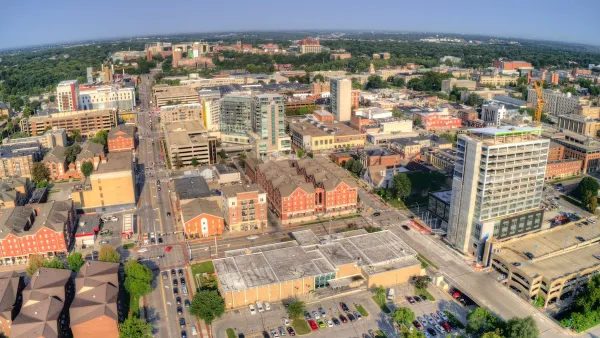
Iowa City Hopes Zoning Amendments Will Increase Housing Supply, Diversity
Iowa City is planning ahead to ensure that housing supply keeps up with housing demand.

The state-sanctioned urbicide of Austin
People don’t kill cities. Freeways do.

US to reduce Colorado River water deliveries to Mexico
A new Colorado Treaty amendment reduces Mexico’s Colorado River water allocation by 250,000 acre feet.

New Jersey’s second-largest city bans standalone data centers
Jersey City will continue to allow co-location facilities, such as those meant for research institutions that store their own data.

Amtrak not solely to blame for New Jersey commuter rail's unreliability, report finds
A new study from the Garden State Initiative found that NJ Transit’s budget grew 20% across a 4 year period, but reliability declined significantly over the same period.

EPA erases limits on planet-warming pollution from power plants
Under Monday’s plan, power plants would still have some limits on how much mercury, arsenic and other contaminants they can emit.

Phoenix announces new on-demand transit service, more frequent RAPID buses
Both new services will launch in October, and are part of Phoenix's Project Effective Access Solutions for Easing Congestion.

FREE Course: Walkable City 1: Why Walkability?
After describing his path towards focusing on walkability as the essence of good planning, Jeff Speck marches through his five principal reasons for making more walkable places.
Reinventing Malls: Planning Alchemy—Turning Gray Fields Into Gold
The course focuses on the opportunities and imperatives that shape reinvention of mall sites.

Eagle County Government
Harvard University Graduate School of Design
Nashville Planning Department
The Architects Foundation
University of Cincinnati Online
The Pocatello Development Authority
The Urban Renewal Agency of the City of Pocatello
Journal of the American Planning Association