The Dallas Morning News’ architecture critic profiles one of the city’s most important current architects.


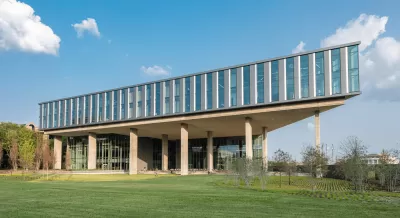
Writing in The Dallas Morning News, Mark Lamster highlights the career of architect Ron Stelmarski, who has played an instrumental in the reshaping of Dallas’ architecture.
As Lamster explains, “You know his buildings even if you don’t know his name, because you will find them in virtually every neighborhood of this city and its suburbs — Downtown, West Village, Deep Ellum, Oak Cliff — stretching from Red Bird Mall to the Frisco Star.” Stelmarski’s projects are varied: “There are skyscrapers, residential projects, works of adaptive reuse, medical centers and civic buildings, not to mention master planning for Fair Park.”
While his designs, like the ominous Richard Group building that looms over its West Village neighbors, are not always popular with the public, Lamster writes, “The precision and sculptural clarity of his work has earned his projects a seemingly endless string of professional accolades.”
Lamster describes Stelmarski’s Dallas-area projects, which “exhibit a consistent and distinctive rigor.” For Lamster, the most important of these is the 15-story Galbraith, a mixed-income building designed to make a statement. “That statement: Affordable housing matters, and so does architectural quality.” As Lamster explains, “It is the kind of building the city needs more of in terms of both aesthetics and function; the rare work of multi-family housing (affordable or otherwise) that eschews the generic and ubiquitous cheaply made greige block for genuine, thoughtful architecture.” While the building still includes over 300 parking spots, Lamster blames the city’s outdated zoning code for perpetuating onerous parking requirements.
Read the full story: How one architect is remaking Dallas in his own modern image, one skyscraper at a time

Vacant lots in south Dallas are giving way to affordable housing
A land use analysis found that Dallas could increase tax revenue and close resource gaps if it invests in vacant lot redevelopment.

Dallas area transit prepares for World Cup, asks locals to drive
DART is adding a special shuttle service and creating back-up mechanisms to ensure it can serve all of this summer's World Cup attendees.
The myth of the 'first skyscraper:' How a clever PR campaign duped the world
The lie that laid claim to the skyscraper’s origins is well documented. Why do we still believe it?

Planetizen Federal Action Tracker
A weekly monitor of how Trump’s orders and actions are impacting planners and planning in America.

The state-sanctioned urbicide of Austin
People don’t kill cities. Freeways do.

Colorado’s Largest Data Center Could Rise Next to Homes — Without a Public Hearing
The proposed campus would consume 11 times the power of Denver International Airport; as it has across the country, opposition mounts.

Raised interest rates may kill financially vulnerable construction projects
The chief economist at ConstructConnect warns that if construction project owners are negatively impacted by the raised rates, it could result in delayed payments to contractors.

Data centers are consuming nearly 25% of Oregon’s power
The state has 111 data centers, with 32 more either planned or under construction.

A third of Texas cities must update their zoning codes to comply with new housing law
Texas municipalities are now required to allow manufactured housing in at least one residential zoning district.

FREE Course: Walkable City 1: Why Walkability?
After describing his path towards focusing on walkability as the essence of good planning, Jeff Speck marches through his five principal reasons for making more walkable places.
Reinventing Malls: Planning Alchemy—Turning Gray Fields Into Gold
The course focuses on the opportunities and imperatives that shape reinvention of mall sites.

Greater Baltimore Committee
Eagle County Government
Harvard University Graduate School of Design
The Architects Foundation
University of Cincinnati Online
The Pocatello Development Authority
The Urban Renewal Agency of the City of Pocatello
Journal of the American Planning Association