A lack of affordable housing and access to services and amenities make it difficult for many seniors to remain in their long-term homes or communities.


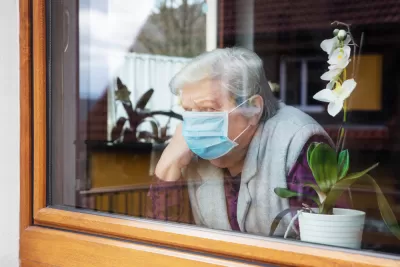
A new study from the Harvard Joint Center for Housing Studies (JCHS) reveals “an acute lack of safe, affordable, and accessible housing options” for seniors hoping to ‘age in place.’ As Colleen Walsh explains in Harvard Magazine, “JCHS projects that U.S. households headed by someone more than 80 years old will number 17.5 million in 2038—more than twice the 8.1 million of 2018— accounting for 12 percent of all households.”
Jennifer Molinsky, who directs the JCHS’s Housing an Aging Society Program, says “When we talk about aging in place, we need to remember the home but also the larger place—does it have the amenities and transportation alternatives and walkability and opportunities to engage in the community that you might want or need?” In other words, Molinsky says, “it’s not only about the home and neighborhood, it’s also about ensuring access to the services and supports people need to stay safely there.”
Walsh describes several efforts by researchers, governments, and nonprofits to identify the challenges facing older adults and best practices and strategies for providing them with services and resources, which include listening to seniors themselves when trying to understand their needs. “The new report emphasizes the importance of involving older voices in planning a sustainable future for all seniors.” The report acknowledges the role of the pandemic, which “forced many people to reconsider the physical design, features, and accessibility of houses, apartments, and neighborhoods, including access to fresh air, green space, reliable elevators, and backup generators.” Molinski stresses the importance of housing as a primary factor in seniors’ health and well-being, shifting the focus away from a traditional healthcare-based approach.
FULL STORY: The Senior Housing Shortfall


Building Age-Friendly Homes
Designing for the unique needs of elderly people can help them maintain social connections and mental acuity.

Survey: Americans Finding it Harder to ‘Age in Place’
While many people over 65 would prefer to stay in their homes and communities, high housing costs and a lack of accessible infrastructure make it difficult.

The Housing Crisis Grows in Rural Idaho
The state’s smaller communities are feeling the pressure of sharply rising housing costs, stagnating wages, and an aging population.

Planetizen Federal Action Tracker
A weekly monitor of how Trump’s orders and actions are impacting planners and planning in America.

The state-sanctioned urbicide of Austin
People don’t kill cities. Freeways do.

US to reduce Colorado River water deliveries to Mexico
A new Colorado Treaty amendment reduces Mexico’s Colorado River water allocation by 250,000 acre feet.

Mamdani overhauls NYC's Vision Zero plan with 100 new policy goals
The overhaul aims to reduce traffic deaths and make streets safer for pedestrians, cyclists and drivers through lower speed limits, new safety infrastructure and more.

Amtrak not solely to blame for New Jersey commuter rail's unreliability, report finds
A new study from the Garden State Initiative found that NJ Transit’s budget grew 20% across a 4 year period, but reliability declined significantly over the same period.

EPA erases limits on planet-warming pollution from power plants
Under Monday’s plan, power plants would still have some limits on how much mercury, arsenic and other contaminants they can emit.

FREE Course: Walkable City 1: Why Walkability?
After describing his path towards focusing on walkability as the essence of good planning, Jeff Speck marches through his five principal reasons for making more walkable places.
Reinventing Malls: Planning Alchemy—Turning Gray Fields Into Gold
The course focuses on the opportunities and imperatives that shape reinvention of mall sites.

Eagle County Government
Harvard University Graduate School of Design
Nashville Planning Department
The Architects Foundation
University of Cincinnati Online
The Pocatello Development Authority
The Urban Renewal Agency of the City of Pocatello
Journal of the American Planning Association