A new study by the Trust for Public Land identifies the benefits and fiscal impacts of public parks and open spaces in New York City.


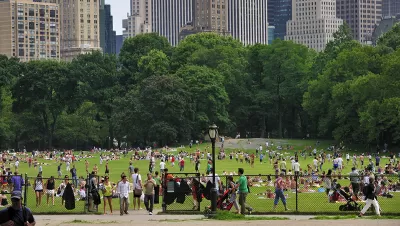
New York City is home to some of the world’s most iconic parks, including the 843-acre Central Park, which offer a wide range of benefits to residents and visitors. But what exactly are the system-wide benefits conveyed by all of these parks? To help answer this question, the Trust for Public Land (TPL) recently released a report entitled The Economic Benefits of Parks in New York City. While previous studies have investigated the economic impact of individual parks, this new report is the first benefit study of the city’s entire integrated park system.
To prepare The Economic Benefits of Parks in New York City, a team of economists, specialists, and research partners used geographic information system (GIS) technology to measure the fiscal impacts of city, state, and federal parks within NYC. The report explains how parks lower healthcare costs for people who exercise there, provide natural air and water filtration, increase property values, and promote tourism while serving as a place for people to connect with nature.
As Sunny Fleming and David LaShell explain in this article on the Esri Blog, the project was no small task. NYC maintains over 48,000 acres of parkland across the city’s five boroughs, making parks a valuable public asset and a critical part of the city’s infrastructure. New York State also maintains important recreational assets like Shirley Chisholm State Park; the National Park Service oversees iconic places like Liberty Island and Grant’s Tomb; and there are many multi-jurisdictional parks like Governors Island and Hudson River Park.
To learn more about the study, including how it is already impacting policy and funding decisions, please read the source article.
Read the full story: The Economic Value of Parks: NYC

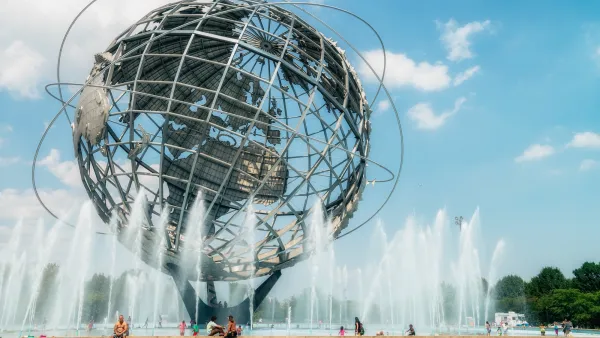
Historic Queens park is getting a $120M upgrade
The borough's largest park will undergo significant upgrades for accessibility, flood mitigation and historic preservation.
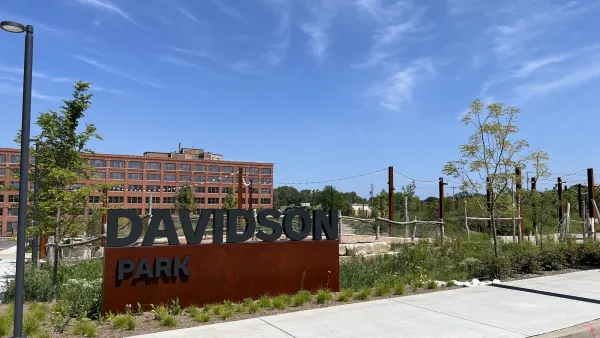
Harley-Davidson turned a Milwaukee parking lot into a green oasis
The park, adjacent to Harley-Davidson headquarters, doubles as stormwater retention infrastructure.

LA unveils plans to reconnect MacArthur Park
The construction of Wilshire Boulevard split the park in two in 1934.

Planetizen Federal Action Tracker
A weekly monitor of how Trump’s orders and actions are impacting planners and planning in America.

The state-sanctioned urbicide of Austin
People don’t kill cities. Freeways do.

Colorado’s Largest Data Center Could Rise Next to Homes — Without a Public Hearing
The proposed campus would consume 11 times the power of Denver International Airport; as it has across the country, opposition mounts.

Nation's most wind-powered state turns to coal as data centers increase energy demand
For the first time in decades, Iowa has increased its generation of coal power.

NYC cools commuters with city's first rain garden above a bus stop
New York City officials say the plants in the rain garden can absorb 16 gallons of rainwater during heavy storms.

Brightline West’s future may rely on $6 billion federal loan
The company has until Nov. 2 to make a $400 million equity investment into its proposed high-speed rail line.

FREE Course: Walkable City 1: Why Walkability?
After describing his path towards focusing on walkability as the essence of good planning, Jeff Speck marches through his five principal reasons for making more walkable places.
Reinventing Malls: Planning Alchemy—Turning Gray Fields Into Gold
The course focuses on the opportunities and imperatives that shape reinvention of mall sites.

Greater Baltimore Committee
Eagle County Government
Harvard University Graduate School of Design
The Architects Foundation
University of Cincinnati Online
The Pocatello Development Authority
The Urban Renewal Agency of the City of Pocatello
Journal of the American Planning Association