A newly released report warns of rapidly dwindling groundwater resources as developers plan to build hundreds of thousands of new homes.


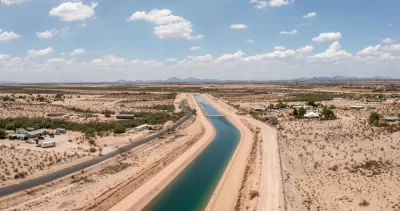
Signaling a potential shift in Arizona’s water conservation policy, newly elected governor Katie Hobbs released a report analyzing the Lower Hassayampa sub-basin’s status as a water source for a rapidly growing region. Writing in Inside Climate News, Wyatt Myskow explains that water experts warn that the growth of communities like Buckeye, near Phoenix, and other massive subdivisions that promise to bring hundreds of thousands of new residents to the area, could put the entire region’s groundwater supplies at risk. Recently, the city of Scottsdale cut off water to an unincorporated community that had been relying on the city's water supplies.
“According to the report, the demand for groundwater will more than double over the current century, resulting in an unmet demand of 4.4 million acre-feet of water. Unless new sources of water can be found, the department won’t be issuing any new certificates along the Lower Hassayampa.” This is because Arizona law requires developers to guarantee water supplies for 100 years, but many have managed to evade this requirement via a loophole that waives water supply requirements for developments built on less than six parcels.
Along with releasing the report, the governor also established the Governor’s Water Policy Council via executive order, paving the way for an update and modernization of the 1980 Arizona Groundwater Management Act, the law containing the aforementioned loophole.


Utah Debates Solutions to Water Shortage
With a rapidly growing population and strained water supplies, Utah lawmakers and conservation groups debate how to best replenish the state's water sources.
Grant Program Will Pay California Farmers To Repurpose Fallow Land
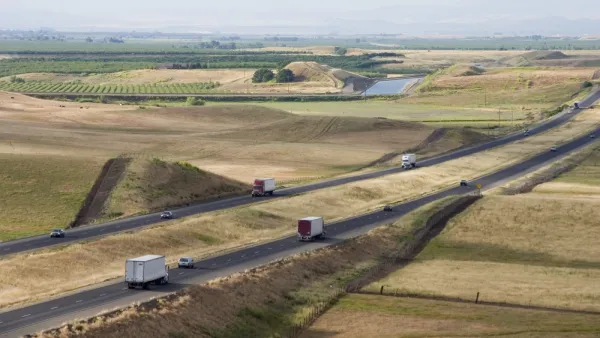
A new state grant program will help California farmers convert idle land to new purposes in an effort to mitigate the environmental and economic effects of drought on the state's Central Valley.
Arizona Tightens Groundwater Restrictions to Rein in Agribusinesses
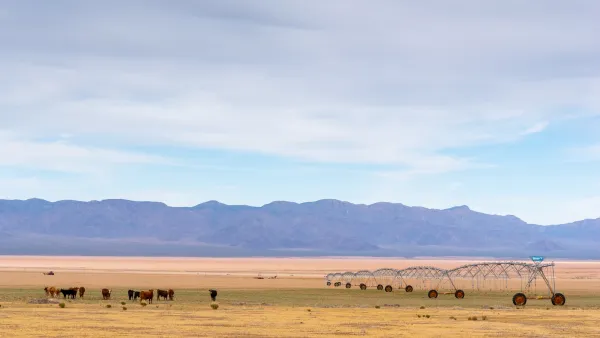
The state is creating an ‘active management area’ in the western part of the state, where agribusinesses including a Saudi alfalfa exporter have practically free rein over water supplies.

The state-sanctioned urbicide of Austin
People don’t kill cities. Freeways do.

US to reduce Colorado River water deliveries to Mexico
A new Colorado Treaty amendment reduces Mexico’s Colorado River water allocation by 250,000 acre feet.

New Jersey’s second-largest city bans standalone data centers
Jersey City will continue to allow co-location facilities, such as those meant for research institutions that store their own data.

Amtrak not solely to blame for New Jersey commuter rail's unreliability, report finds
A new study from the Garden State Initiative found that NJ Transit’s budget grew 20% across a 4 year period, but reliability declined significantly over the same period.

EPA erases limits on planet-warming pollution from power plants
Under Monday’s plan, power plants would still have some limits on how much mercury, arsenic and other contaminants they can emit.

Phoenix announces new on-demand transit service, more frequent RAPID buses
Both new services will launch in October, and are part of Phoenix's Project Effective Access Solutions for Easing Congestion.

FREE Course: Walkable City 1: Why Walkability?
After describing his path towards focusing on walkability as the essence of good planning, Jeff Speck marches through his five principal reasons for making more walkable places.
Reinventing Malls: Planning Alchemy—Turning Gray Fields Into Gold
The course focuses on the opportunities and imperatives that shape reinvention of mall sites.

Eagle County Government
Harvard University Graduate School of Design
Nashville Planning Department
The Architects Foundation
University of Cincinnati Online
The Pocatello Development Authority
The Urban Renewal Agency of the City of Pocatello
Journal of the American Planning Association