The program connects tribal communities with resources to help households in some of the nation’s most underresourced reservations access homeownership.


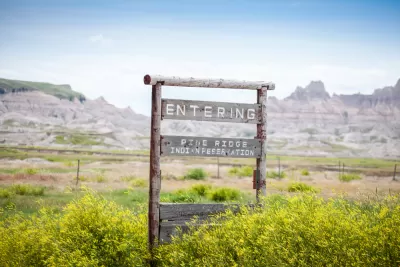
A new initiative created by five South Dakota Community Development Financial Institutions (CDFIs) aims to help Native people overcome the unique challenges they face when trying to buy homes. As Bianca Gonzales reports in Smart Cities Dive, “In addition to Lakota Funds, the initiative includes Lakota Federal Credit Union, Mazaska Owecaso Otipi Financial, Sicangu Wicoti Awanyakapi Corporation and Tatanka Funds. The five financial institutions are providing communities in the Rosebud Reservation with trainings on the homeownership process and becoming stewards over their finances.”
While “The section 184 Indian Home Loan Guarantee Program was designed specifically for American Indian and Alaska Native families in 1992 to facilitate homeownership and increase access to capital in Native American Communities.” However, the complicated nature of mortgage lending on reservation lands has led to low numbers of loans on tribal land. “The Rosebud Reservation is a credit desert, which adds an additional barrier for its communities.” The program, the Rosebud Homeownership and Wealth Building Initiative, uses creative solutions including a ‘Rolling Res Bus’ to bring resources to the many small, geographically dispersed tribal communities in the region.
Read the full story: South Dakota Initiative Helps Native American Families Become Homeowners

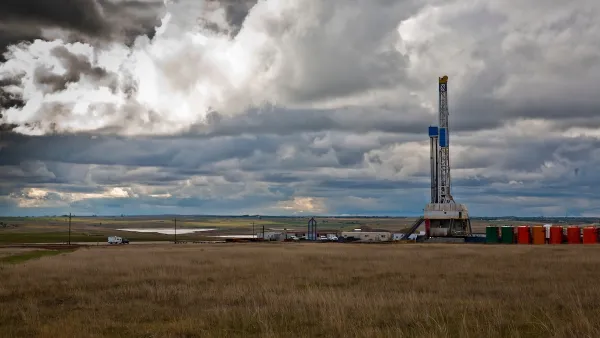
Extraction on Tribal Lands Contributes to State Coffers
A recent investigation reveals that profits from oil, grazing, and other uses on state-managed tribal lands are funding off-reservation public institutions.
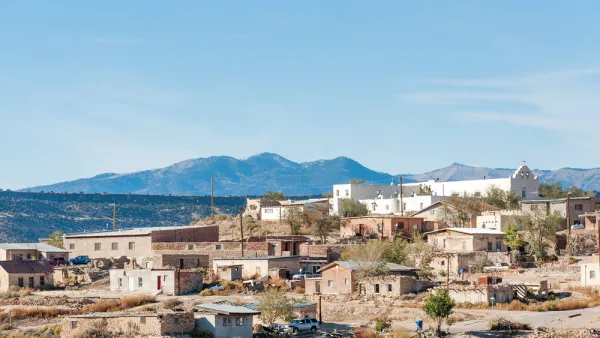
Federal Affordable Housing Grants Awarded to Native Communities
The Indian Housing Block Grant program supports affordable housing efforts in Native American and Native Alaskan communities, which face some of the nation’s highest poverty rates and housing shortages.
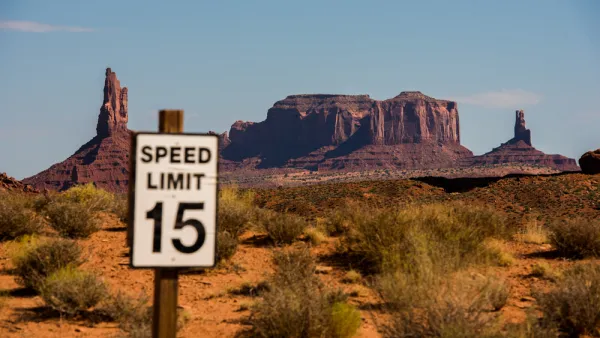
The Fight to Improve Tribal Transportation
Advocates for tribal communities argue that the bipartisan infrastructure bill does not direct enough money to tribal transportation needs, but USDOT and local leaders can ensure more equitable distribution of funds to projects on tribal lands.

Planetizen Federal Action Tracker
A weekly monitor of how Trump’s orders and actions are impacting planners and planning in America.

The state-sanctioned urbicide of Austin
People don’t kill cities. Freeways do.

US to reduce Colorado River water deliveries to Mexico
A new Colorado Treaty amendment reduces Mexico’s Colorado River water allocation by 250,000 acre feet.

Nation's most wind-powered state turns to coal as data centers increase energy demand
For the first time in decades, Iowa has increased its generation of coal power.

NYC cools commuters with city's first rain garden above a bus stop
New York City officials say the plants in the rain garden can absorb 16 gallons of rainwater during heavy storms.

Brightline West’s future may rely on $6 billion federal loan
The company has until Nov. 2 to make a $400 million equity investment into its proposed high-speed rail line.

FREE Course: Walkable City 1: Why Walkability?
After describing his path towards focusing on walkability as the essence of good planning, Jeff Speck marches through his five principal reasons for making more walkable places.
Reinventing Malls: Planning Alchemy—Turning Gray Fields Into Gold
The course focuses on the opportunities and imperatives that shape reinvention of mall sites.

Eagle County Government
Harvard University Graduate School of Design
Nashville Planning Department
The Architects Foundation
University of Cincinnati Online
The Pocatello Development Authority
The Urban Renewal Agency of the City of Pocatello
Journal of the American Planning Association