The Rio Grande Plan would restore rail service to the Rio Grande Depot and reconnect a community divided by a freeway in Salt Lake City.


A pair of private citizens with engineering and design backgrounds have proposed a plan, called the Rio Grande Plan, to improve transit service and reduce freeway impacts in Salt Lake City.
An article by Benjamin Wood introduces the Rio Grande Plan, which has been gaining support among local politicians.
The idea is the brainchild of Charles Lenhart, and engineer, who experienced frustration with transfers between Trax and Frontrunner trains in 2020. “[A]fter studying successful rail rehabilitation projects around the country, he prepared a 60-page draft proposal calling for a so-called ‘train box’ along 500 West that would move freight and passenger lines underground and reactivate the historic Rio Grande Depot as a bonafide transportation hub,” writes Wood.
"The more I thought about it and looked at the grades going into the structure and going out, and how much land would actually be opened up and the way you could reduce the freeway impacts downtown, it started to seem so obvious that yes, this is the right thing to do," Lenhart is quoted as saying in the article.
After teaming up with Cameron Blakely, a designer, after posting the idea on an unnamed “message board for urban planning enthusiasts,” the duo created the final Rio Grande Plan, which is available to explore online.
Wood also reports that “while the Salt Lake City Council hasn't formally supported the plan, the city has twice applied for grant funding to study the proposal, most recently in a ‘Reconnecting Communities’ application that would explore various ways to mitigate the division between the city's east and west sides.”
FULL STORY: Two Salt Lakers have a next-generation plan for transit that, just maybe, could save downtown

A 'Fare-Free-Friday' Is a Rare Thing
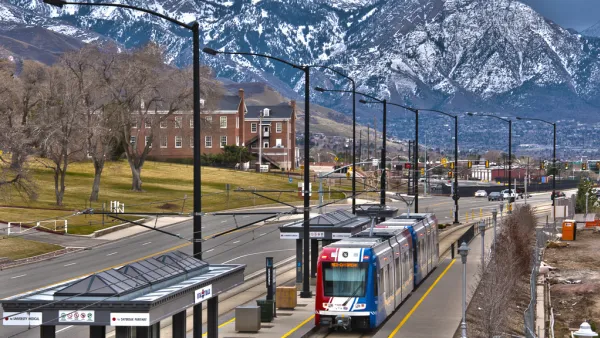
The Utah Transit Authority ran a one-time Fare-Free-Friday in December, thanks to sponsorship by the Salt Lake City Council and the Salt Lake County Mayor’s Office. Another sponsor will be needed to support any future iterations of Fare-Free-Friday.
Salt Lake City to Get Five New Bus Lines
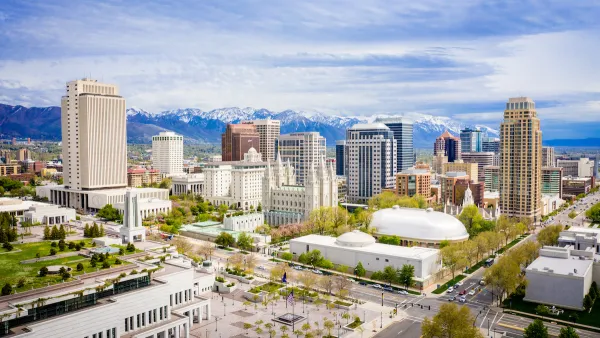
The service improvements come after a year of strong ridership growth.
Transit Capital Investments Planned in Utah
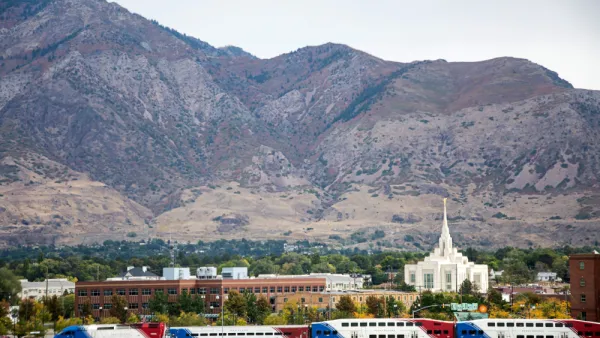
Utah finds itself in a unique situation, with money to spend on expanding transit capacity at a time when many transit agencies are plotting layoffs and service reductions.

Planetizen Federal Action Tracker
A weekly monitor of how Trump’s orders and actions are impacting planners and planning in America.

The state-sanctioned urbicide of Austin
People don’t kill cities. Freeways do.

US to reduce Colorado River water deliveries to Mexico
A new Colorado Treaty amendment reduces Mexico’s Colorado River water allocation by 250,000 acre feet.

5 New England states march closer to 800 megawatt wind energy project
Securing federal approval for the project may be complicated under the Trump administration, which has historically been hostile towards domestic wind power.

Baltimore to break ground on $50 million Transit Priority Project
The project will bring faster bus trips, safer streets and better bike connections to Baltimore.

Airbnb launches $250 million 'last-dollar financing' housing accelerator, makes first investment in Austin
The company will put $6.4 million towards affordable housing development in Texas’ capital.

FREE Course: Walkable City 1: Why Walkability?
After describing his path towards focusing on walkability as the essence of good planning, Jeff Speck marches through his five principal reasons for making more walkable places.
Reinventing Malls: Planning Alchemy—Turning Gray Fields Into Gold
The course focuses on the opportunities and imperatives that shape reinvention of mall sites.

Eagle County Government
Harvard University Graduate School of Design
Nashville Planning Department
The Architects Foundation
University of Cincinnati Online
The Pocatello Development Authority
The Urban Renewal Agency of the City of Pocatello
Journal of the American Planning Association