The growth of transit-oriented development in the Cleveland region is being hindered by zoning codes that limit housing density and excessive parking requirements that drive up construction costs, new research suggests.


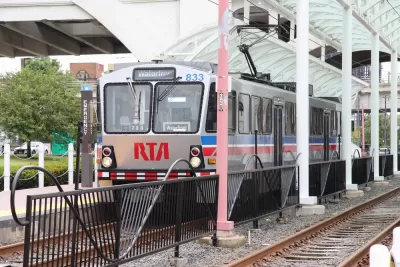
“New research by the Cuyahoga County Planning Commission offers fresh evidence that Cleveland and surrounding suburbs would be smart to rezone transit corridors to encourage dense, walkable, transit-oriented development, or TOD,” reports Steven Litt for Cleveland.com.
While market demand for transit-oriented development in Cleveland is growing, in many cases, developers still have to go through a cumbersome and expensive process to get permits to build TOD. “The data show that between 2012 and 2021, some 383 new developments added nearly $3 billion in real estate value through new construction or building renovations in the transit corridors.”While not every project is ‘transit-friendly,’ the study’s authors say “the new wave of development shows that to a significant extent, transit-oriented development is already happening in the core of the region because the market is demanding it.”
The research is part of an initiative to encourage transit-oriented development and assess how zoning changes can stimulate more housing production near transit lines. The four-phase project “will include identifying areas that could be targeted for transit-oriented development, drafting model codes, and identifying financial mechanisms and incentives.”
According to the study, the momentum for boosting development along transit in many Cleveland suburbs is stymied by outdated zoning codes and parking requirements, as well as disparate regulations among different suburbs. The authors suggest that Cuyahoga County could help suburbs develop their zoning plans with an eye to housing development, connectivity, and walkability. For its part, the county sees TOD as “an opportunity to add population and rebuild the tax base after decades of sprawl sapped its strength.”

Which US cities have the most housing near transit?
Concentrating housing near frequent, reliable transit offers advantages to both residents and transit agencies, who can serve more riders more efficiently.

California Bill Aims to Boost TOD
A bill proposed by Sen. Scott Wiener would exempt transit agencies from zoning rules near ‘high-quality’ transit stops and allow denser transit-oriented development.

New TOD Breaks Ground in Atlanta Area
The project will include over 500 housing units, commercial and retail space, and park spaces.

Planetizen Federal Action Tracker
A weekly monitor of how Trump’s orders and actions are impacting planners and planning in America.

The state-sanctioned urbicide of Austin
People don’t kill cities. Freeways do.

US to reduce Colorado River water deliveries to Mexico
A new Colorado Treaty amendment reduces Mexico’s Colorado River water allocation by 250,000 acre feet.

Mamdani overhauls NYC's Vision Zero plan with 100 new policy goals
The overhaul aims to reduce traffic deaths and make streets safer for pedestrians, cyclists and drivers through lower speed limits, new safety infrastructure and more.

Amtrak not solely to blame for New Jersey commuter rail's unreliability, report finds
A new study from the Garden State Initiative found that NJ Transit’s budget grew 20% across a 4 year period, but reliability declined significantly over the same period.

EPA erases limits on planet-warming pollution from power plants
Under Monday’s plan, power plants would still have some limits on how much mercury, arsenic and other contaminants they can emit.

FREE Course: Walkable City 1: Why Walkability?
After describing his path towards focusing on walkability as the essence of good planning, Jeff Speck marches through his five principal reasons for making more walkable places.
Reinventing Malls: Planning Alchemy—Turning Gray Fields Into Gold
The course focuses on the opportunities and imperatives that shape reinvention of mall sites.

Eagle County Government
Harvard University Graduate School of Design
Nashville Planning Department
The Architects Foundation
University of Cincinnati Online
The Pocatello Development Authority
The Urban Renewal Agency of the City of Pocatello
Journal of the American Planning Association