Local leaders applaud the move, but are calling on the state to keep fares free permanently.


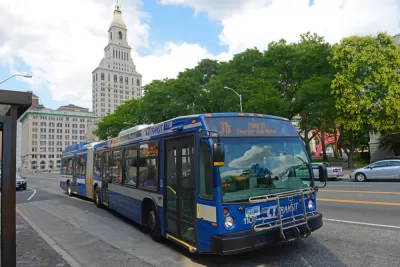
The Connecticut General Assembly voted to extend free bus fares in the state until the end of March 2023, but transit advocates and city leaders in cities like Hartford and New Haven hope the state will make fare-free transit permanent, reports Mark Zaretsky in Mass Transit.
Zaretsky quotes East Rock Alder Anna Festa, D-10, chairwoman of the Board of Alders' City Service and Environmental Policy Committee, who said, “Eliminating fares has increased ridership and improved efficiency. This benefits everyone by lessening the number of cars on the road and reducing emissions.” Wooster Square Alder Eli Sabin, D-7, pointed to the economic impact of free bus fare, which can save residents as much as $1,000 per year.
The extended fare-free program is coupled with the extension of a gas tax holiday until the end of December, after which the gas tax will gradually increase until May. “Free bus service costs the state about $2.7 million a month, while the gas tax holiday that the General Assembly also voted to extend through the end of the year costs the state about $20 million a month, with the figure reaching as high as $25 million in the summer, when people drive the most.”
FULL STORY: CT: Free bus fare extended through March 31, but New Haven, Hartford leaders want it permanent


Can L.A. Metro Fund its Fareless Transit Pilot?
The Los Angeles County Metropolitan Transportation Authority Board of Directors has approved a program that would eliminate fares for students and low-income riders, but the program's future rests on finding sustainable funding sources.
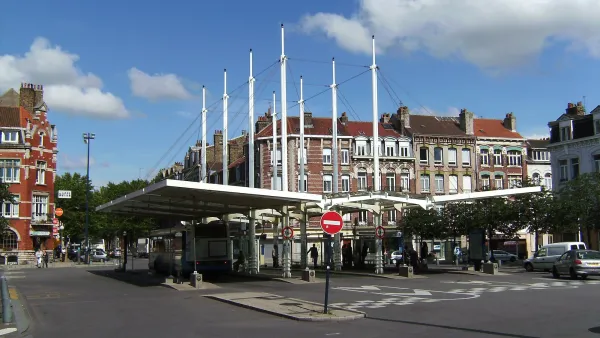
Zohran's Free Buses are Possible — Just Ask This French City
Dunkirk’s free buses are bringing social and economic rewards at a small cost to the city.
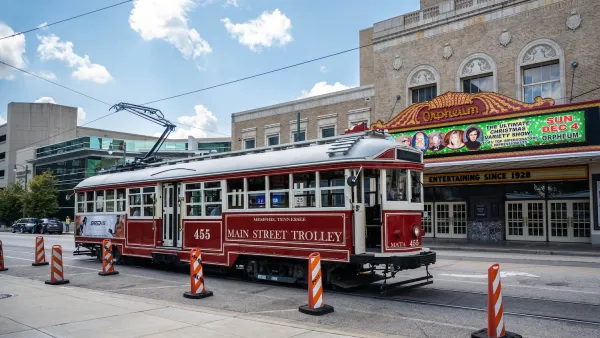
Memphis Launches 3 Month Free Transit Pilot
The city’s transit authority is making a push to increase ridership and improve its transit system.

Planetizen Federal Action Tracker
A weekly monitor of how Trump’s orders and actions are impacting planners and planning in America.

The state-sanctioned urbicide of Austin
People don’t kill cities. Freeways do.

US to reduce Colorado River water deliveries to Mexico
A new Colorado Treaty amendment reduces Mexico’s Colorado River water allocation by 250,000 acre feet.

Mamdani overhauls NYC's Vision Zero plan with 100 new policy goals
The overhaul aims to reduce traffic deaths and make streets safer for pedestrians, cyclists and drivers through lower speed limits, new safety infrastructure and more.

Amtrak not solely to blame for New Jersey commuter rail's unreliability, report finds
A new study from the Garden State Initiative found that NJ Transit’s budget grew 20% across a 4 year period, but reliability declined significantly over the same period.

EPA erases limits on planet-warming pollution from power plants
Under Monday’s plan, power plants would still have some limits on how much mercury, arsenic and other contaminants they can emit.

FREE Course: Walkable City 1: Why Walkability?
After describing his path towards focusing on walkability as the essence of good planning, Jeff Speck marches through his five principal reasons for making more walkable places.
Reinventing Malls: Planning Alchemy—Turning Gray Fields Into Gold
The course focuses on the opportunities and imperatives that shape reinvention of mall sites.

Eagle County Government
Harvard University Graduate School of Design
Nashville Planning Department
The Architects Foundation
University of Cincinnati Online
The Pocatello Development Authority
The Urban Renewal Agency of the City of Pocatello
Journal of the American Planning Association