New research shows a strong connection between a healthy urban tree canopy and lowered mortality rates.


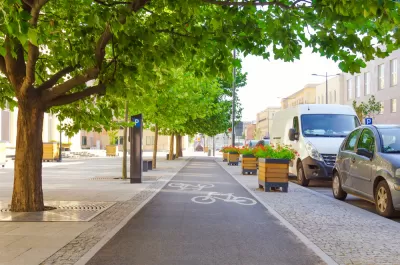
It’s no surprise that street trees benefit public health, but a new study shows a “direct statistical connection” between street trees and reduced mortality rates. Robert Steuteville explains the research in an article for Congress for the New Urbanism.
To be sure, association is correlation, and correlation is not causation. And yet the study controlled for such factors as race, education, income, age, and year of planting in the analysis of tree plantings and people in Portland, Oregon, census tracts. Importantly, researchers were able to control for demographic causes for the health benefits, which strengthens the case for street trees being a critical factor.
Important findings include that “Tree plantings were significantly associated with reductions in non-accidental and cardiovascular mortality,” with bigger, older trees having a stronger connection than younger ones.
The study focused on street trees rather than trees in private gardens, which are easier to monitor, are “a uniquely visible type of tree that, a priori, we would expect to have a broader neighborhood-level impact on health,” and can be planted through public initiatives.
FULL STORY: The life-saving benefits of street trees

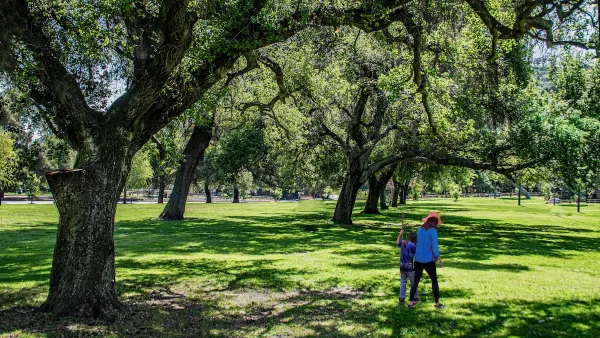
Branching Out: Building Health and Equity Through Community Forestry
Los Angeles County’s Community Forest Management Plan seeks to create a healthier, more equitable community forest by expanding tree coverage, engaging communities, and building resilience to climate impacts.
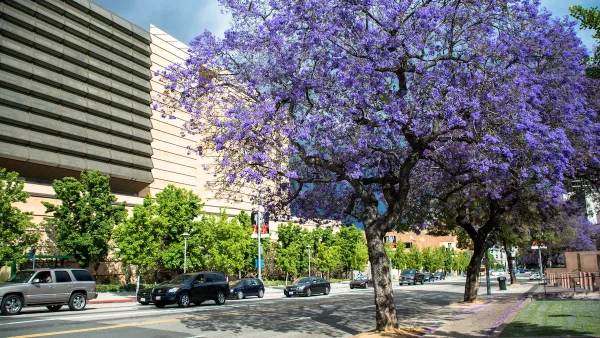
Addressing Tree Canopy Disparity in South Los Angeles
A new study highlights the complex challenge of addressing tree canopy disparities in South L.A., where historical environmental injustices, budget constraints, and competing community priorities hinder efforts to increase equitable tree coverage.
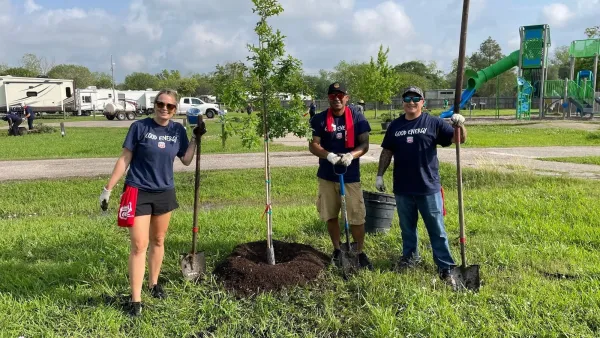
Houston Nonprofit Plants its Millionth Tree
Trees for Houston works with private and public landowners to distribute trees across the city and help restore Houston’s shrinking tree canopy.

The state-sanctioned urbicide of Austin
People don’t kill cities. Freeways do.

US to reduce Colorado River water deliveries to Mexico
A new Colorado Treaty amendment reduces Mexico’s Colorado River water allocation by 250,000 acre feet.

New Jersey’s second-largest city bans standalone data centers
Jersey City will continue to allow co-location facilities, such as those meant for research institutions that store their own data.

Amtrak not solely to blame for New Jersey commuter rail's unreliability, report finds
A new study from the Garden State Initiative found that NJ Transit’s budget grew 20% across a 4 year period, but reliability declined significantly over the same period.

EPA erases limits on planet-warming pollution from power plants
Under Monday’s plan, power plants would still have some limits on how much mercury, arsenic and other contaminants they can emit.

Phoenix announces new on-demand transit service, more frequent RAPID buses
Both new services will launch in October, and are part of Phoenix's Project Effective Access Solutions for Easing Congestion.

FREE Course: Walkable City 1: Why Walkability?
After describing his path towards focusing on walkability as the essence of good planning, Jeff Speck marches through his five principal reasons for making more walkable places.
Reinventing Malls: Planning Alchemy—Turning Gray Fields Into Gold
The course focuses on the opportunities and imperatives that shape reinvention of mall sites.

Eagle County Government
Harvard University Graduate School of Design
Nashville Planning Department
The Architects Foundation
University of Cincinnati Online
The Pocatello Development Authority
The Urban Renewal Agency of the City of Pocatello
Journal of the American Planning Association