Rising interest rates are having a major effect in the housing market—including on the large institutional investors who spent much of the past couple of years buying up single-family homes.


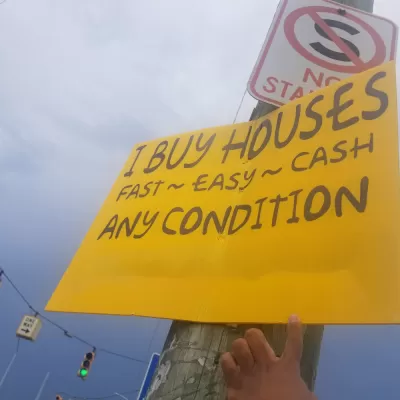
“Investor buying of homes tumbled 30% in the third quarter, a sign that the rise in borrowing rates and high home prices that pushed traditional buyers to the sidelines are causing these firms to pull back, too,” reports Will Parker in a paywalled article published by the Wall Street Journal. “Companies bought around 66,000 homes in the 40 markets tracked by real-estate brokerage Redfin during the third quarter, compared with 94,000 homes during the same quarter a year ago.”
The decline was the largest in a quarter, other than the second quarter of 2020, since the subprime mortgage crisis that began the Great Recession.
Sources in the article credit the rising cost of loans as the reason behind the decline.
“At the same time, large rental landlords are coming under greater scrutiny from federal and local governments. Congressional Democrats have hosted a series of hearings focused on eviction practices and rent increases. Three Congress members from California this month introduced a bill called the ‘Stop Wall Street Landlords Act,’ which proposes levying new taxes on single-family landlords. It would prevent government-sponsored enterprises like Freddie Mac from acquiring and securitizing their debt.” The bill is expected to have a hard time achieving approval with a Republican majority in control of the House of Representatives.
FULL STORY: Investor Home Purchases Drop 30% as Rising Rates, High Prices Cool Housing Market [paywall]

Institutional Investors Gaining a Larger Footprint in the Housing Market, Report Says
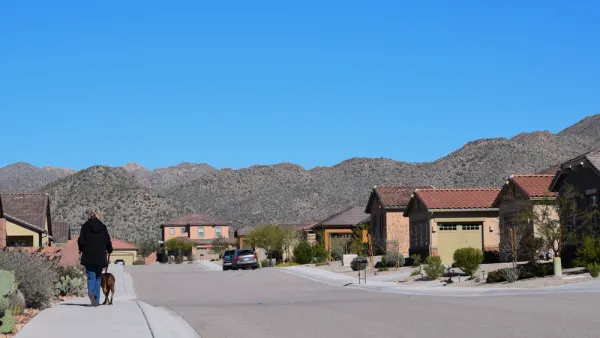
The locations with the fastest growing populations are seeing the most dramatic increase in investor-owned single-family housing rentals.

Local, State Governments Creating Obstacles for Institutional Investors on the Housing Market
Large Wall Street investors are increasing their footprint in the housing market, like they did after the Great Recession, and some local and state governments are inventing new ways to prevent these institutional investors from cornering the market.

Newark Working to Stem the Tide of Wall Street Investors in the Residential Market
A new study by researchers at Rutgers University reveals the scale of Wall Street’s reach into the Newark, New Jersey, housing market—LLCs and private equity accounted for 47 percent of residential real estate transactions from 2017 to early 2020.

Planetizen Federal Action Tracker
A weekly monitor of how Trump’s orders and actions are impacting planners and planning in America.

The state-sanctioned urbicide of Austin
People don’t kill cities. Freeways do.

US to reduce Colorado River water deliveries to Mexico
A new Colorado Treaty amendment reduces Mexico’s Colorado River water allocation by 250,000 acre feet.

Mamdani overhauls NYC's Vision Zero plan with 100 new policy goals
The overhaul aims to reduce traffic deaths and make streets safer for pedestrians, cyclists and drivers through lower speed limits, new safety infrastructure and more.

Amtrak not solely to blame for New Jersey commuter rail's unreliability, report finds
A new study from the Garden State Initiative found that NJ Transit’s budget grew 20% across a 4 year period, but reliability declined significantly over the same period.

EPA erases limits on planet-warming pollution from power plants
Under Monday’s plan, power plants would still have some limits on how much mercury, arsenic and other contaminants they can emit.

FREE Course: Walkable City 1: Why Walkability?
After describing his path towards focusing on walkability as the essence of good planning, Jeff Speck marches through his five principal reasons for making more walkable places.
Reinventing Malls: Planning Alchemy—Turning Gray Fields Into Gold
The course focuses on the opportunities and imperatives that shape reinvention of mall sites.

Eagle County Government
Harvard University Graduate School of Design
Nashville Planning Department
The Architects Foundation
University of Cincinnati Online
The Pocatello Development Authority
The Urban Renewal Agency of the City of Pocatello
Journal of the American Planning Association