A new study by researchers at Rutgers University reveals the scale of Wall Street’s reach into the Newark, New Jersey, housing market—LLCs and private equity accounted for 47 percent of residential real estate transactions from 2017 to early 2020.


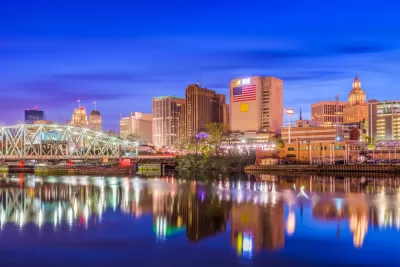
“Purchases of residential properties in Newark by corporate entities has caused rents to rise and owner-occupancy to fall, according to a new Rutgers-Newark study,” reports Steve Strunsky for NJ Advance Media.
Strunsky shares a new study, titled “Who Owns Newark?” by researchers at the Center on Law, Inequality and Metropolitan Equity (CLiME) at Rutgers University.
The CLiMe report finds that 47 percent of all residential real estate transactions in the years leading up to the pandemic involved corporations and LLCs backed by private equity firms, not individual homebuyers.
“Many of the homes had been foreclosed on and vacated, then later bundled by a corporate buyer and sold to another corporate owner,” explains Strunsky.
Newark Mayor Ras Baraka penned a follow-up op-ed to further dig into the report and also list what the city is doing to counter the growing footprint of institutional investors in Newark.
For further insight into the study, Mayor Baraka reveals these key statistics: “The study says five residential neighborhoods — Weequahic, Upper Clinton Hill, West Side Park, Fairmount and Vailsburg — were heavily targeted, with more than 420 homes in each section being sold to corporate entities. In all 3,900 in the West and South Wards alone were sold to these real estate companies and just four companies accounted for nearly 1,000 of those sales.”
“These neighborhoods are the most vulnerable, where the foreclosure crisis 10 years ago drained cities of homeowners as their properties went on the auction block,” adds Mayor Baraka.
The op-ed by Mayor Baraka, linked in the source article below, also includes a list of actions Newark is undertaking to counter the trend.
“Our Neighborhood Development Program in the West Ward allowed nine developers led by women or people of color to build affordable housing on 40 city-owned parcels,” writes Mayor Baraka. “We increased the affordable housing funding to $20 million for families making $34,000 or less. We doubled the Live Newark Program to financially assist first-time homeowners and made Land Bank properties available for Section 8 housing.”
Mayor Baraka also mentions that the city created the New Jersey Forty Acres and a Mule Fund to invest $100 million in real estate and small business development for minority partners.
FULL STORY: Mayor Baraka: Who owns Newark? We want to make sure it’s the people.

Fast-Rising Rents: Cause or Effect of Institutional Real Estate Investors?
More media attention for the growing influence of large, institutional investors on the housing market.
Institutional Investors Gaining a Larger Footprint in the Housing Market, Report Says
The locations with the fastest growing populations are seeing the most dramatic increase in investor-owned single-family housing rentals.
Wall Street Suddenly Buying Fewer Single-Family Homes
Rising interest rates are having a major effect in the housing market—including on the large institutional investors who spent much of the past couple of years buying up single-family homes.

Planetizen Federal Action Tracker
A weekly monitor of how Trump’s orders and actions are impacting planners and planning in America.

The state-sanctioned urbicide of Austin
People don’t kill cities. Freeways do.

US to reduce Colorado River water deliveries to Mexico
A new Colorado Treaty amendment reduces Mexico’s Colorado River water allocation by 250,000 acre feet.

Baltimore to break ground on $50 million Transit Priority Project
The project will bring faster bus trips, safer streets and better bike connections to Baltimore.

Airbnb launches $250 million 'last-dollar financing' housing accelerator, makes first investment in Austin
The company will put $6.4 million towards affordable housing development in Texas’ capital.

Guerilla urbanists are building DIY bus stop benches in Chicago
A before-and-after of one of the bus stops with a new bench. The new benches are not officially sanctioned or permitted, but the residents who placed them hope they will be the start of a network of DIY benches across the city.

FREE Course: Walkable City 1: Why Walkability?
After describing his path towards focusing on walkability as the essence of good planning, Jeff Speck marches through his five principal reasons for making more walkable places.
Reinventing Malls: Planning Alchemy—Turning Gray Fields Into Gold
The course focuses on the opportunities and imperatives that shape reinvention of mall sites.

Eagle County Government
Harvard University Graduate School of Design
Nashville Planning Department
The Architects Foundation
University of Cincinnati Online
The Pocatello Development Authority
The Urban Renewal Agency of the City of Pocatello
Journal of the American Planning Association