The fiscal toll of the pandemic is only beginning to reveal itself. The challenges presented to growing office vacancy rates are not unique to San Francisco.


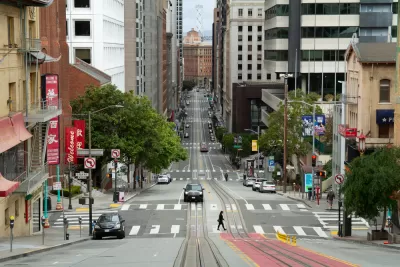
A new analysis published by the office of San Francisco Chief Economist Ted Egan estimates the property tax revenue risk of ongoing office vacancies in the city at $200 million by 2028.
Romy Varghese shares news of the analysis for Bloomberg, explaining that office vacancies in the traditional tech hub could rise to as much as 31 percent in the fourth quarter of next year. According to an October article on Socketsite, San Francisco reached 23 percent office vacancies in the second quarter of 2022.
“Commercial property values would fall, and that would mean less revenue for the city from property taxes. In the short-term, the risk is lessened by long-term leases and the fact that under a California law known as Proposition 13, valuations for property tax purposes are often well below market prices. That cushions municipalities during downturns,” writes Varghese.
The office sector is responsible for 18 percent of the city’s revenues, according to Bloomberg.
San Francisco has emerged as the poster child of cities faced with the fiscal consequences of new work from home trends in the wake of the Covid-19 pandemic, but it’s not the only city faced with similar concerns in the United States, though the office vacancy equation varies by the location.
FULL STORY: San Francisco Sees Risk of Lost Revenue as Remote Work Prevails

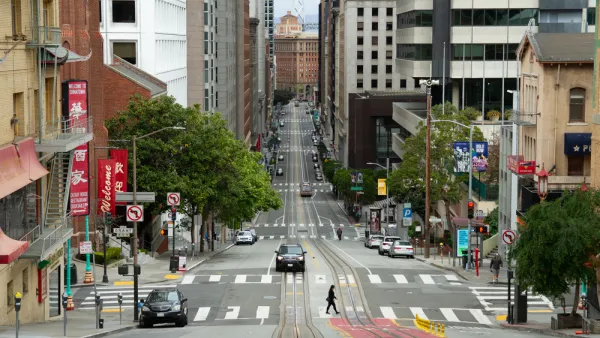
Downtown San Francisco Still Looking for a Post-Pandemic Comeback
“Downtown on the Brink” reads the headline of a recent San Francisco Chronicle feature.
The Once-in-a-Generation Opportunity to Remake Downtown
Urban cores around the country were transforming into live, work, and play destinations before the pandemic. The pandemic was a setback for this transformation, but it could also be a rare opportunity. It’s up to city leadership to seize it.
Planning Year in Review 2022: Downtowns, Transportation, Climate Change
Part two of a review of the major themes, debates, and events of the year in planning that was 2022.

Planetizen Federal Action Tracker
A weekly monitor of how Trump’s orders and actions are impacting planners and planning in America.

The state-sanctioned urbicide of Austin
People don’t kill cities. Freeways do.

US to reduce Colorado River water deliveries to Mexico
A new Colorado Treaty amendment reduces Mexico’s Colorado River water allocation by 250,000 acre feet.

Mamdani overhauls NYC's Vision Zero plan with 100 new policy goals
The overhaul aims to reduce traffic deaths and make streets safer for pedestrians, cyclists and drivers through lower speed limits, new safety infrastructure and more.

Amtrak not solely to blame for New Jersey commuter rail's unreliability, report finds
A new study from the Garden State Initiative found that NJ Transit’s budget grew 20% across a 4 year period, but reliability declined significantly over the same period.

EPA erases limits on planet-warming pollution from power plants
Under Monday’s plan, power plants would still have some limits on how much mercury, arsenic and other contaminants they can emit.

FREE Course: Walkable City 1: Why Walkability?
After describing his path towards focusing on walkability as the essence of good planning, Jeff Speck marches through his five principal reasons for making more walkable places.
Reinventing Malls: Planning Alchemy—Turning Gray Fields Into Gold
The course focuses on the opportunities and imperatives that shape reinvention of mall sites.

Eagle County Government
Harvard University Graduate School of Design
Nashville Planning Department
The Architects Foundation
University of Cincinnati Online
The Pocatello Development Authority
The Urban Renewal Agency of the City of Pocatello
Journal of the American Planning Association