As more electric cars and trucks hit U.S. roads, large charging stations could require as much power as a small town.


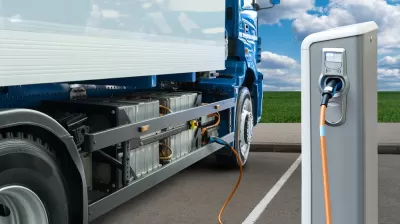
The debate over how the electric grid will handle a rising number of electric vehicles continues, as Tom Randall outlines the potential energy needs of an electric charging station for Bloomberg Green.
The problem isn’t the amount of electricity required, Randall notes. “The real challenge is how quickly high-speed chargers will need to deliver electricity at a single place and time.” According to Dave Mulaney of the RMI research institute, “Utilities need to be starting half a decade ahead of the trucks in order to not be bottlenecking the transition to electric trucks.”
Randall cites a study by utility company National Grid Plc. “Researchers found that by 2030, electrifying a typical highway gas station will require as much power as a professional sports stadium—and that’s mostly just for electrified passenger vehicles. As more electric trucks hit the road, the projected power needs for a big truck stop by 2035 will equal that of a small town.”
Brian Wilkie, director of transport electrification at National Grid, says that “Building connected electricity highways will be a competitive advantage for states that move the fastest, and every utility should be conducting similar studies to evaluate future demand.”
FULL STORY: Electric Truck Stops Will Need as Much Power as a Small Town

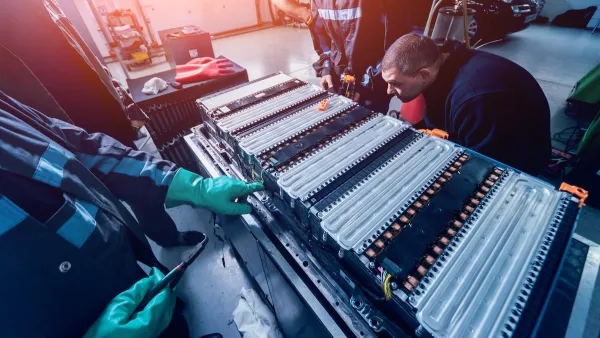
Used EV Batteries Get New Life Supporting the Texas Power Grid
After the end of their useful life in electric cars, batteries can be repurposed to stabilize the electricity supply.
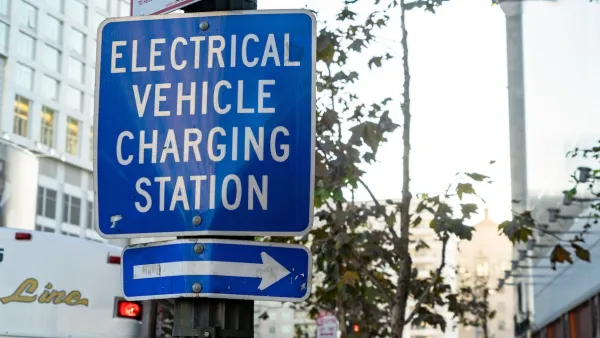
New York State Finances $60M Loan for EV Charging Infrastructure
Gov. Hochul announced the investment just as a federal program for EV charging infrastructure was halted by administration officials.
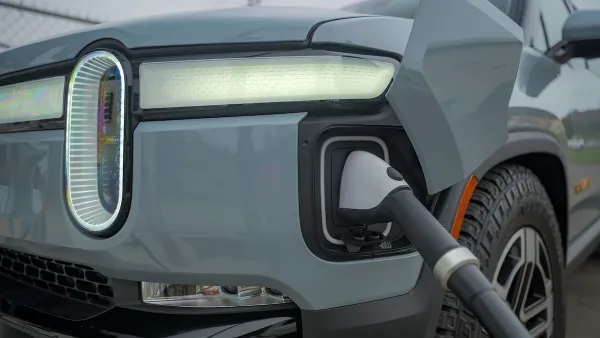
Rivian Joins Movement Toward Universal EV Charging
As more automakers like Tesla, Ford, and Rivian make their charging infrastructure compatible, the shift could lead to the faster development of a nationwide EV charging network.

The state-sanctioned urbicide of Austin
People don’t kill cities. Freeways do.

US to reduce Colorado River water deliveries to Mexico
A new Colorado Treaty amendment reduces Mexico’s Colorado River water allocation by 250,000 acre feet.

New Jersey’s second-largest city bans standalone data centers
Jersey City will continue to allow co-location facilities, such as those meant for research institutions that store their own data.

Amtrak not solely to blame for New Jersey commuter rail's unreliability, report finds
A new study from the Garden State Initiative found that NJ Transit’s budget grew 20% across a 4 year period, but reliability declined significantly over the same period.

EPA erases limits on planet-warming pollution from power plants
Under Monday’s plan, power plants would still have some limits on how much mercury, arsenic and other contaminants they can emit.

Phoenix announces new on-demand transit service, more frequent RAPID buses
Both new services will launch in October, and are part of Phoenix's Project Effective Access Solutions for Easing Congestion.

FREE Course: Walkable City 1: Why Walkability?
After describing his path towards focusing on walkability as the essence of good planning, Jeff Speck marches through his five principal reasons for making more walkable places.
Reinventing Malls: Planning Alchemy—Turning Gray Fields Into Gold
The course focuses on the opportunities and imperatives that shape reinvention of mall sites.

Eagle County Government
Harvard University Graduate School of Design
Nashville Planning Department
The Architects Foundation
University of Cincinnati Online
The Pocatello Development Authority
The Urban Renewal Agency of the City of Pocatello
Journal of the American Planning Association