In a set of recommendations submitted to the city, the commission calls for revised land use and transportation policies that reclaim public space from cars and shift focus away from vehicle throughput to more pedestrian-oriented uses.


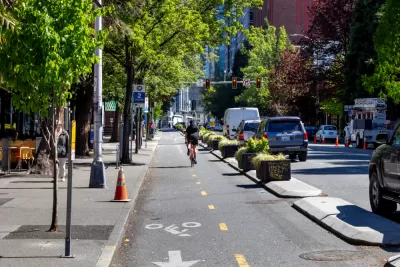
A document submitted to the city of Seattle by its Planning Commission outlines an ambitious set of recommendations aimed at reclaiming public right-of-way for people, mitigating the impact of climate change, and improving safety on the city’s streets. The brief notes that road deaths and injuries are on the rise in spite of the city’s Vision Zero pledge.
“The brief goes on to note that the city will not be able to accommodate the growth anticipated in the coming decades if streets continue to be used in the same way they are now, stating that the status quo will ‘literally kill us,’” Ryan Packer writes in The Urbanist. The Commission calls on the city to include their recommendations in the update of the Seattle Comprehensive Plan, which will undergo a major update in 2024.
“Among the Planning Commission’s recommendations is the removal of vehicle storage from the current Comprehensive Plans’s list of needs that should be accommodated on city streets,” calling instead for “a citywide parking policy and plan that looks to balance revenue needs with opportunities for multi-function streets that provide more options, public space, and environmental benefits.”
The commission also highlighted the discrepancy between the proposed comprehensive plan update and the Seattle Department of Transportation’s Transportation Plan, which, according to a letter sent to SDOT earlier this year, “appear[s] to assume a future high rate of trip-making by privately owned vehicles, with the only variable being whether those vehicles are electric.” The focus on electrification, the commission pointed out, “will miss an opportunity to evaluate alternatives that the City has far more influence over, and that align with the forthcoming update to the Comprehensive Plan.”
As Packer notes, it remains to be seen whether the mayor and city council will adopt the Planning Commission’s bold, transformative vision for more sustainable and equitable land use and transportation planning.
FULL STORY: Planning Commission Pushes for Bolder One Seattle Plan Re-envisioning City Streets

Opinion: Voters Deserve to See the Draft ‘One Seattle’ Plan
Despite a promise to release a draft comprehensive plan update in April and with elections in less than a week, Seattle residents are still waiting to see the city’s proposal for how to guide development in the next decades.
Seattle Ponders a New Approach to Zoning for its Comprehensive Plan Update
The city of Seattle will have an updated comprehensive plan by the end of 2024, with zoning changes to follow by 2025.
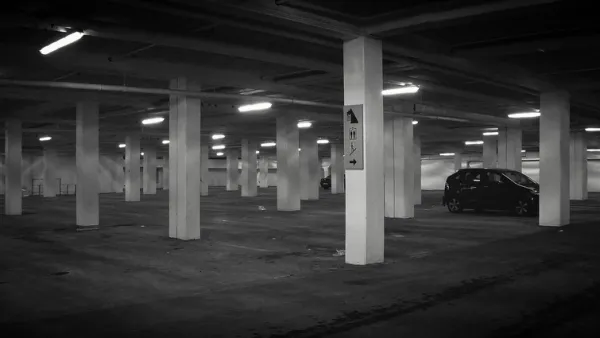
Op-Ed: 'Mammoth' New Parking Garages Belie Seattle's Green Talk
"Seattle is still a car town at heart," Danny Westneat writes, pointing to a number of gargantuan new parking garages like the 2,300-stall complex at Expedia's new headquarters.

Planetizen Federal Action Tracker
A weekly monitor of how Trump’s orders and actions are impacting planners and planning in America.

The state-sanctioned urbicide of Austin
People don’t kill cities. Freeways do.

US to reduce Colorado River water deliveries to Mexico
A new Colorado Treaty amendment reduces Mexico’s Colorado River water allocation by 250,000 acre feet.

Mamdani overhauls NYC's Vision Zero plan with 100 new policy goals
The overhaul aims to reduce traffic deaths and make streets safer for pedestrians, cyclists and drivers through lower speed limits, new safety infrastructure and more.

Amtrak not solely to blame for New Jersey commuter rail's unreliability, report finds
A new study from the Garden State Initiative found that NJ Transit’s budget grew 20% across a 4 year period, but reliability declined significantly over the same period.

EPA erases limits on planet-warming pollution from power plants
Under Monday’s plan, power plants would still have some limits on how much mercury, arsenic and other contaminants they can emit.

FREE Course: Walkable City 1: Why Walkability?
After describing his path towards focusing on walkability as the essence of good planning, Jeff Speck marches through his five principal reasons for making more walkable places.
Reinventing Malls: Planning Alchemy—Turning Gray Fields Into Gold
The course focuses on the opportunities and imperatives that shape reinvention of mall sites.

Eagle County Government
Harvard University Graduate School of Design
Nashville Planning Department
The Architects Foundation
University of Cincinnati Online
The Pocatello Development Authority
The Urban Renewal Agency of the City of Pocatello
Journal of the American Planning Association