A streaming box screen saver exhibits better urbanism than many real-life cities.


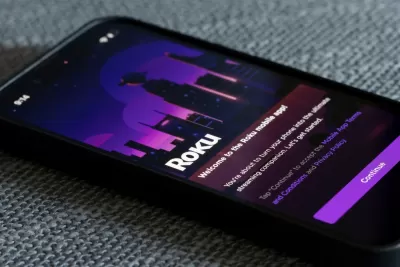
Have you ever wanted to live in a screen saver? As Luke Winkie explains in a New York Times article, some users of Roku, a TV streaming device, are finding themselves wishing they could move into what fans are calling ‘Roku City,’ the hypnotic animated city that scrolls past on the Roku home screen.
If you let a Roku idle long enough, you will eventually be transported to a magenta cityscape beyond time and space. The screen slowly pans across cozy diners, gothic mansions and a sumptuous, moonlit lagoon, all sheathed in a groovy, ‘Blade Runner’-esque color palette.
Designed by artist Kyle Jones, ‘Roku City’ is meant to serve as a vehicle for advertisements embedded as ‘billboards’ in the animated metropolis. “The animation hit Roku servers without much fanfare in 2018, but its status slowly grew over the next few years.” During the early part of the pandemic, interest in the screen saver skyrocketed as fans began to tweet about the allure of the fictional city, and Roku itself got in on the urbanism joke.
Roku City is dynamic, too. “As the summer months left the calendar, a wash of auburn trees began to streak across a new district and a fresh set of spooky cafes — and the requisite filmic easter eggs — filled the city block.”
The attractive urbanism and perennial golden hour leaves one to wonder, how much does rent in Roku City cost?
FULL STORY: Pack Your Bags, We’re Moving to ‘Roku City’

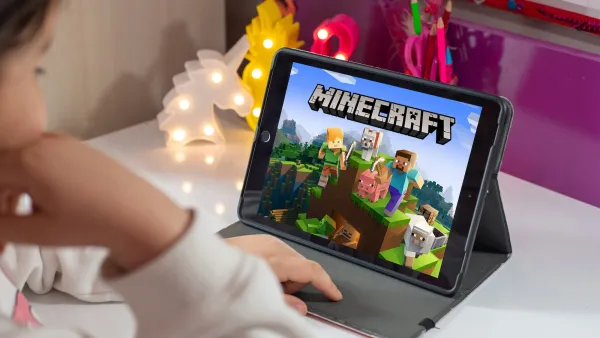
Children in 55 countries are redesigning their cities in Minecraft
A U.N.-backed program lets students and community members reimagine sites in their neighborhoods in the game — and translate them into real-life buildings.
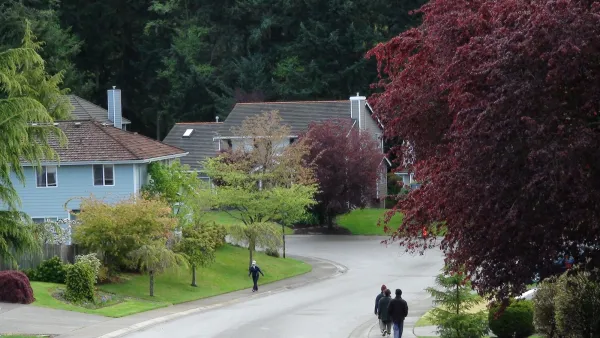
Move over, zoning. Housing’s unsung hero is better street design.
The physical layout of infrastructure is the quiet force that shapes housing supply.
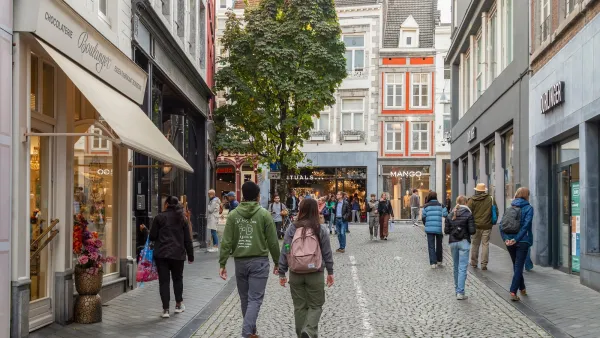
Planning for Love, Part 3: Enhancing human connection through walkability
In the third and final installment of this series, author Hannah Kosoff examines what her research findings say about modern dating and urban form.

Planetizen Federal Action Tracker
A weekly monitor of how Trump’s orders and actions are impacting planners and planning in America.

The state-sanctioned urbicide of Austin
People don’t kill cities. Freeways do.

US to reduce Colorado River water deliveries to Mexico
A new Colorado Treaty amendment reduces Mexico’s Colorado River water allocation by 250,000 acre feet.

5 New England states march closer to 800 megawatt wind energy project
Securing federal approval for the project may be complicated under the Trump administration, which has historically been hostile towards domestic wind power.

Baltimore to break ground on $50 million Transit Priority Project
The project will bring faster bus trips, safer streets and better bike connections to Baltimore.

Airbnb launches $250 million 'last-dollar financing' housing accelerator, makes first investment in Austin
The company will put $6.4 million towards affordable housing development in Texas’ capital.

FREE Course: Walkable City 1: Why Walkability?
After describing his path towards focusing on walkability as the essence of good planning, Jeff Speck marches through his five principal reasons for making more walkable places.
Reinventing Malls: Planning Alchemy—Turning Gray Fields Into Gold
The course focuses on the opportunities and imperatives that shape reinvention of mall sites.

Eagle County Government
Harvard University Graduate School of Design
Nashville Planning Department
The Architects Foundation
University of Cincinnati Online
The Pocatello Development Authority
The Urban Renewal Agency of the City of Pocatello
Journal of the American Planning Association