Despite the line’s reliability and success, funding for its future expansion and operations remains undetermined.


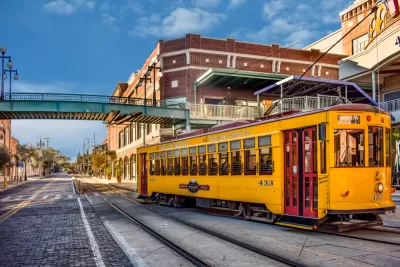
An article in the Tampa Bay Times by Olivia George profiles Tampa’s TECO Line Streetcar, which opened in 2002 and became fare-free in 2018. Since then, the neighborhoods along the streetcar line have transformed as the city became one of the nation’s hottest housing markets.
“Celebrating its 20th birthday this month, the TECO Line Streetcar has evolved from a charming yet oft-disparaged tourist attraction into one of the county’s few reliable public transit options for those lucky enough to benefit from its 2.7-mile footprint.” Advocates want to see the system extended to benefit more commuters in the highly congested city, but the city has been unable to match a $67.3 million state grant received in 2020, and future funding for the operating agency, the Hillsborough Area Regional Transit Authority, is uncertain.
The streetcar is somewhat of a beacon in an unreliable transit landscape, George writes. While local buses are often late, delayed by regular traffic and mechanical failures, “The streetcar comes every 15 minutes and operates until 2 a.m. on weekends. Next year, the cars will run every 12 minutes on weekends. The county transit agency wants to further boost efficiency by increasing signal priorities and preemption to ensure frequency is maintained.”
FULL STORY: After 20 years, Tampa’s streetcar is a front row seat to downtown’s rebirth.

A Better Future for Tampa's Trolley?
Tampa's TECO line streetcar system does not lack charm. What the historic streetcar does lack, however, is riders. Can HART transform the trolley into an integral part of a revitalized downtown?
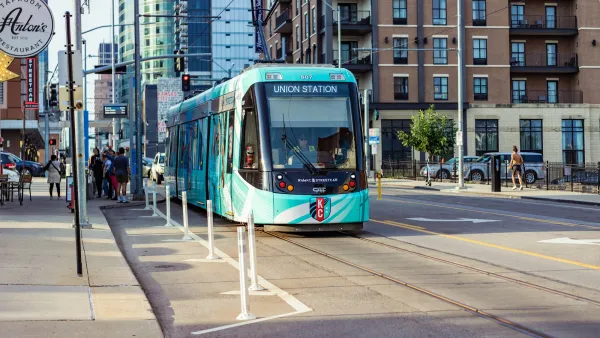
Kansas City Announces Another New, Fare-Free Streetcar Line
The once-derided transit system continues to add new lines as ridership grows.
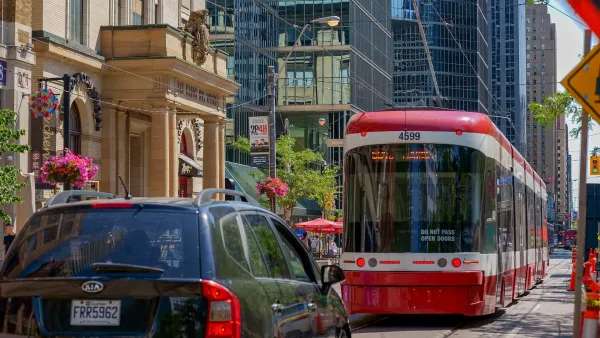
Toronto Man Beats Streetcar on Foot to Highlight Traffic Delays
Runner Mac Bauer says he hopes his project spurs the city to improve transit speed and reliability.

Planetizen Federal Action Tracker
A weekly monitor of how Trump’s orders and actions are impacting planners and planning in America.

The state-sanctioned urbicide of Austin
People don’t kill cities. Freeways do.

US to reduce Colorado River water deliveries to Mexico
A new Colorado Treaty amendment reduces Mexico’s Colorado River water allocation by 250,000 acre feet.

5 New England states march closer to 800 megawatt wind energy project
Securing federal approval for the project may be complicated under the Trump administration, which has historically been hostile towards domestic wind power.

Baltimore to break ground on $50 million Transit Priority Project
The project will bring faster bus trips, safer streets and better bike connections to Baltimore.

Airbnb launches $250 million 'last-dollar financing' housing accelerator, makes first investment in Austin
The company will put $6.4 million towards affordable housing development in Texas’ capital.

FREE Course: Walkable City 1: Why Walkability?
After describing his path towards focusing on walkability as the essence of good planning, Jeff Speck marches through his five principal reasons for making more walkable places.
Reinventing Malls: Planning Alchemy—Turning Gray Fields Into Gold
The course focuses on the opportunities and imperatives that shape reinvention of mall sites.

Eagle County Government
Harvard University Graduate School of Design
Nashville Planning Department
The Architects Foundation
University of Cincinnati Online
The Pocatello Development Authority
The Urban Renewal Agency of the City of Pocatello
Journal of the American Planning Association