The city will launch a pilot program to assess five methods of treating wastewater to identify the most effective solution for a scaled-up program.


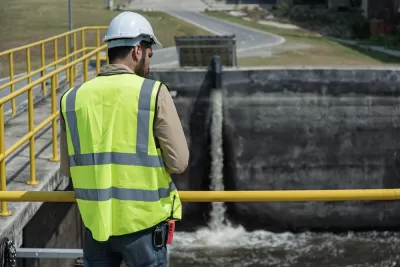
As part of Boise’s Water Renewal Utility Plan, the city will conduct a pilot program to evaluate five potential methods for treating and recycling wastewater, reports Erin Banks Rusby for the Idaho Press.
“The water being processed through the pilot program will not contain any human excrement, urine, viruses, or other waste disposed of through household toilets, sinks, or showers, [Haley Falconer, senior manager of the city’s environmental division] said.” According to Falconer, “The city is planning to build a water renewal facility in that part of the city that will treat industrial wastewater and ‘grow with other industrial or commercial sources in that part of town.’”
The article outlines the five technologies that will be tested during the pilot program, including an air scrubber, reverse osmosis, and ultraviolet advanced oxidation. “Testing all of these complex systems gives city personnel a chance to learn how each work, what is most effective, and to develop design criteria for how the technology would be used at a large scale in the future facility, Falconer said.”
According to Natalie Monro, spokesperson for the city’s public works department, “Currently, the city is hoping to clean the water to a drinkable level, but it is not considering an option to reuse the water as a source of drinking water.”
Read the full story: Boise launching recycled water pilot program
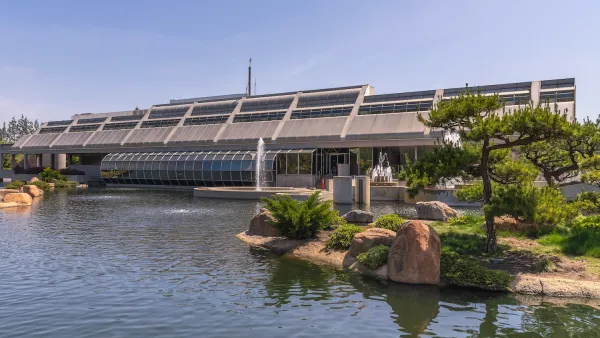
LA Will Double its Wastewater Recycling Capacity to Serve Half a Million Residents
A new wastewater treatment facility will be able to process 45 million gallons of water per day.
Southern California water agencies accelerate reuse and recycling projects
From desalination to wastewater recycling, California officials are promoting more reclamation projects as the Southwest remains in drought.
Where water recycling is working
Orange County, California and Las Vegas are leaders in water recycling in the United States.

Planetizen Federal Action Tracker
A weekly monitor of how Trump’s orders and actions are impacting planners and planning in America.

California plans to bury El Niño’s downpour
If the state plays its cards right, it may be able to store a billion acre-feet of El Niño’s water in aquifers.

Desperate measures: Advocates weigh draining Lake Powell to fill Colorado River
Draining the reservoir could reduce evaporation losses by a couple hundred thousand acre-feet.

US buildings threatened, destroyed by fires set to triple by 2060
Researchers found a high fire risk for socioeconomically vulnerable neighborhoods in the American West.

LA residents may be allowed to paint their own crosswalks
Councilwoman Katy Yaroslavsky put out a motion instructing the Los Angeles Department of Public Transportation to study the feasibility of allowing volunteers to paint crosswalks.

Dallas moves to overhaul its zoning code
The city's zoning reform will allow more multi-family and mixed-use developments.

FREE Course: Walkable City 1: Why Walkability?
After describing his path towards focusing on walkability as the essence of good planning, Jeff Speck marches through his five principal reasons for making more walkable places.
Reinventing Malls: Planning Alchemy—Turning Gray Fields Into Gold
The course focuses on the opportunities and imperatives that shape reinvention of mall sites.

City of Rosemead
Rutgers University, Edward J. Bloustein School of Planning and Public Policy
One Hundred Miles
Hunter College, City University of New York (CUNY)
The Architects Foundation
University of Cincinnati Online
City of Cambridge
Montrose County
The Pocatello Development Authority