A NACTO report highlights the importance of bus-friendly policies and infrastructure for boosting ridership numbers and reducing urban congestion and pollution.


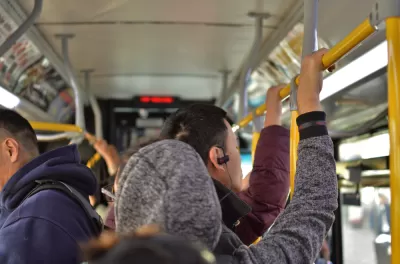
To grow bus ridership, improve service. That’s the conclusion of a new (but unsurprising) report from the National Association of City Transportation Officials (NACTO), writes Dan Zukowski in Smart Cities Dive.
More specifically, the report highlights three key areas where transit agencies and city officials can take action: ensuring all-day, frequent bus service; redesigning streets for buses with dedicated bus lanes, signal priority, and improved infrastructure; and adopting broader policy reforms that support transit, such as adjusting parking fees, discouraging driving, and promoting walkability and mixed-use development.
The report provides examples of successful initiatives, such as New York City’s 14th Street busway and transit signal priority in Minneapolis. It also highlights the potential for speedy action from local agencies. “For example, faced with the need to shut down a major subway line for repairs this month, Boston quickly created dedicated bus lanes and implemented parking restrictions along several major streets to allow for temporary shuttle bus services.”
FULL STORY: Dedicated lanes, frequent service key to increasing bus ridership: NACTO

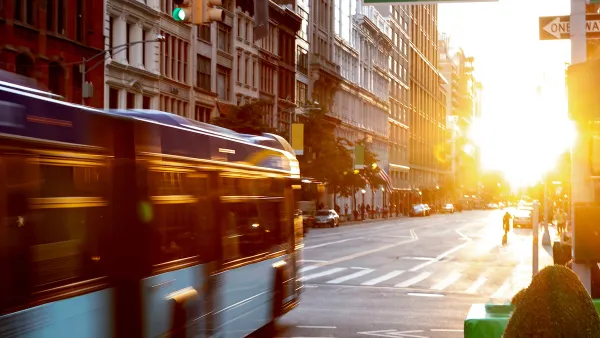
NYC Bus Service Hindered by Congestion
Sharing lanes with car traffic may make it impossible for the MTA to increase service frequency.
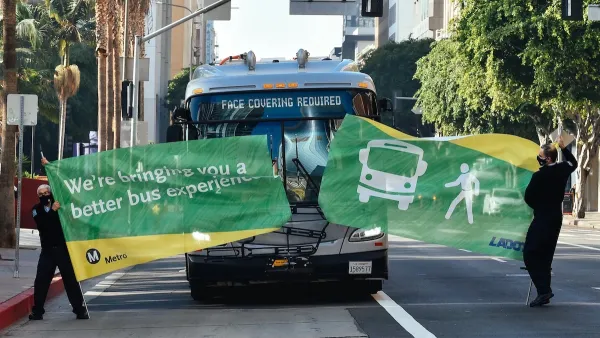
Los Angeles Adding 30 Miles of Bus Lanes in 2023
An ambitious plan to improve L.A. County’s bus network is bearing fruit.
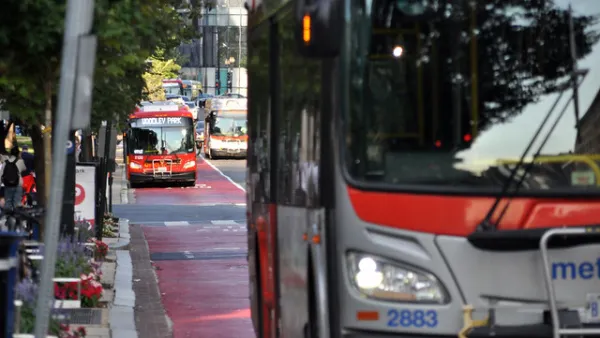
D.C. Bus Priority Plan To Expand Bus Lanes and Improve Service
A new plan from DDOT describes 51 bus priority projects aimed at improving service and making transit accessible to more D.C. commuters and residents.

Planetizen Federal Action Tracker
A weekly monitor of how Trump’s orders and actions are impacting planners and planning in America.

The state-sanctioned urbicide of Austin
People don’t kill cities. Freeways do.

US to reduce Colorado River water deliveries to Mexico
A new Colorado Treaty amendment reduces Mexico’s Colorado River water allocation by 250,000 acre feet.

Mamdani overhauls NYC's Vision Zero plan with 100 new policy goals
The overhaul aims to reduce traffic deaths and make streets safer for pedestrians, cyclists and drivers through lower speed limits, new safety infrastructure and more.

Amtrak not solely to blame for New Jersey commuter rail's unreliability, report finds
A new study from the Garden State Initiative found that NJ Transit’s budget grew 20% across a 4 year period, but reliability declined significantly over the same period.

EPA erases limits on planet-warming pollution from power plants
Under Monday’s plan, power plants would still have some limits on how much mercury, arsenic and other contaminants they can emit.

FREE Course: Walkable City 1: Why Walkability?
After describing his path towards focusing on walkability as the essence of good planning, Jeff Speck marches through his five principal reasons for making more walkable places.
Reinventing Malls: Planning Alchemy—Turning Gray Fields Into Gold
The course focuses on the opportunities and imperatives that shape reinvention of mall sites.

Eagle County Government
Harvard University Graduate School of Design
Nashville Planning Department
The Architects Foundation
University of Cincinnati Online
The Pocatello Development Authority
The Urban Renewal Agency of the City of Pocatello
Journal of the American Planning Association