The Seattle area's $53.8 billion transit expansion plan is moving along in fits and starts.


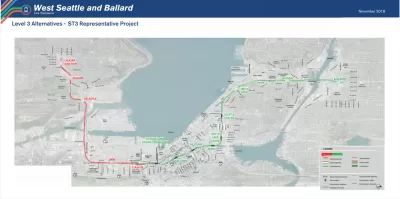
It’s been six years since Seattle-area voters approved a suite of taxes and fees to raise $27.7 billion for transit funding. While the Sound Transit 3 (ST3) plan has made some progress in that time, locals also point to examples of slow, even potentially abandoned plans for transit improvements originally envisioned as part of the region’s transit expansion.
Mike Lindblom updates the plan’s progress for the Seattle Times, examining some of the good (e.g., announcing preferred locations for three stations and a short tunnel in West Seattle for the Ballard Link extension) and the bad (e.g., a hub station planned for the Chinatown International District) when it comes to implementing the vision laid out by ST3.
The source article, below, includes status updates on ST3 plans for West Seattle, Sodo Station, the Chinatown International District, Seattle Center, and Ballard Crossing.
Read the full story: Sound Transit 3: Progress in West Seattle, paralysis in Chinatown International District
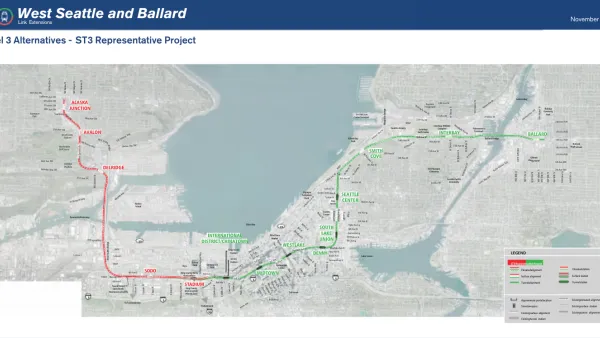
Alternatives Explored for West Seattle and Ballard Light Rail Extensions
Plans to extend the Sound Transit light rail system are moving forward. Elected officials have a big choice to make that will determine the cost and scope of the projects.
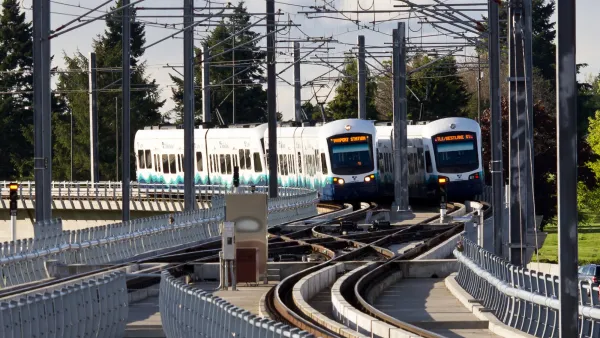
The Northgate Link Extension Is Great, But Voters Want More
A recent survey of Seattle voters finds widespread support for the continued expansion of the Link light rail system in Seattle.
Two Transit Agencies Using Their Clout to Spur Affordable Housing
More transit agencies are recognizing that it's not enough to build transit infrastructure if the people who really need it don't live close enough to use it.

Planetizen Federal Action Tracker
A weekly monitor of how Trump’s orders and actions are impacting planners and planning in America.

Eastern Nebraska is running out of electricity
Data centers and electrification are straining eastern Nebraska’s grid, throttling economic development.

Study reveals best places in the U.S. for cycling, walking
New research from Streetlight Data examines bicycle and pedestrian miles per capita in the 100 largest U.S. cities by population.

As development costs rise, Boston moves to lessen affordable housing requirements
The Boston Zoning Commission and the City Council still need to approve Boston Mayor Michelle Wu’s proposed changes

Washington state to fine drivers with fuel-efficient cars
Revenue from the fine will go towards supporting the state’s highways.

Strained electrical grid forces San Francisco to choose: housing, or data centers?
The city is approaching its maximum grid capacity, leaving leaders with tough choices about what projects to siphon energy toward.

FREE Course: Walkable City 1: Why Walkability?
After describing his path towards focusing on walkability as the essence of good planning, Jeff Speck marches through his five principal reasons for making more walkable places.
Reinventing Malls: Planning Alchemy—Turning Gray Fields Into Gold
The course focuses on the opportunities and imperatives that shape reinvention of mall sites.

City of Charlotte
City of Rosemead
Rutgers University, Edward J. Bloustein School of Planning and Public Policy
University of Michigan School for Environment and Sustainability (SEAS)
Hunter College, City University of New York (CUNY)
The Architects Foundation
City of Cambridge
The Pocatello Development Authority
The Urban Renewal Agency of the City of Pocatello