The city commission voted in favor of a controversial zoning reform package that critics from multiple sides say won’t create more affordable housing for those who need it most.



As Katie Hyson reports for WUFT, the city commission of Gainesville, Florida approved proposed zoning changes that, if passed by a second vote, would replace ‘single-family zoning’ with ‘neighborhood residential’ zoning and allow for greater housing density in an effort to boost the city’s housing supply.
Hyson notes that “The city commission’s Thursday night vote goes against the recommendation of the affordable housing advisory committee – whose members said they were not consulted by the city about the proposal – the opinion of the county commission and substantial public opposition.”
Supporters say the change will help create more desperately needed housing in a city projected to grow by 60,000 people in the next decade, according to Mayor Lauren Poe. But the proposal has faced criticism from some residents for threatening to “create parking issues, strain infrastructure and result in the loss of trees,” and decrease property values and neighborhood stability. Others argue that the changes would “speed up gentrification and displace Black and low-income residents” by encouraging developers to buy the lowest-cost properties first—those traditionally owned and occupied by Black and brown residents. All sides tend to agree that the zoning changes won’t create affordable units for the lowest-income residents.
Read the full story: Gainesville poised to become first Florida city to end exclusionary zoning, despite community outcry

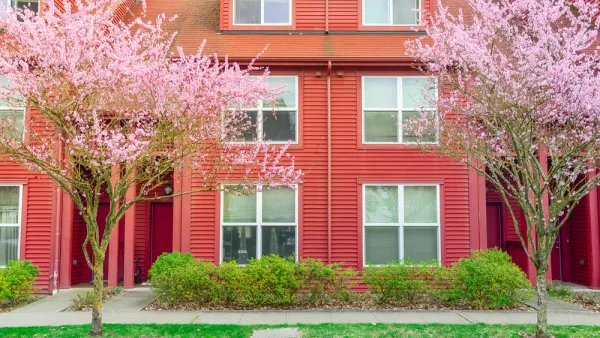
‘Missing Middle Housing’ Bill Passes in Washington Senate
The legislation would permit duplexes and, in some cases, fourplexes in residential areas in most Washington towns.
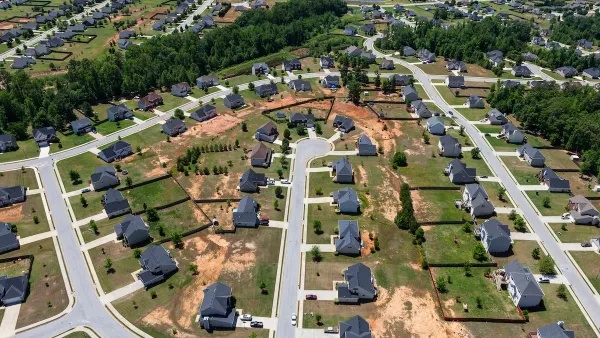
Commentary: Minimum Lot Sizes Drive Up Housing Costs
How making residential building requirements more flexible can ease the housing crisis and make neighborhoods more livable for more households.
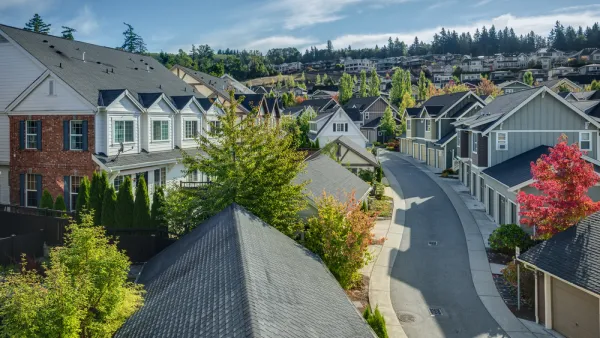
Wealthy Washington Neighborhoods Could Remain Untouched by Zoning Reforms
Neighborhoods with preexisting internal contracts are exempted from new legislation requiring all Washington cities to permit duplexes and other ‘missing middle housing.’

Planetizen Federal Action Tracker
A weekly monitor of how Trump’s orders and actions are impacting planners and planning in America.

The state-sanctioned urbicide of Austin
People don’t kill cities. Freeways do.

US to reduce Colorado River water deliveries to Mexico
A new Colorado Treaty amendment reduces Mexico’s Colorado River water allocation by 250,000 acre feet.

Brightline West’s future may rely on $6 billion federal loan
The company has until Nov. 2 to make a $400 million equity investment into its proposed high-speed rail line.

LA Metro’s ultimatum: no extra buses for LA28 if federal funding isn’t imminently secured
If Metro does not provide additional buses, LA28 organizers will have to find a new way to manage Olympic traffic. LA28’s budget does not include a line item for transit.

Colorado’s Largest Data Center Could Rise Next to Homes — Without a Public Hearing
The proposed campus would consume 11 times the power of Denver International Airport; as it has across the country, opposition mounts.

FREE Course: Walkable City 1: Why Walkability?
After describing his path towards focusing on walkability as the essence of good planning, Jeff Speck marches through his five principal reasons for making more walkable places.
Reinventing Malls: Planning Alchemy—Turning Gray Fields Into Gold
The course focuses on the opportunities and imperatives that shape reinvention of mall sites.


Eagle County Government
Harvard University Graduate School of Design
Nashville Planning Department
The Architects Foundation
University of Cincinnati Online
The Pocatello Development Authority
The Urban Renewal Agency of the City of Pocatello
Journal of the American Planning Association