In the wake of condemnation from environmental groups, the USPS revised its plan to replace its gas-powered fleet of trucks.



After receiving harsh criticism for its original plan to replace its fleet with primarily gas-powered trucks, the United States Postal Service is changing course, reports Gersh Kuntzman in Streetsblog USA. “According to a posting on the USPS website quietly uploaded [on Wednesday], the agency will raise the target percentage of new electric vehicles in the fleet from just 10 percent to 50 percent. And instead of rush purchasing 165,000 new “Next Generation Delivery Vehicles” — 90 percent of them gas-powered — the Postal Service will reduce its order to 50,000.”
The USPS blamed a lack of sufficient funding for its original plan. Environmentalists praise the changes, but argue that the agency needs to do more to reduce emissions. Kuntzman also notes that “The announcement by the Postal Service still ignores the potential of electric cargo bicycle and tricycle delivery, which studies show can slash emissions by roughly one-third compared to electric cargo vans, particularly in dense cities where mail routes are short.”
Read the full story: Return to Sender: Postal Service Backtracks on Gas-Powered Truck Purchase


USPS Says It Needs More Money To Electrify Fleet
The agency claims the federal government isn't providing enough funding to switch more of its delivery trucks to electric vehicles.

USPS Electrification Project Far Behind Schedule
The manufacturer of the electric mail trucks ordered by the Postal Service is plagued by problems that are slowing production to around one truck per day.
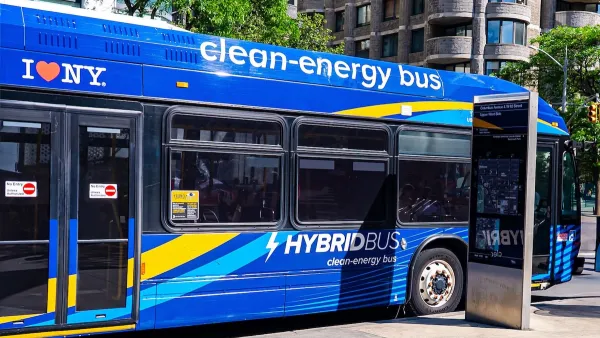
FTA Allows Changes to Low or No Emission Grant Proposals
Grant recipients can change their proposals from zero-emission to low-emission projects, a move the FTA says will offer more flexibility to cities and transit providers.

Planetizen Federal Action Tracker
A weekly monitor of how Trump’s orders and actions are impacting planners and planning in America.

Colorado’s Largest Data Center Could Rise Next to Homes — Without a Public Hearing
The proposed campus would consume 11 times the power of Denver International Airport; as it has across the country, opposition mounts.

US to reduce Colorado River water deliveries to Mexico
A new Colorado Treaty amendment reduces Mexico’s Colorado River water allocation by 250,000 acre feet.

'This is going to be painful:’ Virginia stares down $1.7 billion funding gap for highway maintenance
The state may address the deficit by shifting $290 million from its construction budget to maintenance projects.

Judges permit Denver to divert 77,000 acre feet from the Colorado River for reservoir expansion
Overuse and climate change have caused the Colorado River’s water levels to plummet.

Amtrak, CN end decades-long dispute with eight-year agreement
The new operating agreement establishes an updated framework for the companies to work together, including processes to resolve disputes.

FREE Course: Walkable City 1: Why Walkability?
After describing his path towards focusing on walkability as the essence of good planning, Jeff Speck marches through his five principal reasons for making more walkable places.
Reinventing Malls: Planning Alchemy—Turning Gray Fields Into Gold
The course focuses on the opportunities and imperatives that shape reinvention of mall sites.

KFH Group Inc.
Greater Baltimore Committee
Eagle County Government
The Architects Foundation
University of Cincinnati Online
The Pocatello Development Authority
The Urban Renewal Agency of the City of Pocatello