The United States is making modest gains in the power and transportation sectors, but emissions in the industrial sector are holding steady, absent new reduction initiatives.


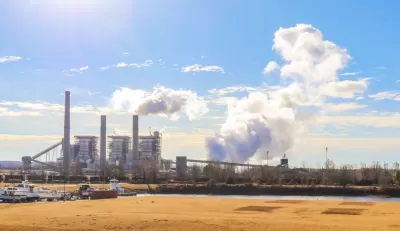
An annual report from Rhodium Group that analyzes trends in greenhouse gas emissions in the United States finds that “the US is on track to reduce emissions 24% to 35% below 2005 levels by 2030, absent any additional policy action,” far below the Paris Agreement goal of reducing GHG emissions by 50 to 52 percent. The report notes that “These estimates represent a rosier outlook for emissions reductions compared to Taking Stock 2021 (which estimated a 17-30% reduction by 2030 under current policy), but this change is largely attributable to slower macroeconomic growth projections and higher fossil fuel prices—not large policy changes.”
According to the report, “Industry becomes the largest-emitting sector absent meaningful policies to curtail emissions growth, with emissions remaining relatively flat depending on the scenario,” while the power sector continues to reduce emissions as more Americans turn to renewable energy and the transportation sector cuts some emissions thanks to electric vehicle adoption. “There has been some policy movement in the past year, although not close to the level of action required to meet the US’s 2030 climate target, and the recent Supreme Court ruling in West Virginia v. EPA has called EPA’s regulatory pathways into question.”
FULL STORY: Taking Stock 2022: US Greenhouse Gas Emissions Outlook in an Uncertain World


Study: Cutting U.S. Emissions by 50 Percent This Decade Is Possible
With coordinated effort at the local, state, and federal levels, the United States could meet its goal of cutting greenhouse gas emissions in half by 2030.

Driving Equity and Clean Air: California Invests in Greener School Transportation
California has awarded $500 million to fund 1,000 zero-emission school buses and chargers for educational agencies as part of its effort to reduce pollution, improve student health, and accelerate the transition to clean transportation.
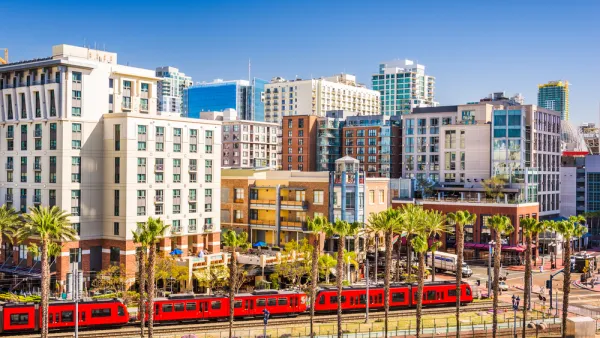
America’s 10 ‘Greenest’ Cities
A new analysis ranks cities based on their environmental quality, energy consumption and production, transportation, density, and other factors.

Planetizen Federal Action Tracker
A weekly monitor of how Trump’s orders and actions are impacting planners and planning in America.

The state-sanctioned urbicide of Austin
People don’t kill cities. Freeways do.

US to reduce Colorado River water deliveries to Mexico
A new Colorado Treaty amendment reduces Mexico’s Colorado River water allocation by 250,000 acre feet.

5 New England states march closer to 800 megawatt wind energy project
Securing federal approval for the project may be complicated under the Trump administration, which has historically been hostile towards domestic wind power.

Baltimore to break ground on $50 million Transit Priority Project
The project will bring faster bus trips, safer streets and better bike connections to Baltimore.

Airbnb launches $250 million 'last-dollar financing' housing accelerator, makes first investment in Austin
The company will put $6.4 million towards affordable housing development in Texas’ capital.

FREE Course: Walkable City 1: Why Walkability?
After describing his path towards focusing on walkability as the essence of good planning, Jeff Speck marches through his five principal reasons for making more walkable places.
Reinventing Malls: Planning Alchemy—Turning Gray Fields Into Gold
The course focuses on the opportunities and imperatives that shape reinvention of mall sites.

Eagle County Government
Harvard University Graduate School of Design
Nashville Planning Department
The Architects Foundation
University of Cincinnati Online
The Pocatello Development Authority
The Urban Renewal Agency of the City of Pocatello
Journal of the American Planning Association