If approved, an ordinance under consideration in Louisville would commit to eventually eliminate traffic fatalities…20 years in the future.


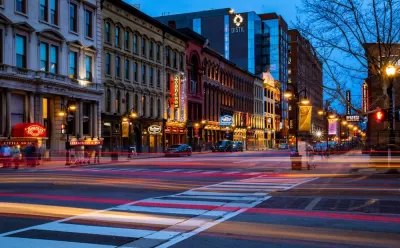
“Louisville Metro Council is debating a proposed ordinance that would commit the city to a goal of eliminating roadway deaths by 2050, an initiative known as Vision Zero,” reports Roberto Roldan for WFPL. “More than 900 people have died from crashes on non-interstate roadways in Louisville since 2014, according to city data, including 185 pedestrians.”
The ordinance would “require city agencies like Public Works and Louisville Metro Police to create an action plan for reducing fatal collisions and provide Metro Council with an annual update,” according to Roldan.
The ordinance has encountered resistance on the Metro Council from elected officials concerned about street reconfigurations might hurt business.
There is also little in the way of evidence that Vision Zero programs in other parts of the country (e.g., Seattle, Portland, New York City, the entire country) have done anything to reduce traffic collisions outside of a few rare examples (e.g., Fremont and Hoboken).
Read the full story: Ordinance would make ending traffic deaths the primary focus of road design in Louisville
D.C. Revamps its Vision Zero Plan to Eliminate Traffic Fatalities
Washington, D.C. was an early adopter of Vision Zero in the United States, but eventually it became emblematic of the country's lack of progress in reducing traffic collisions.

Cleveland Ready for Vision Zero
Cleveland is working to become the latest U.S. city to set a goal to eliminate traffic fatalities.
New York City Traffic Fatalities Pass 2019 Totals
The visions of a car-free utopia that might have seemed like a potential silver lining in March and April have given away to a tragic reality.

Planetizen Federal Action Tracker
A weekly monitor of how Trump’s orders and actions are impacting planners and planning in America.

Eastern Nebraska is running out of electricity
Data centers and electrification are straining eastern Nebraska’s grid, throttling economic development.

Study reveals best places in the U.S. for cycling, walking
New research from Streetlight Data examines bicycle and pedestrian miles per capita in the 100 largest U.S. cities by population.

Illinois considers spending $1 billion in taxpayer money on data center
A quantum computing campus and data center are currently under construction in Chicago.

As development costs rise, Boston moves to lessen affordable housing requirements
The Boston Zoning Commission and the City Council still need to approve Boston Mayor Michelle Wu’s proposed changes

Washington state charge fee to drivers with fuel-efficient cars
Revenue from the fee will go towards supporting the state’s highways.

FREE Course: Walkable City 1: Why Walkability?
After describing his path towards focusing on walkability as the essence of good planning, Jeff Speck marches through his five principal reasons for making more walkable places.
Reinventing Malls: Planning Alchemy—Turning Gray Fields Into Gold
The course focuses on the opportunities and imperatives that shape reinvention of mall sites.

City of Charlotte
City of Rosemead
Rutgers University, Edward J. Bloustein School of Planning and Public Policy
University of Michigan School for Environment and Sustainability (SEAS)
Hunter College, City University of New York (CUNY)
The Architects Foundation
City of Cambridge
The Pocatello Development Authority
The Urban Renewal Agency of the City of Pocatello