A multi-agency effort will assess options for ‘reimagining’ the notorious Cross Bronx Expressway and improving public health and quality of life along the corridor.


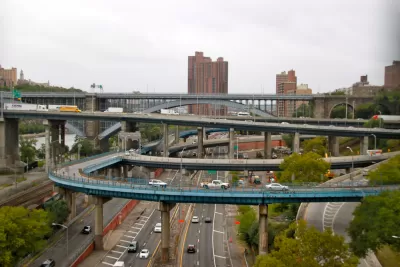
New York City’s “hated” Cross Bronx Expressway moves 200,000 vehicles per day through the borough, damaging the air quality in surrounding neighborhoods, writes Dave Colon in Streetsblog NYC. “The COVID-19 pandemic made the situation even more urgent, since the air pollution from traffic on the highway had already inflicted massive respiratory damage to residents of neighborhoods surrounding the highway, and those residents were then much more likely to have died of coronavirus as the pandemic raged through the city.”
Now, Colon writes, “The city Department of Transportation has announced a big-time multi-agency effort to ‘re-imagine’ the Cross Bronx Expressway, with the help of the state Department of Transportation, the city Planning Department and (wait for it) the city Department of Health and Mental Hygiene.”
While Colon expresses little confidence that the freeway could be eliminated altogether, a freeway cap and park is one possible alternative that could be funded through federal infrastructure funds aimed at repairing the damage caused by freeway construction. “Although the engagement and outreach on the study won’t begin until later this year, the city’s listed goals of creating new public open space and improving the quality of life along the highway corridor suggest that some form of capping the highway could be on the table.”
Read the full story: DOT Announces Multi-Agency Study to ‘Reimagine’ the Cross Bronx Expressway
More Details of the $1.2 Trillion Federal Infrastructure Bill
There's plenty of room for analysis and discussion in a $1.2 trillion bill, so Planetizen's coverage of the historic bill continues.
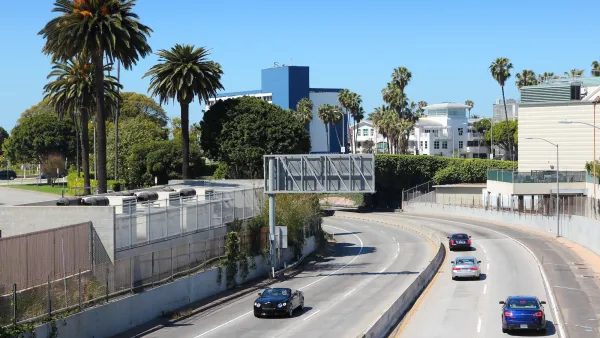
Santa Monica gets $2M grant to study I-10 freeway cap
City officials want to explore capping or even removing a portion of the freeway in the Pico neighborhood.
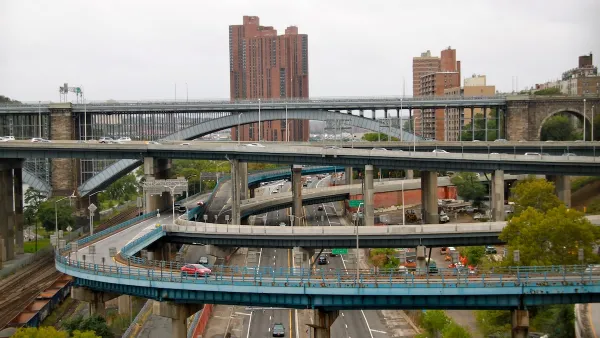
New York Scraps Cross Bronx Highway Expansion
In the wake of community opposition, the state DOT says it no longer plans to add a “traffic diversion” that would have added an elevated roadway next to the CBX.

Planetizen Federal Action Tracker
A weekly monitor of how Trump’s orders and actions are impacting planners and planning in America.

California plans to bury El Niño’s downpour
If the state plays its cards right, it may be able to store a billion acre-feet of El Niño’s water in aquifers.

Desperate measures: Advocates weigh draining Lake Powell to fill Colorado River
Draining the reservoir could reduce evaporation losses by a couple hundred thousand acre-feet.

Los Angeles just elected an urban planner as its mayor
Transportation analysts are optimistic that Raman will be more aggressive in addressing transit issues than Bass.

Mamdani’s pied-à-terre tax survives legal challenge
A panel of judges found that the plaintiffs failed to demonstrate injury as a result of New York City's implementation of the tax.

Eastern Nebraska is running out of electricity
Data centers and electrification are straining eastern Nebraska’s grid, throttling economic development.

FREE Course: Walkable City 1: Why Walkability?
After describing his path towards focusing on walkability as the essence of good planning, Jeff Speck marches through his five principal reasons for making more walkable places.
Reinventing Malls: Planning Alchemy—Turning Gray Fields Into Gold
The course focuses on the opportunities and imperatives that shape reinvention of mall sites.

City of Rosemead
Rutgers University, Edward J. Bloustein School of Planning and Public Policy
One Hundred Miles
University of Michigan School for Environment and Sustainability (SEAS)
Hunter College, City University of New York (CUNY)
The Architects Foundation
City of Cambridge
Montrose County
The Pocatello Development Authority