A new urban design plan calls for a robust buffer zone to protect the town from fast-spreading fires, among other mitigation measures.


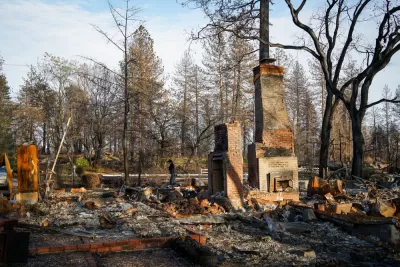
Town leaders in Paradise, the California town devastated by wildfire almost four years ago, worked with a landscape architecture, planning, and urban design firm to outline plans for a 90,000-acre “buffer zone” that could protect the town from future fires. Adele Peters describes the plan, writing, “Homeowners in wildfire zones already know that their houses are safer when surrounded by few things that can burn; SWA’s design applies the same idea to a city.”
According to Peters, “The design proposes surrounding the town with new parks, athletic fields, orchards, and other amenities that are less likely to burn than forests, in a design that carefully considers data about current land uses, ownership, and fire risk.” The plan also calls for clearing vegetation along power transmission corridors and using controlled burns to thin out flammable materials.
“While it remains to be seen how much of the design Paradise will adopt, the Parks and Recreation Department has already started acquiring new land as a buffer zone around the town, and is considering the full design.” With a quarter of the state’s population living in fire-prone areas, the plan could serve as a model for other California communities on the increasingly vulnerable wildland-urban interface.
FULL STORY: A smarter urban design concept for a town decimated by wildfires

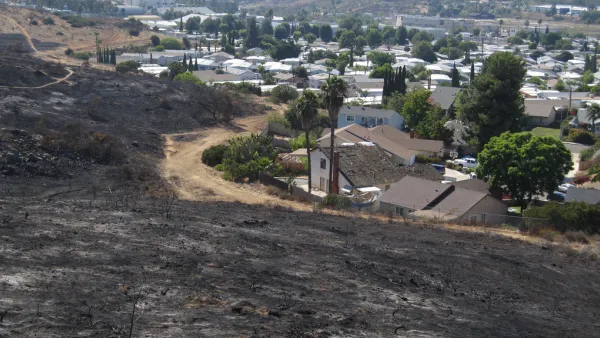
A New Approach to Wildfire Resilience: Property Buy Backs, Fire Resistant Parks
The city of Paradise is employing a natural hazard mitigation strategy long practiced in flood zones. The idea could be expanded in other places where wildland meets human development.
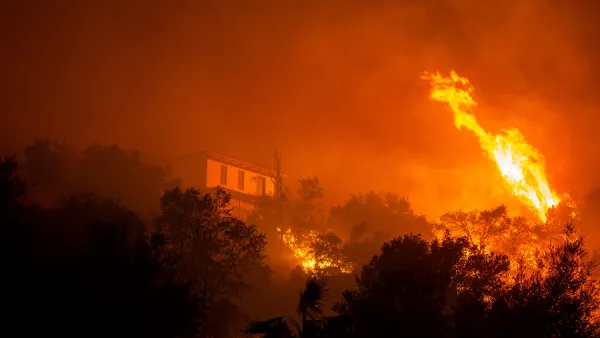
Wildfires are coming for America’s suburbs
Buying land in between paved cities and forests has become increasingly popular, but those same areas are naturally fire prone.
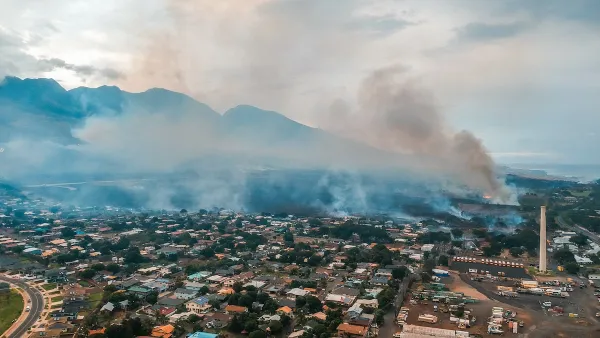
Maui's Deadly Firestorm: Investigating the Tragedy and Lessons for the Future
FRONTLINE's Maui’s Deadly Firestorm investigates the 2023 Lahaina wildfire, uncovering critical failures in preparedness and response while examining the tragedy’s causes, impact, and lessons for future disaster prevention.

Planetizen Federal Action Tracker
A weekly monitor of how Trump’s orders and actions are impacting planners and planning in America.

The state-sanctioned urbicide of Austin
People don’t kill cities. Freeways do.

US to reduce Colorado River water deliveries to Mexico
A new Colorado Treaty amendment reduces Mexico’s Colorado River water allocation by 250,000 acre feet.

Mamdani overhauls NYC's Vision Zero plan with 100 new policy goals
The overhaul aims to reduce traffic deaths and make streets safer for pedestrians, cyclists and drivers through lower speed limits, new safety infrastructure and more.

Amtrak not solely to blame for New Jersey commuter rail's unreliability, report finds
A new study from the Garden State Initiative found that NJ Transit’s budget grew 20% across a 4 year period, but reliability declined significantly over the same period.

EPA erases limits on planet-warming pollution from power plants
Under Monday’s plan, power plants would still have some limits on how much mercury, arsenic and other contaminants they can emit.

FREE Course: Walkable City 1: Why Walkability?
After describing his path towards focusing on walkability as the essence of good planning, Jeff Speck marches through his five principal reasons for making more walkable places.
Reinventing Malls: Planning Alchemy—Turning Gray Fields Into Gold
The course focuses on the opportunities and imperatives that shape reinvention of mall sites.

Eagle County Government
Harvard University Graduate School of Design
Nashville Planning Department
The Architects Foundation
University of Cincinnati Online
The Pocatello Development Authority
The Urban Renewal Agency of the City of Pocatello
Journal of the American Planning Association