Unlike the no-fault eviction protections being considered in other states and cities, San Diego's new eviction moratorium is timed to coincide with the ongoing economic and public health emergency presented by the Covid-19 pandemic.


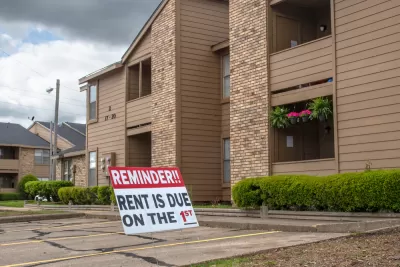
"The San Diego City Council voted 5-to-1 to back a so-called no-fault eviction moratorium" earlier this week, according to an article by Voice of San Diego. A second council vote will be required to approve the moratorium.
According to the article, the moratorium "will keep landlords in the city from forcing out a tenant to take the property off the market or making significant upgrades that haven’t been ordered by a government entity or agreed upon by the tenant."
The city's moratorium coincides with a decision by California to extend its statewide eviction moratorium through June 30. "That moratorium only applies to tenants who did not pay rent due to COVID-related challenges and applied for rental assistance by March 31," according to the article.
Backers of the San Diego moratorium, led by City Council President Sean Elo-Rivera, are hoping the new protections prevent vulnerable renters from being forced into homelessness.
As shared by Planetizen in February 2022, no fault or just cause eviction ordinances are gaining popularity around the country, as evidenced by a recently proposed law in the state of Maryland. The state of New York is also considering a "good cause" eviction law with the same goals, and a recent study documented the effect of just cause eviction laws in four California cities.
Read the full story: Morning Report: Council Passes No-Fault Eviction Moratorium
Concerns Mount as Pandemic Eviction Protections Expire
With eviction protections in Virginia set to expire at the end of June, advocates warn that an “eviction tsunami” could still sweep up the state’s renters.
Eviction Moratorium Renewed for State of New York
The New York State Legislature convened for a special session between holidays to implement new protections in the housing market.
The 'Eviction Tsunami' and Other Pandemic Projections
The ups and downs of the pandemic have been extremely hard to predict, so the consequences of the pandemic have been just as unforeseeable—despite the efforts of a nation of armchair prognosticators.

Planetizen Federal Action Tracker
A weekly monitor of how Trump’s orders and actions are impacting planners and planning in America.

California plans to bury El Niño’s downpour
If the state plays its cards right, it may be able to store a billion acre-feet of El Niño’s water in aquifers.

Desperate measures: Advocates weigh draining Lake Powell to fill Colorado River
Draining the reservoir could reduce evaporation losses by a couple hundred thousand acre-feet.

US buildings threatened, destroyed by fires set to triple by 2060
Researchers found a high fire risk for socioeconomically vulnerable neighborhoods in the American West.

LA residents may be allowed to paint their own crosswalks
Councilwoman Katy Yaroslavsky put out a motion instructing the Los Angeles Department of Public Transportation to study the feasibility of allowing volunteers to paint crosswalks.

Dallas moves to overhaul its zoning code
The city's zoning reform will allow more multi-family and mixed-use developments.

FREE Course: Walkable City 1: Why Walkability?
After describing his path towards focusing on walkability as the essence of good planning, Jeff Speck marches through his five principal reasons for making more walkable places.
Reinventing Malls: Planning Alchemy—Turning Gray Fields Into Gold
The course focuses on the opportunities and imperatives that shape reinvention of mall sites.

City of Rosemead
Rutgers University, Edward J. Bloustein School of Planning and Public Policy
One Hundred Miles
Hunter College, City University of New York (CUNY)
The Architects Foundation
University of Cincinnati Online
City of Cambridge
Montrose County
The Pocatello Development Authority