The story of East Palo Alto’s incorporation is one marked by great contention among local stakeholders, but also provides valuable lessons for organizers in forging and mobilizing local coalitions.


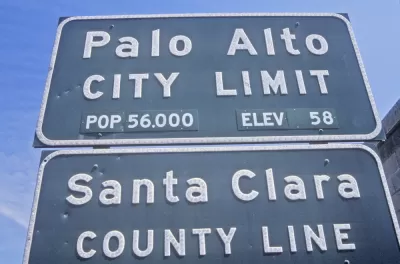
When East Palo Alto incorporated in 1983, it gained a place among the early cities that were predominantly home to people of color in California and, alongside Richmond, was one of only two with a Black majority. Within a year after incorporation, East Palo Alto joined Berkeley, Santa Monica, and Hayward in an early wave of California cities to pass comprehensive rent stabilization ordinances.
East Palo Alto’s incorporation thus stood at the intersection of two major social movements: the struggles for Black liberation and for economic justice. The channeling of these movements through electoral politics and legal reform required construction of multiracial and cross-class coalitions that rested upon distinct, yet compatible, sets of interests and identities. The story of East Palo Alto’s founding remains relevant today for the lessons it offers about building complex political coalitions that can successfully pursue progressive change in the face of unreceptive institutions and entrenched opposition. These lessons have gained renewed currency during a time when the forces of progress and retrenchment have each intensified and when both tenant rights and racial justice movements are on the rise.
And while rent control was not initially a major focal point of the incorporation campaign, it came to play a central role due to the housing crisis of the early 1980s and also because of its potential for reshaping electoral coalitions at the margin in favor of incorporation amid a tightly contested political landscape.
Communities lacking access to power within the broader society have long gravitated to East Palo Alto. In 1916, Charles Weeks founded Runnymeade Little Farms Colony, a utopian agrarian community that primarily raised poultry. The colony peaked at 1,000 members in the 1920s before ultimately failing. During the 1930s, Japanese and Italian immigrants launched successful flower-growing operations. The substantial Japanese population of East Palo Alto was removed and placed in internment camps during World War II.
East Palo Alto: Historical Background
After the war, East Palo Alto grew rapidly from a population of 1,500 in 1947 to 12,000 in 1953. The newcomers were mostly white and working class. Over the next few years, East Palo Alto lost significant chunks of its area and population to land annexations by Menlo Park and Palo Alto.
A more devastating blow came in ...
FULL STORY: How Rent Control Helped Create East Palo Alto

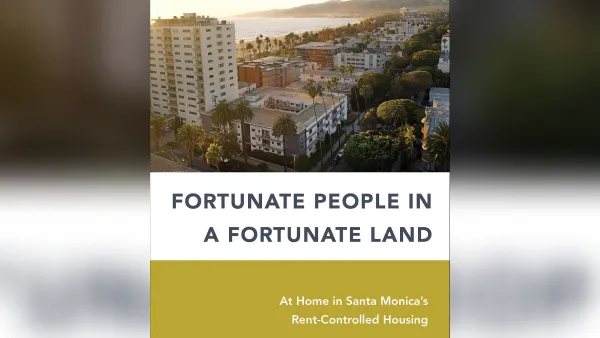
A masterful, human-centered defense of rent control
Book Review: "Fortunate People in a Fortunate Land" offers a human look at how rent control is more than just numbers and data in a spreadsheet.

NYC landlords sue Mamdani administration over rent freeze
The suit charges the administration with unfairly promoting the rent freeze and accuses the city's Rent Guidelines Board of yielding to pressure from the mayor.
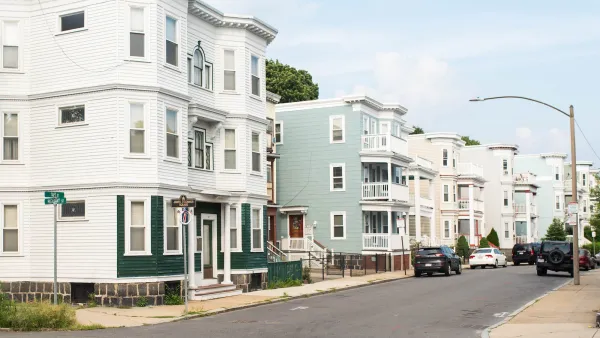
32 years after it was banned, could Massachusetts get rent control back?
In Massachusetts, the collection of more than 124,000 signatures makes it likely that a statewide rent control measure will be on the ballot in November.

Planetizen Federal Action Tracker
A weekly monitor of how Trump’s orders and actions are impacting planners and planning in America.

The state-sanctioned urbicide of Austin
People don’t kill cities. Freeways do.

US to reduce Colorado River water deliveries to Mexico
A new Colorado Treaty amendment reduces Mexico’s Colorado River water allocation by 250,000 acre feet.

5 New England states march closer to 800 megawatt wind energy project
Securing federal approval for the project may be complicated under the Trump administration, which has historically been hostile towards domestic wind power.

Baltimore to break ground on $50 million Transit Priority Project
The project will bring faster bus trips, safer streets and better bike connections to Baltimore.

Airbnb launches $250 million 'last-dollar financing' housing accelerator, makes first investment in Austin
The company will put $6.4 million towards affordable housing development in Texas’ capital.

FREE Course: Walkable City 1: Why Walkability?
After describing his path towards focusing on walkability as the essence of good planning, Jeff Speck marches through his five principal reasons for making more walkable places.
Reinventing Malls: Planning Alchemy—Turning Gray Fields Into Gold
The course focuses on the opportunities and imperatives that shape reinvention of mall sites.

Eagle County Government
Harvard University Graduate School of Design
Nashville Planning Department
The Architects Foundation
University of Cincinnati Online
The Pocatello Development Authority
The Urban Renewal Agency of the City of Pocatello
Journal of the American Planning Association