Book Review: "Fortunate People in a Fortunate Land" offers a human look at how rent control is more than just numbers and data in a spreadsheet.



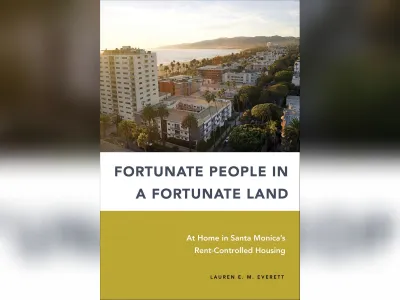
This review is part of a special collaboration between Planetizen and Booked on Planning, a biweekly podcast where AICP planner Stephanie Rouse and Jennifer Hiatt chat with authors of the latest books shaping urban planning today. Listen to the episode with today’s author in the player below.
Lauren E.M. Everett’s "Fortunate People in a Fortunate Land: At Home in Santa Monica’s Rent Controlled Housing" is exactly the book the housing policy debate has been missing. National conversations have focused heavily on solving the housing crisis by reducing regulations and building more housing, but have yet to consider ways to support existing housing affordability. While economists love to argue about rent control using dry numbers and abstract graphs, Everett takes a new approach. By shifting the focus away from spreadsheet data and focusing on the lived experiences of the tenants themselves, Everett delivers a groundbreaking, empathetic work that redefines how we talk about housing policy in America. It shifts the concept of housing from a commodity to its intended use — shelter.
Centering her research in Santa Monica, California — a city in which she was born and raised but no longer lives — Everett conducts deep, poignant interviews with low- and middle- income residents navigating private market, rent-controlled housing. What emerges from listening to these stories is a profound exploration of the emotional, psychological and social considerations of "home." Everett brilliantly illustrates that rent control is not just a financial mechanism; it is an anchor for psychological stability, deeply-rooted community ties and a true sense of belonging in one’s community. As more communities adopt these approaches, the positive impact becomes self-evident, creating a ripple effect that enhances the quality of life for all residents.
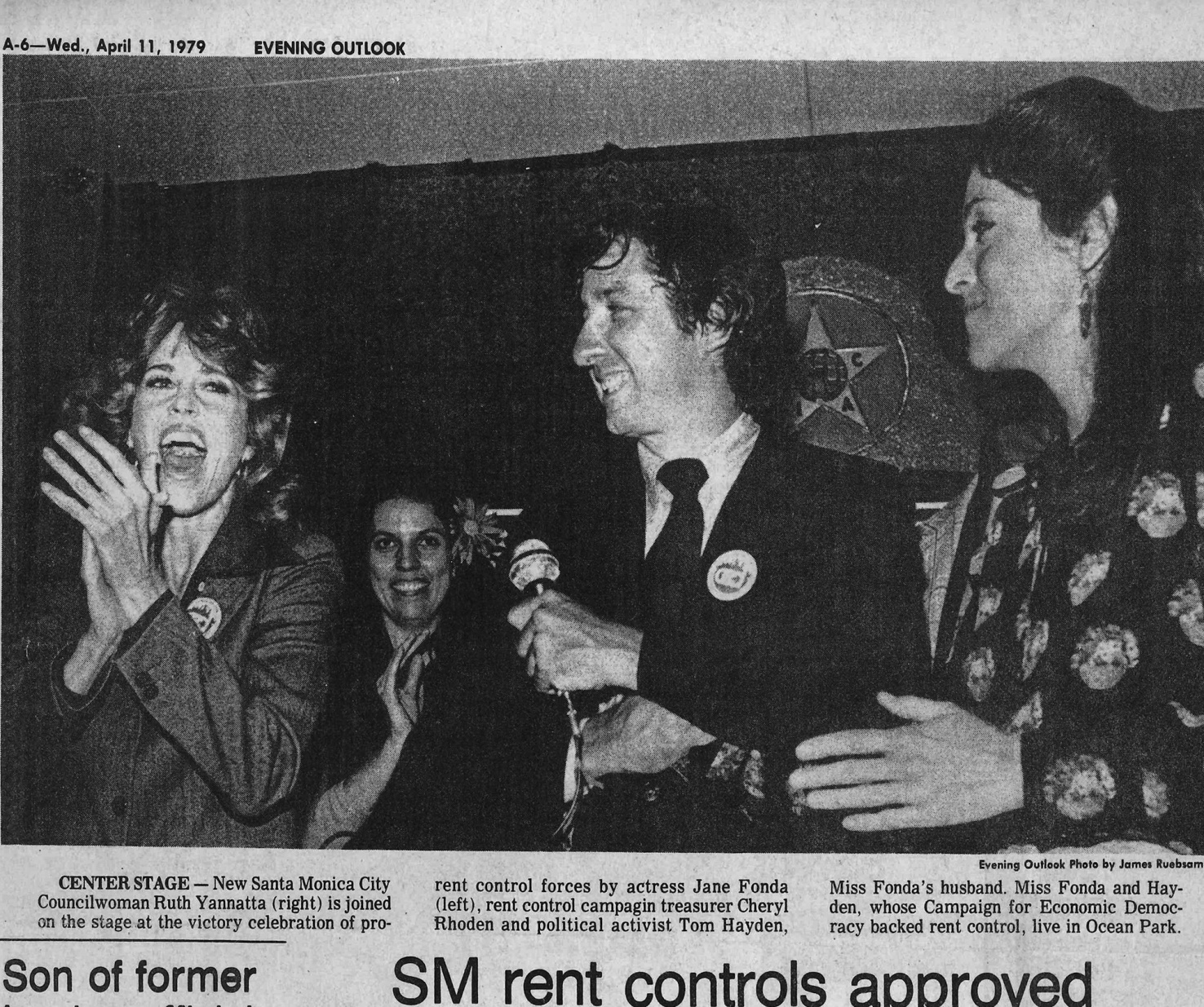
The book’s greatest strength is its ability to ground heavy, systemic policy choices in daily human realities. Everett challenges the conventional economic critiques of rent control by proving that standard models routinely leave out the unquantifiable value of residential stability. Rent control policies can be implemented at no cost. By setting landlord registration fees appropriately, these fees can be shared with tenants, making it a mutually beneficial arrangement for both landlords and tenants. This approach not only provides an immediate mechanism to stabilize housing but ensures fairness and sustainability.
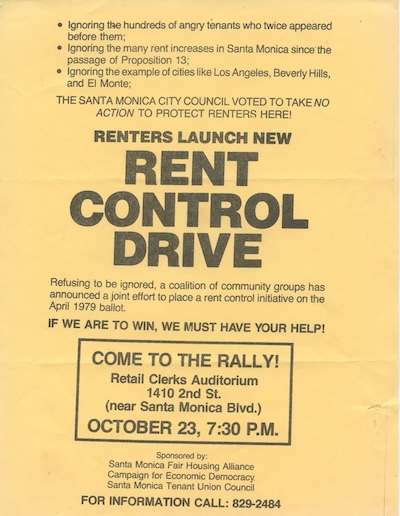
Everett’s proposal presents a compelling case for rethinking how we approach renter stability. By focusing on practical, cost-neutral solutions, we can collectively work towards ensuring that everyone has access to secure housing without additional financial burdens. If you care about renter’s rights, community preservation or the future of our cities, you need to read this book to understand what it truly takes to make our cities livable for everyone.

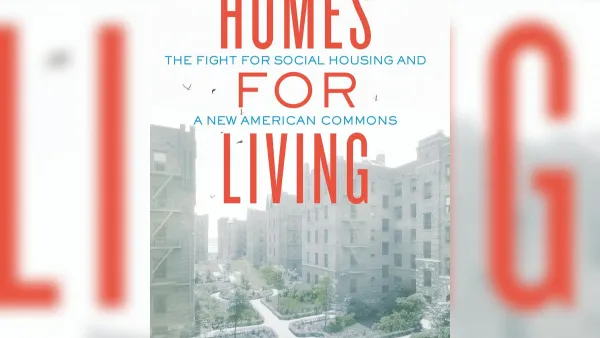
Book review: Co-ops, commons and the conundrum of cashing in on the American dream
Jonathan Tarleton’s "Homes for Living: The Fight for Social Housing and a New American Commons" shows what happens when a loophole in housing legislation opens the door to the privatization of a common good — and when an affordable home suddenly becomes a commodity.
The "vicious cycle of real estate mania" — and how we might find our way home
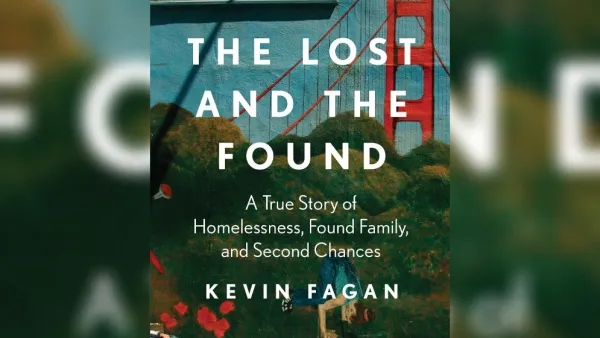
Book review: In "The Lost and the Found: A True Story of Homelessness, Found Family, and Second Chances," Kevin Fagan humanizes the housing crisis like never before.

NYC landlords sue Mamdani administration over rent freeze
The suit charges the administration with unfairly promoting the rent freeze and accuses the city's Rent Guidelines Board of yielding to pressure from the mayor.

Planetizen Federal Action Tracker
A weekly monitor of how Trump’s orders and actions are impacting planners and planning in America.

The state-sanctioned urbicide of Austin
People don’t kill cities. Freeways do.

Colorado’s Largest Data Center Could Rise Next to Homes — Without a Public Hearing
The proposed campus would consume 11 times the power of Denver International Airport; as it has across the country, opposition mounts.

Judges permit Denver to divert 77,000 acre feet from the Colorado River for reservoir expansion
Overuse and climate change have caused the Colorado River’s water levels to plummet.

Amtrak, CN end decades-long dispute with eight-year agreement
The new operating agreement establishes an updated framework for the companies to work together, including processes to resolve disputes.

Raised interest rates may kill financially vulnerable construction projects
The chief economist at ConstructConnect warns that if construction project owners are negatively impacted by the raised rates, it could result in delayed payments to contractors.

FREE Course: Walkable City 1: Why Walkability?
After describing his path towards focusing on walkability as the essence of good planning, Jeff Speck marches through his five principal reasons for making more walkable places.
Reinventing Malls: Planning Alchemy—Turning Gray Fields Into Gold
The course focuses on the opportunities and imperatives that shape reinvention of mall sites.

KFH Group Inc.
Greater Baltimore Committee
Eagle County Government
The Architects Foundation
University of Cincinnati Online
The Pocatello Development Authority
The Urban Renewal Agency of the City of Pocatello

