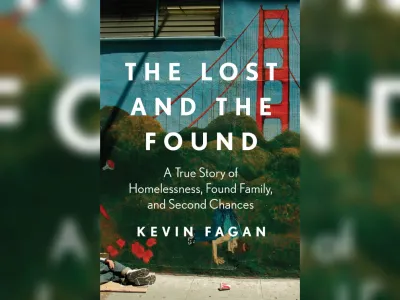
Book review: In "The Lost and the Found: A True Story of Homelessness, Found Family, and Second Chances," Kevin Fagan humanizes the housing crisis like never before.



This review is part of a special collaboration between Planetizen and Booked on Planning, a biweekly podcast where AICP planner Stephanie Rouse and Jennifer Hiatt chat with authors of the latest books shaping urban planning today. Listen to the episode with today’s author in the player below.
Behind the overwhelming statistics, policy debates, and political gridlock surrounding the American housing crisis lie millions of distinctly human stories. In "The Lost and the Found: A True Story of Homelessness, Found Family, and Second Chances," veteran San Francisco Chronicle journalist Kevin Fagan delivers a powerful, deeply reported narrative that balances raw, human-centered storytelling with a sharp critique of urban housing policies.
At the center of this narrative are the harrowing but resilient journeys of two homeless individuals, Rita and Tyson. Fagan traces their lives with remarkable intimacy, mapping out the divergent paths that led them to the margins of San Francisco, and the beautiful, unlikely "found families" they forged to survive there. Through Fagan's eyes, we see how the simple act of listening — recognizing someone's name, remembering their story and validating their pain — can be a radical act of restoration. He captures the complex psychology of survival on the streets, showing how institutional bureaucracy often strips people of their agency and how vital personal relationships are to reclaiming a sense of self-worth.
Fagan uses their experiences as a lens to examine the structural failures of the American housing market and the evolution of municipal policy responses. He connects the immediate crisis on San Francisco's streets to broader macroeconomic trends, expertly tracing a "vicious cycle of real estate mania," charting how skyrocketing housing prices in major metros trigger a domino effect. Fagan illustrates that homelessness is not merely an individual failure, but a direct consequence of a housing market that treats shelter strictly as a speculative financial asset rather than a basic human need.
One of the book's strongest contributions to planning literature is its exploration of permanent supportive housing as a foundational piece of civic infrastructure. Fagan avoids treating housing merely as a commodity or a temporary roof; instead, he frames it through the lens of comprehensive urban design and how supportive housing should be integrated throughout a community. Fagan highlights historic successes, such as the conversion of single-room occupancy (SRO) residential hotels, to show how the physical layout of housing matters. Fagan's story demonstrates that successful stabilization requires a physical architecture that integrates private living space with centralized, on-site healthcare, casework and community spaces.
For anyone looking to understand the intersection of housing affordability, systemic policy gaps, and human dignity, Fagan’s book is an eye-opening read that charts a clear, empathic path forward for civic leaders and activists alike. For planners committed to building equitable, inclusive and walkable communities, Fagan’s book offers an urgent reminder of the stakes involved and serves as an inspiring call to design cities where everyone has a place to belong.

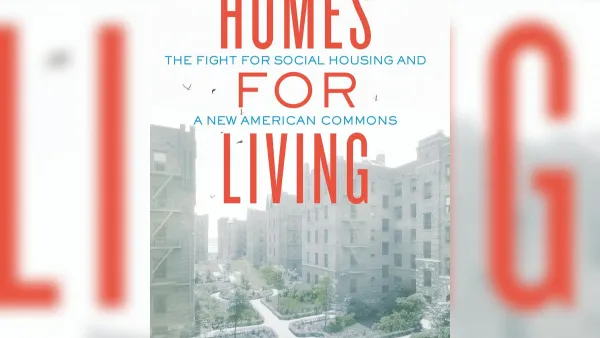
Book review: Co-ops, commons and the conundrum of cashing in on the American dream
Jonathan Tarleton’s "Homes for Living: The Fight for Social Housing and a New American Commons" shows what happens when a loophole in housing legislation opens the door to the privatization of a common good — and when an affordable home suddenly becomes a commodity.
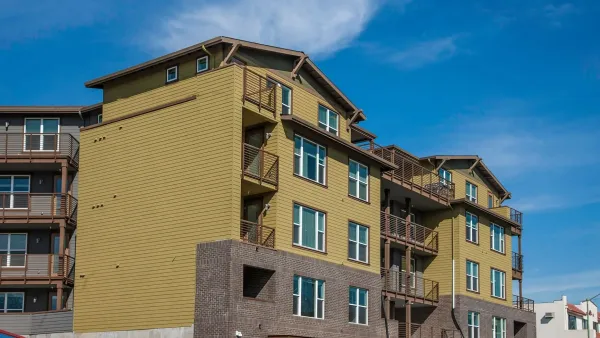
Oakland opens first affordable housing for teachers
The school district says 70% of its teachers can't afford to live in Oakland.

Oklahoma has Over 200,000 Vacant Homes. None are Affordable to Low-income Families.
The state faces a shortage of over 80,000 rental units for extremely low-income households while hundreds of thousands of vacant units face financial or legal barriers to restoration.

The state-sanctioned urbicide of Austin
People don’t kill cities. Freeways do.

US to reduce Colorado River water deliveries to Mexico
A new Colorado Treaty amendment reduces Mexico’s Colorado River water allocation by 250,000 acre feet.

New Jersey’s second-largest city bans standalone data centers
Jersey City will continue to allow co-location facilities, such as those meant for research institutions that store their own data.

Amtrak not solely to blame for New Jersey commuter rail's unreliability, report finds
A new study from the Garden State Initiative found that NJ Transit’s budget grew 20% across a 4 year period, but reliability declined significantly over the same period.

EPA erases limits on planet-warming pollution from power plants
Under Monday’s plan, power plants would still have some limits on how much mercury, arsenic and other contaminants they can emit.

Phoenix announces new on-demand transit service, more frequent RAPID buses
Both new services will launch in October, and are part of Phoenix's Project Effective Access Solutions for Easing Congestion.

FREE Course: Walkable City 1: Why Walkability?
After describing his path towards focusing on walkability as the essence of good planning, Jeff Speck marches through his five principal reasons for making more walkable places.
Reinventing Malls: Planning Alchemy—Turning Gray Fields Into Gold
The course focuses on the opportunities and imperatives that shape reinvention of mall sites.

Eagle County Government
Harvard University Graduate School of Design
Nashville Planning Department
The Architects Foundation
University of Cincinnati Online
The Pocatello Development Authority
The Urban Renewal Agency of the City of Pocatello
Journal of the American Planning Association

