Environmentalists decry the proposed wind farm as harmful to the fragile ecosystem of the Central California coast.


"A plan by private corporations to float up to eight wind power generators less than three miles offshore has run headlong into efforts to designate a vast area of ocean off the Central Coast as a Chumash Heritage National Marine Sanctuary," reports Louis Sahagún. The proposed sanctuary "would extend offshore more than 70 miles in some areas, and include shipwrecks, kelp forests, underwater canyons and a seamount that rises more than a mile above the ocean floor."
"However, applications have been submitted by Cierco Corp. and Ideol USA to the State Lands Commission for leases to install up to eight floating wind turbines in state waters about 2 ½ miles offshore, and within the boundaries of the Chumash marine sanctuary." An additional federal plan would add 380 turbines northwest of Morro Bay. "The plan would also create 44,000 jobs and help speed up our conversion from fossil fuels to renewables."
But the Northern Chumash and conservationists oppose the plan, citing potential damage to the delicate, "uniquely Californian" local ecosystem. "Building a network of floating turbines that are tethered to the seafloor and connected to one another and the mainland with electric cables is an affront to preservation, [members of the Northern Chumash Tribe] say."
The Chumash aren't alone in their opposition to the project. "Critics of the wind turbine proposal include tribal leaders, the California Coastal Commission, NOAA, the Pacific Coast Federation of Fishermen’s Assns., the Alliance of Communities for Sustainable Fisheries and a coalition of environmental groups led by Defenders of Wildlife, the Monterey Bay Aquarium, the Surfrider Foundation, Sierra Club California, the Natural Resources Defense Council, the Center for Biological Diversity and the Environmental Defense Center."
FULL STORY: A Chumash tribe and conservationists fight offshore wind turbines

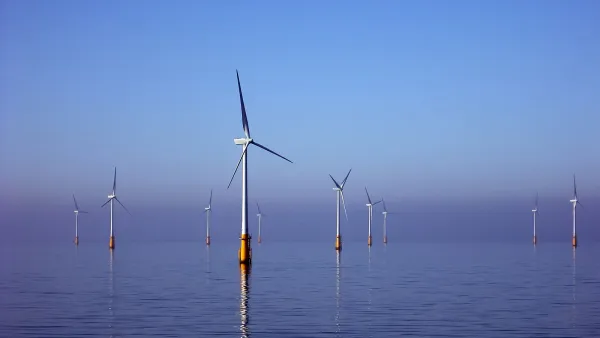
Offshore Wind Energy Faces Challenges on West Coast
Unique geography and high costs have stymied offshore wind energy production in California, but new incentives and innovations could soon make it more accessible.
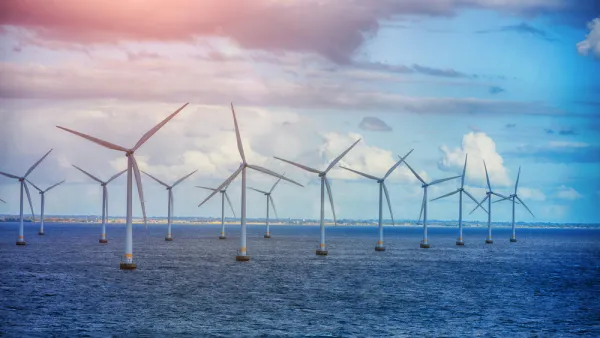
Proposed Offshore Wind Project Could Be the West Coast’s Largest
If approved, the plan to build a 2,000-megawatt facility off the coast of Washington State would be a milestone for floating offshore wind production in the United States.
Northern California Port Seeks Offshore Wind Lease
The Port of Humboldt has proposed a plan to modernize its facilities to accommodate offshore wind energy production, hoping to stimulate the local economy and create sustainable jobs.

Planetizen Federal Action Tracker
A weekly monitor of how Trump’s orders and actions are impacting planners and planning in America.

The state-sanctioned urbicide of Austin
People don’t kill cities. Freeways do.

US to reduce Colorado River water deliveries to Mexico
A new Colorado Treaty amendment reduces Mexico’s Colorado River water allocation by 250,000 acre feet.

Colorado’s Largest Data Center Could Rise Next to Homes — Without a Public Hearing
The proposed campus would consume 11 times the power of Denver International Airport; as it has across the country, opposition mounts.

5 New England states march closer to 800 megawatt wind energy project
Securing federal approval for the project may be complicated under the Trump administration, which has historically been hostile towards domestic wind power.

Baltimore to break ground on $50 million Transit Priority Project
The project will bring faster bus trips, safer streets and better bike connections to Baltimore.

FREE Course: Walkable City 1: Why Walkability?
After describing his path towards focusing on walkability as the essence of good planning, Jeff Speck marches through his five principal reasons for making more walkable places.
Reinventing Malls: Planning Alchemy—Turning Gray Fields Into Gold
The course focuses on the opportunities and imperatives that shape reinvention of mall sites.

.jpg)
Eagle County Government
Harvard University Graduate School of Design
Nashville Planning Department
The Architects Foundation
University of Cincinnati Online
The Pocatello Development Authority
The Urban Renewal Agency of the City of Pocatello
Journal of the American Planning Association