As Oregon's coastal beaches erode, taking valued public space with them and exposing private property to increased risks from flooding and sea-level rise, some local governments want to allow property owners the right to "armor" the coast.


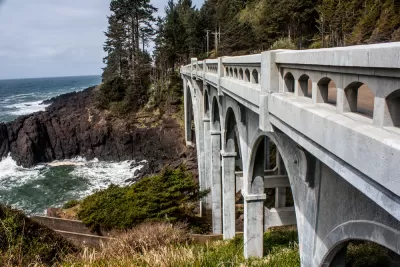
After decades of enforcing a state law banning construction of rip-rap, or a barrier constructed of large rocks, along the coastline, Tillamook County, Oregon has decided to toss the state law and allow coastal homeowners to reinforce the coastline to protect their homes, according to an article by Kristian Foden-Vencil for OPB.
"Oregon land-use rules largely ban shoreline armoring, under what’s known as Goal 18," explains Foden-Vencil in the article. "The policy, adopted back in 1977, banned the use of rip rap to protect new development, unless the site qualified for an exception."
Goal 18 was adopted to protect the natural features of the Oregon Coast, but scientists have also shown that rip rap "changes the wave action on a beach, scouring away sand and potentially leaving no beach for the public to enjoy," according to the article.
"So there’s a natural friction between the hundreds of thousands of Oregonians who live on the coast and want their properties protected from the ocean, and environmentalists and visitors who vacation here and want to protect the beautiful vistas."
As reported in the source article below, Tillamook County, located on the Oregon Coast directly west of Portland but south of the mouth of the Columbia River, has recently begun to favor rip rap over public beaches.
But environmentalists aren't allowing the shift in land use policy without a legal fight. "The Oregon Shores Conservation Coalition is fighting Tillamook County’s decision and taking the Pine Beach case to Oregon’s Land Use Board of Appeals, or LUBA. They’re joined in their case by the Surfrider Foundation and the Oregon Department of Land Conservation and Development," reports Foden -Vencil.
FULL STORY: Oregon’s land-use rules bump up against increasingly crowded shorelines


Who is allowed to walk on the beach? It depends on where you live
Debate over who has the right to access beaches has sparked a slew of legal cases.
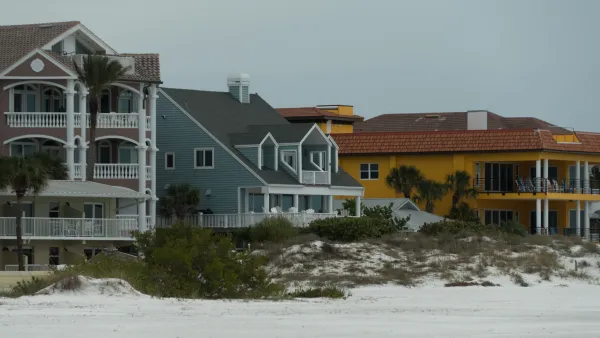
Florida Homeowners 'Nope Out' of Beach Restoration Over Public Access
The U.S. Corps of Engineers and Redington Shores, Florida are at a standstill: The Corps won’t spend public money to restore private beaches, and homeowners are refusing to grant public access to the beaches behind their home in return for federal assistance.
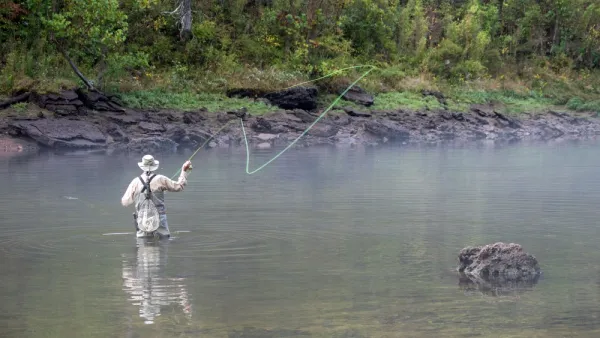
Lawsuit Could Open Public Access to Colorado Rivers
Colorado is one of few U.S. states that has decided that private property owners supersede the public when it comes to access to rivers and streams.

The state-sanctioned urbicide of Austin
People don’t kill cities. Freeways do.

US to reduce Colorado River water deliveries to Mexico
A new Colorado Treaty amendment reduces Mexico’s Colorado River water allocation by 250,000 acre feet.

New Jersey’s second-largest city bans standalone data centers
Jersey City will continue to allow co-location facilities, such as those meant for research institutions that store their own data.

Amtrak not solely to blame for New Jersey commuter rail's unreliability, report finds
A new study from the Garden State Initiative found that NJ Transit’s budget grew 20% across a 4 year period, but reliability declined significantly over the same period.

EPA erases limits on planet-warming pollution from power plants
Under Monday’s plan, power plants would still have some limits on how much mercury, arsenic and other contaminants they can emit.

Phoenix announces new on-demand transit service, more frequent RAPID buses
Both new services will launch in October, and are part of Phoenix's Project Effective Access Solutions for Easing Congestion.

FREE Course: Walkable City 1: Why Walkability?
After describing his path towards focusing on walkability as the essence of good planning, Jeff Speck marches through his five principal reasons for making more walkable places.
Reinventing Malls: Planning Alchemy—Turning Gray Fields Into Gold
The course focuses on the opportunities and imperatives that shape reinvention of mall sites.

Eagle County Government
Harvard University Graduate School of Design
Nashville Planning Department
The Architects Foundation
University of Cincinnati Online
The Pocatello Development Authority
The Urban Renewal Agency of the City of Pocatello
Journal of the American Planning Association