A controversial desalination plant in Orange County could receive massive state subsidies, but advocates argue the money would be better spent on affordable housing projects to relieve the state's housing crisis.



The California Debt Limit Allocation Committee could allow a tax-free bond sale for a controversial desalination project in Orange County while ignoring the opportunity to make close to $2 billion available to affordable housing projects, according to a report by Oscar Rodriguez and Garry Brown.
As the panel that decides allocations that let companies and developers finance projects at low interest rates, the commission plays a crucial role in the success of affordable housing projects, which rely on below-market financing to offer below-market rent. According to the article, if the allocations are diverted to the desalination plant, affordable housing would also lose $880 billion in federal tax credits, for a total of almost $2 billion in lost funds.
The authors argue that "no good case can be made for diverting taxpayer money to the private for-profit desalination project," which, according to the article, "has been deemed the least cost-effective and most financially risky of all water supply alternatives in Orange County" and threatens to raise water costs for low-income families and small businesses.
With all the economic, social, and environmental risks posed by the plant, Rodriguez and Brown call on the state to reject subsidizing it with public funds and put the resources toward urgently needed affordable housing instead.
FULL STORY: Invest in housing, people instead of corporate welfare


What Might Federal Housing Policy Look Like in 2025?
Changes to tax incentives, fair housing laws, and housing assistance programs would quickly start impacting local efforts to stem the housing crisis.
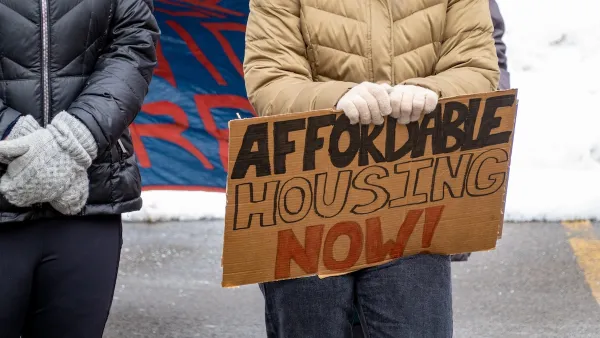
Federal Policies for Creating Permanent Affordable Housing
An Urban Institute analysis outlines three ways federal lawmakers can support housing programs that provide permanent affordable housing for the households that need it most.
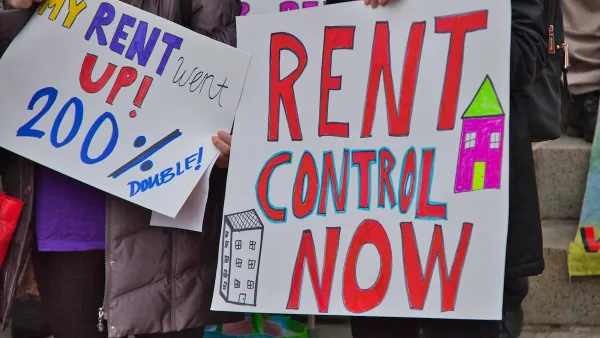
Biden Administration Proposes Federal Rent Hike Limits
A new policy would limit rent increases to 5 percent for landlords receiving federal tax write-offs.

The state-sanctioned urbicide of Austin
People don’t kill cities. Freeways do.

US to reduce Colorado River water deliveries to Mexico
A new Colorado Treaty amendment reduces Mexico’s Colorado River water allocation by 250,000 acre feet.

New Jersey’s second-largest city bans standalone data centers
Jersey City will continue to allow co-location facilities, such as those meant for research institutions that store their own data.

Amtrak not solely to blame for New Jersey commuter rail's unreliability, report finds
A new study from the Garden State Initiative found that NJ Transit’s budget grew 20% across a 4 year period, but reliability declined significantly over the same period.

EPA erases limits on planet-warming pollution from power plants
Under Monday’s plan, power plants would still have some limits on how much mercury, arsenic and other contaminants they can emit.

Phoenix announces new on-demand transit service, more frequent RAPID buses
Both new services will launch in October, and are part of Phoenix's Project Effective Access Solutions for Easing Congestion.

FREE Course: Walkable City 1: Why Walkability?
After describing his path towards focusing on walkability as the essence of good planning, Jeff Speck marches through his five principal reasons for making more walkable places.
Reinventing Malls: Planning Alchemy—Turning Gray Fields Into Gold
The course focuses on the opportunities and imperatives that shape reinvention of mall sites.

Eagle County Government
Harvard University Graduate School of Design
Nashville Planning Department
The Architects Foundation
University of Cincinnati Online
The Pocatello Development Authority
The Urban Renewal Agency of the City of Pocatello
Journal of the American Planning Association