The future of mobility depends on having a comprehensive, nationwide broadband network capable of supporting new transportation technologies and regulatory needs.


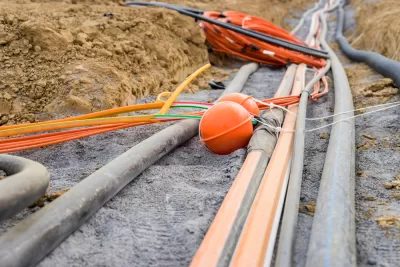
An article by Rudy Salo highlights the importance of broadband infrastructure, which will receive $65 billion in funding from the Infrastructure Investment and Jobs Act. Far from just home internet speeds, Salo writes that broadband quality affects many aspects of modern life, including transportation. "Better broadband capabilities affect highway operations, including through applications centrally managing signal systems, variable speed limits, and cameras that improve incident response and timing, among others."
According to Salo, broadband is also required to connect autonomous vehicles to each other and the road they're driving on, which calls for a robust system of infrastructure to ensure seamless communication and keep passengers and pedestrians safe in the age of self-driving cars.
Salo also highlights the privacy concerns inherent in the massive amounts of data that users will—and already do—provide to the tech companies that power their phones, cars, and smart home gadgets, cautioning against data monopolies. "If left unregulated, there is danger that control over and use of user data by a combination of big auto and big tech could lead to monopolization and abuse. U.S. consumer-commuters could be at the mercy of conglomerates that abuse their power and limit consumer-commuters to minimal choices or use the data they control to manipulate choices."
FULL STORY: Why The Future Of Transportation Needs A National Investment In Broadband Infrastructure

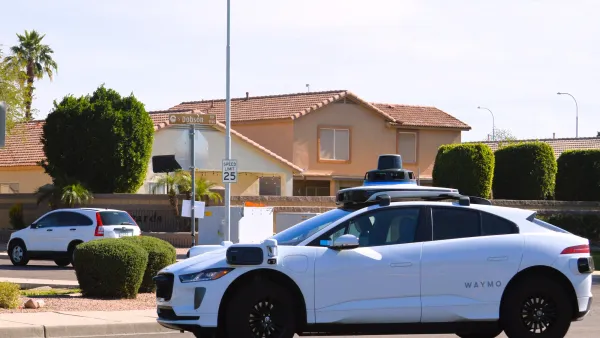
Uber and Waymo part ways in Phoenix
The companies ended a three-year pilot program, with Waymo saying it plans to keep its Phoenix robotaxi fleet available through its own app.
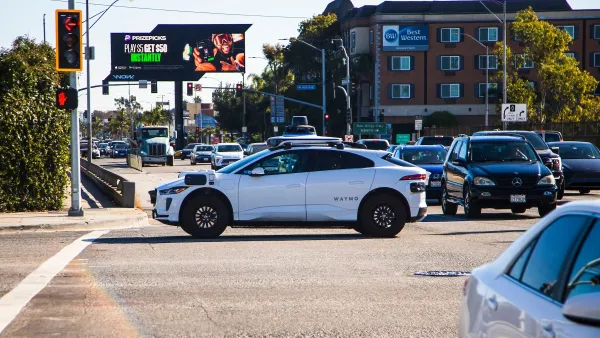
MIT study confirms robotaxis don't reduce traffic
Waymo data reveals that the cars spend close to half of their time 'deadheading' — driving around with no passengers.
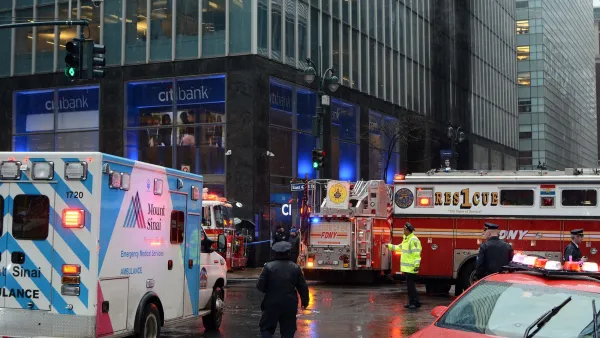
Waymo's troubles with emergency vehicles are getting worse
In one case, first responders waited 53 minutes to reach a Waymo support representative during an emergency.

Planetizen Federal Action Tracker
A weekly monitor of how Trump’s orders and actions are impacting planners and planning in America.

The state-sanctioned urbicide of Austin
People don’t kill cities. Freeways do.

US to reduce Colorado River water deliveries to Mexico
A new Colorado Treaty amendment reduces Mexico’s Colorado River water allocation by 250,000 acre feet.

Mamdani overhauls NYC's Vision Zero plan with 100 new policy goals
The overhaul aims to reduce traffic deaths and make streets safer for pedestrians, cyclists and drivers through lower speed limits, new safety infrastructure and more.

Amtrak not solely to blame for New Jersey commuter rail's unreliability, report finds
A new study from the Garden State Initiative found that NJ Transit’s budget grew 20% across a 4 year period, but reliability declined significantly over the same period.

EPA erases limits on planet-warming pollution from power plants
Under Monday’s plan, power plants would still have some limits on how much mercury, arsenic and other contaminants they can emit.

FREE Course: Walkable City 1: Why Walkability?
After describing his path towards focusing on walkability as the essence of good planning, Jeff Speck marches through his five principal reasons for making more walkable places.
Reinventing Malls: Planning Alchemy—Turning Gray Fields Into Gold
The course focuses on the opportunities and imperatives that shape reinvention of mall sites.

Eagle County Government
Harvard University Graduate School of Design
Nashville Planning Department
The Architects Foundation
University of Cincinnati Online
The Pocatello Development Authority
The Urban Renewal Agency of the City of Pocatello
Journal of the American Planning Association