U.S. building codes mandate two staircases in multi-story buildings, but some argue this requirement reduces affordability and encourages wasteful, uninspired design.


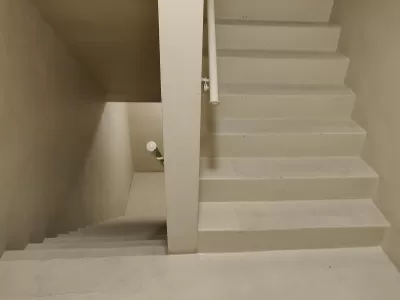
A group of architects and developers led by architect Michael Eliason is arguing against building codes that mandate more than one staircase in apartment buildings, saying that the requirement "produces smaller, more unpleasant, more expensive apartments in larger buildings full of wasted space. As Henry Grabar notes in an article for Slate, "Most American apartment buildings over four stories are required to include two means of egress from every apartment" for fire safety purposes. But Eliason argues that buildings in other countries that permit one-staircase construction are no less safe from fire.
Eliason observes that when you require every apartment to connect to two staircases, you all but ensure those units are built around one long double-loaded corridor, to give all residents access to both stairways. You tilt the scales in favor of larger floor plates in bigger buildings, because developers need to find room for two stairways, and connect them—and then compensate for the unsellable interior space consumed by the corridor.
Single-staircase advocates argue that second staircases hinder affordability and construction of "missing middle housing," while building fires are much less common than when the rules were put in place. Currently, Seattle is the only U.S. city that permits single stairs in buildings as tall as six stories.
Read the full story: The Single-Staircase Radicals Have a Good Point

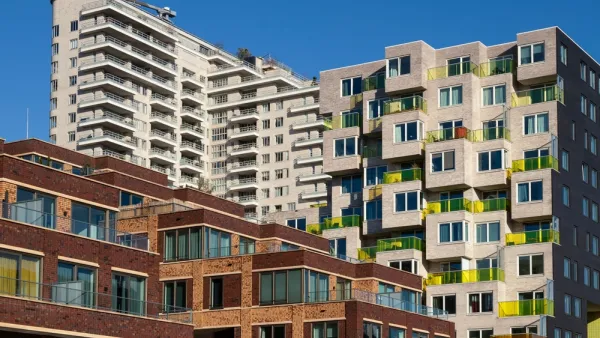
Single-Staircase Buildings: A Design Solution to a Political Problem?
One writer argues that single-staircase buildings solve an architectural problem and make buildings more interesting, but the political problem of the U.S. housing crisis goes much deeper.
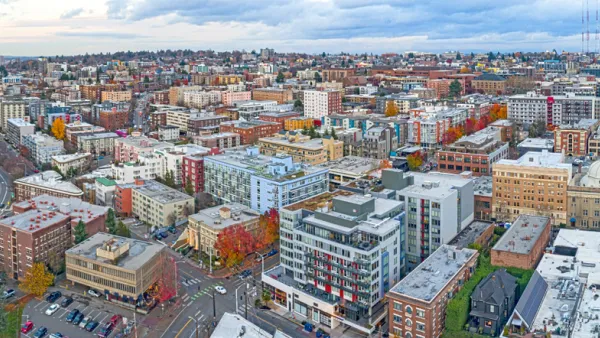
Washington Could Legalize Single-Staircase Buildings
Supporters of ‘point access blocks,’ which are common in Europe and other parts of the world, say the design maximizes living space and lowers the cost of construction.
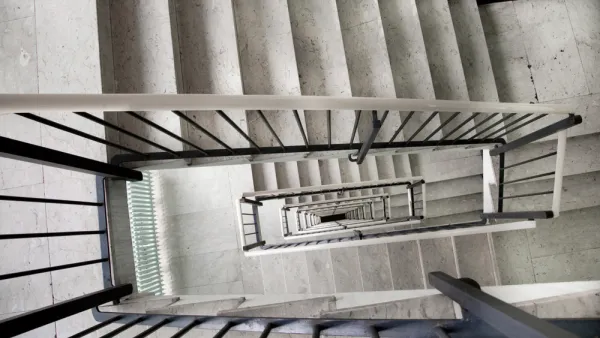
How a Staircase Requirement Can Impact Housing Affordability
Critics of the double-staircase mandate for multi-story buildings argue that it does little to improve fire safety while raising the costs of housing construction and limiting community interaction.

Planetizen Federal Action Tracker
A weekly monitor of how Trump’s orders and actions are impacting planners and planning in America.

Northwest rail fans eager for Sept. 30 debut of Amtrak’s Airo fleet
Get ready for that new train smell and more seats. But they won’t go faster or run more frequently on the Cascades route in Washington and Oregon.

Trump is considering data centers on 6 states' public land — some state officials say they had no idea
If the administration approves the proposed projects, data center and data center-related developments will cover 17,600 acres of public land.

California high-speed rail accomplishes only one legislative goal in 2026
The majority of the agency's failed pitches were never developed into written proposals.

Sharp cuts to federal passenger rail, public transit funding arrive today
The American Public Transportation Associations estimates the stopgap bill will result in an over 80% cut to federal passenger rail investment and 20% cut to public transit investment.

Chicago to showcase country’s first battery-operated passenger train
Metra estimates the trains will be ready for passenger use around the start of 2028.

FREE Course: Walkable City 1: Why Walkability?
After describing his path towards focusing on walkability as the essence of good planning, Jeff Speck marches through his five principal reasons for making more walkable places.
Reinventing Malls: Planning Alchemy—Turning Gray Fields Into Gold
The course focuses on the opportunities and imperatives that shape reinvention of mall sites.


City of Thousand Oaks
City of Wisconsin Rapids
Harvard University Graduate School of Design
The Architects Foundation
University of Cincinnati Online
Northern Illinois Transit Authority (NITA)
The Pocatello Development Authority
The Urban Renewal Agency of the City of Pocatello