Emissions from container ships idling outside Southern California's ports are adding to pollution that has blanketed the region in a noxious layer of smog.


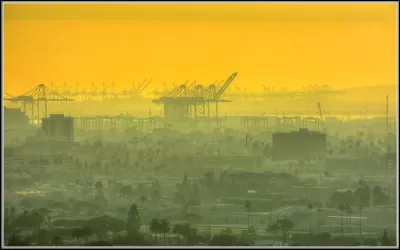
Operations at the massive port complex that comprises the Port of Los Angeles and the Port of Long Beach, which have been experiencing delays as ships wait offshore to unload containers, are creating hazardous air quality for surrounding neighborhoods and the entire region, reports Alissa Walker.
These problems have existed since long before the current logjam brought the ports into national attention. "The neighborhoods around San Pedro Bay have become something of a sacrificial zone for U.S. commerce. The pollution from port operations is like having 6 million more cars driving around every day, and it’s estimated to cause 1,300 premature deaths in Los Angeles and Long Beach each year." As Walker notes, "Regulators noted an uptick in certain pollutants during a November with no measurable precipitation, reporting that emissions are up 75 percent compared to the same period in 2019, but they hesitate to declare a direct link between the smog and the port."
Yet when President Biden announced the ports would begin 24-hour operations to increase throughput, no public input was considered, according to an organizer with activist group East Yard Communities for Environmental Justice. "All the attention currently being showered on the supply chain is showing how quickly decisions can be made to favor what [environmental attorney Adriano] Martinez calls the freight-industrial complex at a cost to residents, who have been told to wait decades for basic reforms."
FULL STORY: L.A.’s Backed-up Port Is Smothering Neighborhoods in Smog

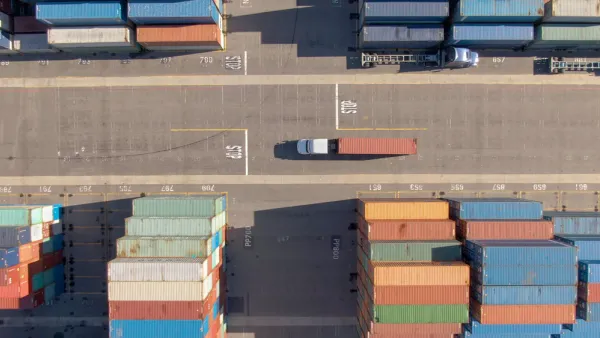
Zoning and the Global Supply Shortage
Zoning has been blamed for a lot of things in recent years, but a global supply crunch increasing prices and creating shortages of household goods—and potentially ruining the holidays—is a new one.
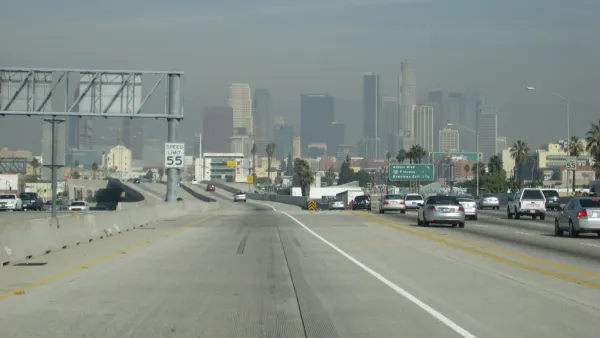
California Has 8 of the 10 Most Polluted Cities in the U.S.
Despite ever-stricter air-quality regulations and dropping emissions, the American Lung Association once again finds the state to have some of the worst air in the nation.
A 'Good News' Air Pollution Study for a Change
Too often we report on new studies showing how air pollution worsens public health, often causing premature death. For a change, here's a study showing how efforts to improve air quality in Southern California have boosted public health in children.

The state-sanctioned urbicide of Austin
People don’t kill cities. Freeways do.

US to reduce Colorado River water deliveries to Mexico
A new Colorado Treaty amendment reduces Mexico’s Colorado River water allocation by 250,000 acre feet.

New Jersey’s second-largest city bans standalone data centers
Jersey City will continue to allow co-location facilities, such as those meant for research institutions that store their own data.

Amtrak not solely to blame for New Jersey commuter rail's unreliability, report finds
A new study from the Garden State Initiative found that NJ Transit’s budget grew 20% across a 4 year period, but reliability declined significantly over the same period.

EPA erases limits on planet-warming pollution from power plants
Under Monday’s plan, power plants would still have some limits on how much mercury, arsenic and other contaminants they can emit.

Phoenix announces new on-demand transit service, more frequent RAPID buses
Both new services will launch in October, and are part of Phoenix's Project Effective Access Solutions for Easing Congestion.

FREE Course: Walkable City 1: Why Walkability?
After describing his path towards focusing on walkability as the essence of good planning, Jeff Speck marches through his five principal reasons for making more walkable places.
Reinventing Malls: Planning Alchemy—Turning Gray Fields Into Gold
The course focuses on the opportunities and imperatives that shape reinvention of mall sites.

.jpeg)
Eagle County Government
Harvard University Graduate School of Design
Nashville Planning Department
The Architects Foundation
University of Cincinnati Online
The Pocatello Development Authority
The Urban Renewal Agency of the City of Pocatello
Journal of the American Planning Association