The state's proposal to increase housing density is raising concerns among city officials worried about losing local control over development in their cities.



An article by Jessica Piper and Michael Shepherd outlines the conflict between proposed solutions to Maine's severe housing crisis and its history of local control. "A draft report released Thursday by a legislative housing commission proposed a range of solutions, including eliminating single-family zoning and annual caps on home construction, allowing homeowners to add accessory units like in-law apartments and allowing up to four units to be built in lots now zoned for one."
Supporters of the proposal say statewide housing policy is essential to achieving housing goals and increasing affordability for Maine households. But while other states are aggressively promoting housing development, encourage high-density construction, and impose quotas on affordable housing production, the recommendations could fail to get enough votes in the Maine legislature, where, according to the article, "[t]he desire for local control is a sacred principle."
With the housing crisis showing no signs of abating, housing advocates are calling on state and federal officials to implement robust tenant and homeowner protection policies and maintain pandemic-era housing assistance infrastructure.
Read the full story: Maine’s aggressive housing policy push runs into history of strong local control

San Francisco Mayor’s ‘Family Zoning’ Plan Faces Pushback, Displacement Concerns
Newly proposed legislation aims to protect long-term tenants from displacement caused by Mayor Lurie’s proposed zoning reform plan, which would allow for more housing construction in parts of the city.
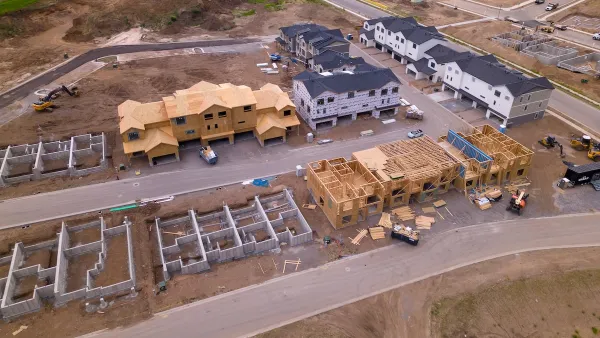
‘Montana Miracle:’ The State Actually Succeeding at Housing Reform
A series of ambitious zoning reforms is having a significant impact on the state’s housing supply.

NYC Council Approves Brooklyn Rezoning Plan
The Atlantic Avenue Mixed Use Plan includes infrastructure investments and could bring 4,600 new housing units to parts of Brooklyn.

Planetizen Federal Action Tracker
A weekly monitor of how Trump’s orders and actions are impacting planners and planning in America.

California plans to bury El Niño’s downpour
If the state plays its cards right, it may be able to store a billion acre-feet of El Niño’s water in aquifers.

Desperate measures: Advocates weigh draining Lake Powell to fill Colorado River
Draining the reservoir could reduce evaporation losses by a couple hundred thousand acre-feet.

Mamdani’s pied-à-terre tax survives legal challenge
A panel of judges found that the plaintiffs failed to demonstrate injury as a result of New York City's implementation of the tax.

Eastern Nebraska is running out of electricity
Data centers and electrification are straining eastern Nebraska’s grid, throttling economic development.

Seattle passes record-breaking transit services expansion
Proposition 1 will double the city’s transit tax to add 95,000 more bus trips and preserve 180,000 bus trips annually.

FREE Course: Walkable City 1: Why Walkability?
After describing his path towards focusing on walkability as the essence of good planning, Jeff Speck marches through his five principal reasons for making more walkable places.
Reinventing Malls: Planning Alchemy—Turning Gray Fields Into Gold
The course focuses on the opportunities and imperatives that shape reinvention of mall sites.

City of Rosemead
Rutgers University, Edward J. Bloustein School of Planning and Public Policy
One Hundred Miles
University of Michigan School for Environment and Sustainability (SEAS)
Hunter College, City University of New York (CUNY)
The Architects Foundation
City of Cambridge
Montrose County
The Pocatello Development Authority