Sixth and Guadalupe, which will top out at 875 feet, will soon be crowned the tallest building in Austin, and the fifth-tallest building in Texas.


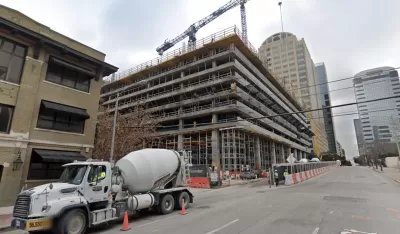
Cindy Widner reports for Urbanize Austin on the status of what will soon be Austin's tallest high-rise: Sixth and Guadalupe.
Here's how Widner summarizes the plan for Sixth and Guadalupe:
Developed by Lincoln Property Company and Kairoi Residential, in partnership with DivcoWest, the building will rise to 875 feet and will be the tallest in Austin—for a moment, at least—when completed. Designed by Gensler, Sixth and Guadalupe will consist of stacked sections with different uses, combining over a million square feet of office, residential, retail, and outdoor space in one very tall building. The high-rise will include 9,984 square feet of ground-floor retail space and 14 levels of parking, topped by 589,112 square feet of Class A office space and 349 apartments for a total of 66 floors.
The headline of the story says the building, which is expected to be complete in spring 2023, is about halfway done with construction. The source article, linked below, includes more details about the facilities and amenities included in the building's plan.
Read the full story: 66-story Sixth and Guadalupe tower hits halfway mark
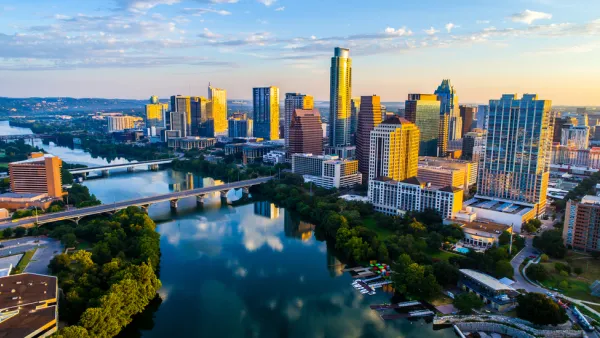
Austin’s Changing Skyline
Multiple proposed skyscrapers are changing the shape of once low-slung downtown Austin, signaling the growth of the city as a technology and manufacturing hub.
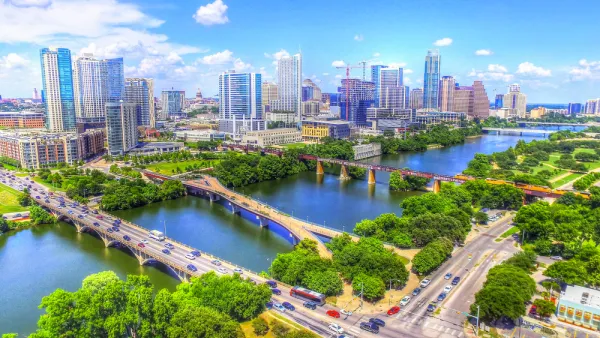
Skyscraper Proposed for Austin Would Be Tallest in Texas
The skylines are starting to catch up to the hype about everything being bigger in Texas.
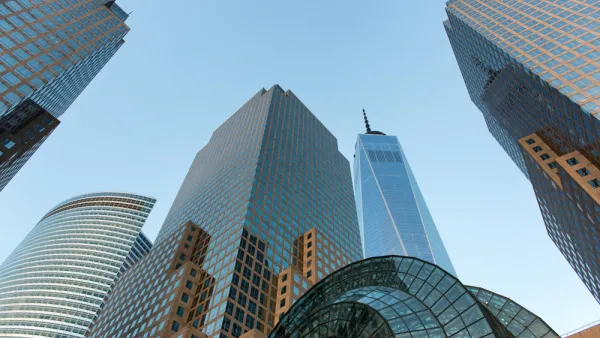
World Trade Center Rebuild Almost Complete With Approval of 900-Foot Mixed-Use Tower
Plans have been approved for the development of 5 World Trade Center, in place of a building damaged on September 11 and eventually torn down.

Planetizen Federal Action Tracker
A weekly monitor of how Trump’s orders and actions are impacting planners and planning in America.

Eastern Nebraska is running out of electricity
Data centers and electrification are straining eastern Nebraska’s grid, throttling economic development.

Washington state charge fee to drivers with fuel-efficient cars
Revenue from the fee will go towards supporting the state’s highways.

Instead of building new housing, LA developers are turning mansions into mega-mansions
In the richest areas, the number of houses valued at $30 million with demolition permits has skyrocketed since 2018.

Illinois considers spending $1 billion in taxpayer money on data center
A quantum computing campus and data center are currently under construction in Chicago.

As development costs rise, Boston moves to lessen affordable housing requirements
The Boston Zoning Commission and the City Council still need to approve Boston Mayor Michelle Wu’s proposed changes

FREE Course: Walkable City 1: Why Walkability?
After describing his path towards focusing on walkability as the essence of good planning, Jeff Speck marches through his five principal reasons for making more walkable places.
Reinventing Malls: Planning Alchemy—Turning Gray Fields Into Gold
The course focuses on the opportunities and imperatives that shape reinvention of mall sites.

City of Charlotte
City of Rosemead
Rutgers University, Edward J. Bloustein School of Planning and Public Policy
University of Michigan School for Environment and Sustainability (SEAS)
Hunter College, City University of New York (CUNY)
The Architects Foundation
City of Cambridge
The Pocatello Development Authority
The Urban Renewal Agency of the City of Pocatello