The county is evaluating its options for spurring construction of 'missing middle' housing that would provide more housing types in the D.C. suburb.


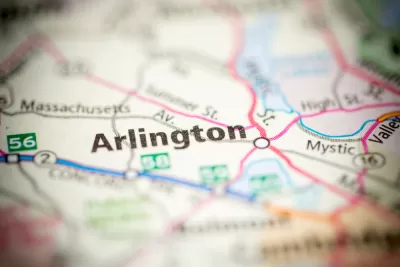
According to an article by Ally Schweitzer, Virginia's Arlington County is entering the second phase of a comprehensive study to evaluate how the county can encourage construction of "missing middle housing" to ease pressures on the local housing market.
With more than three quarters of residential land in Arlington zoned for single-family housing and average home prices reaching close to $1 million, the D.C. suburb is quickly becoming unaffordable to many households. "The county’s first 'Missing Middle' report also shows that most of Arlington’s single-family neighborhoods are at least 70% white, though non-Hispanic whites make up 61% of the county’s total population," Schweitzer writes.
The article provides a primer on the results of the study's first phase, including a definition of missing middle housing, answers to common questions, and an explanation of how rezoning can be an important tool in creating more diverse housing options and reaching affordable housing goals.
The study also assesses the environmental impacts of potential new development, claiming that denser, taller development could actually create fewer impervious surfaces and take up less land than new single-family homes. Increasing the availability of housing types, the report argues, could help reduce the negative impacts of the area's inevitable population growth.
Read the full story: Arlington County Is Studying ‘Missing Middle’ Housing. Here’s What That Means
Zoning Reform Gains Momentum in Northern Virginia
Arlington County and Alexandria are moving forward with actions that could potentially launch a new era of planning and development in their respective communities.

The Trouble With QUIMBY
The idea of “quality urbanism in my back yard” has its uses, but should not be used to limit housing supply.
Court Blocks Arlington County Zoning Reform
The county’s zoning reform plan would have promoted ‘missing middle housing’ types of up to six units on lots previously zoned for single-family housing.

Planetizen Federal Action Tracker
A weekly monitor of how Trump’s orders and actions are impacting planners and planning in America.

California plans to bury El Niño’s downpour
If the state plays its cards right, it may be able to store a billion acre-feet of El Niño’s water in aquifers.

Desperate measures: Advocates weigh draining Lake Powell to fill Colorado River
Draining the reservoir could reduce evaporation losses by a couple hundred thousand acre-feet.

Chicago voters approve permanent festival grounds, penalty for vacant property owners
Currently, major summer and fall festivals take over public parks for weeks at a time, drawing criticism from nearby residents

NYC votes to cut outdoor dining red tape, speed up permitting
New York City also voted to allow the Department of Transportation to begin work on urgent projects before notifying elected officials.

California appears to reject Prop. 45
The proposition would have expanded the projects that qualify for a streamlined environmental review, effectively paring down the California Environmental Quality Act.

FREE Course: Walkable City 1: Why Walkability?
After describing his path towards focusing on walkability as the essence of good planning, Jeff Speck marches through his five principal reasons for making more walkable places.
Reinventing Malls: Planning Alchemy—Turning Gray Fields Into Gold
The course focuses on the opportunities and imperatives that shape reinvention of mall sites.

City of Rosemead
Rutgers University, Edward J. Bloustein School of Planning and Public Policy
One Hundred Miles
Hunter College, City University of New York (CUNY)
The Architects Foundation
University of Cincinnati Online
City of Cambridge
Montrose County
The Pocatello Development Authority