The Chicago Transit Authority (CTA) in October proposed a $1.75 billion operating budget that will make it cheaper to ride transit in the Windy City.


The Chicago Transit Authority (CTA) recently proposed a $1.75 billion operating budget "that takes multiple steps to ensure that public transit remains a crucial part of the city’s continuing recovery from the COVID-19 pandemic," according to a press release dated October 21, 2021.
The budget would allow the CTA to maintain all existing bus and transit service while also proposing a "major realignment of fares and passes to better meet changing ridership patterns due to the COVID-19 pandemic," according to the press release.
The press release notes that ridership on CTAA grew throughout 2021 but still falls short of pre-pandemic levels (a pattern that is repeated in other U.S. cities, like New York City, for example). The reduced costs of fares and passes are thus intended to lure back riders who are working on flexible schedules or dealing with the economic shocks of the pandemic.
"CTA is lowering its 30-Day Full Fare pass price to $75 (from $105) and the 30-Day Reduced Fare pass price to $35 (from $50)," according to the press release. "Additionally, the CTA-Pace 7-Day pass will be reduced to $25 (from $33) to reflect the $5 premium for the shared pass with Pace Suburban Bus."
The question of how to lure riders back from catastrophic declines that date back to the earliest days of the pandemic looms over the transit planning community. Ride-hailing companies are facing their own unique problems, potentially creating an opportunity for public transit to win back some of the market share it's lost to companies like Uber and Lyft over the past decade.
An article by Brody Ford provides more details about how the CTA hopes reduced fares will respond to the pandemic's influence on transit in Chicago.

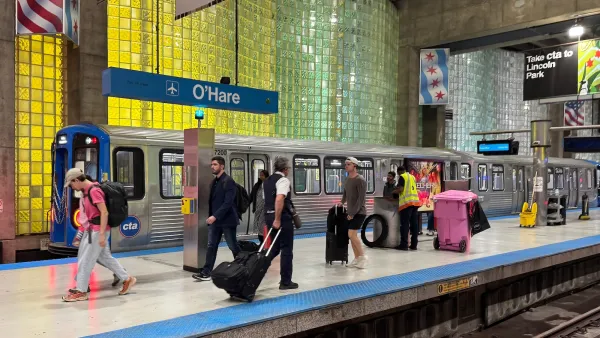
CTA underestimated Chicago transit ridership by 19 million trips
The agency is moving from using farebox data and manual video reviews to automatic counters that more accurately measure the total number of riders, whether or not they pay full fares.

Chicago Transit Report Calls for Income-Based Fares, Paratransit Funding
An RTA report highlights a need for state funding to bridge an imminent $730 budget shortfall, calling for an approach that relies less heavily on fare revenue.
Website Predicts Crowds to Inform Social Distancing on Buses and Trains
Know before you go.

Planetizen Federal Action Tracker
A weekly monitor of how Trump’s orders and actions are impacting planners and planning in America.

The state-sanctioned urbicide of Austin
People don’t kill cities. Freeways do.

US to reduce Colorado River water deliveries to Mexico
A new Colorado Treaty amendment reduces Mexico’s Colorado River water allocation by 250,000 acre feet.

5 New England states march closer to 800 megawatt wind energy project
Securing federal approval for the project may be complicated under the Trump administration, which has historically been hostile towards domestic wind power.

Baltimore to break ground on $50 million Transit Priority Project
The project will bring faster bus trips, safer streets and better bike connections to Baltimore.

Airbnb launches $250 million 'last-dollar financing' housing accelerator, makes first investment in Austin
The company will put $6.4 million towards affordable housing development in Texas’ capital.

FREE Course: Walkable City 1: Why Walkability?
After describing his path towards focusing on walkability as the essence of good planning, Jeff Speck marches through his five principal reasons for making more walkable places.
Reinventing Malls: Planning Alchemy—Turning Gray Fields Into Gold
The course focuses on the opportunities and imperatives that shape reinvention of mall sites.

Eagle County Government
Harvard University Graduate School of Design
Nashville Planning Department
The Architects Foundation
University of Cincinnati Online
The Pocatello Development Authority
The Urban Renewal Agency of the City of Pocatello
Journal of the American Planning Association