While many places have eliminated their breed-specific bans, some counties hold on to outdated stereotypes that create additional challenges in an already tight housing market.



Dan Reed argues that breed-specific housing restrictions that ban dogs such as pit bulls ultimately constitute a housing issue. Despite public perception that "pit bulls"–which "can refer to several different breeds, including American Pit Bull Terrier, American Staffordshire Terrier, and Staffordshire Bull Terrier"–are "inherently dangerous," writes Reed, history shows "pit bull bans didn’t make communities safer." By now, "most jurisdictions in the [D.C.] region no longer have pit bull laws. Virginia bans breed-specific laws entirely." Yet Prince George's County continues to uphold its ban.
Reed reasserts that breed restrictions create unnecessary difficulties for renters like himself and his partner, who found themselves facing a list of 38 restricted breeds when renting an apartment in Montgomery County. Meanwhile, "'Pet-friendly' apartment complexes may still have restrictions and tend to be more expensive or charge extra in pet rent, putting them out of reach for many pet owners," and "insurance companies can deny or restrict your coverage if you have a pit bull." Reed advocates for the breeds, saying "misconceptions about pit bulls have real consequences for innocent dogs and their families."
Read the full story: Pit bull bans are a housing issue

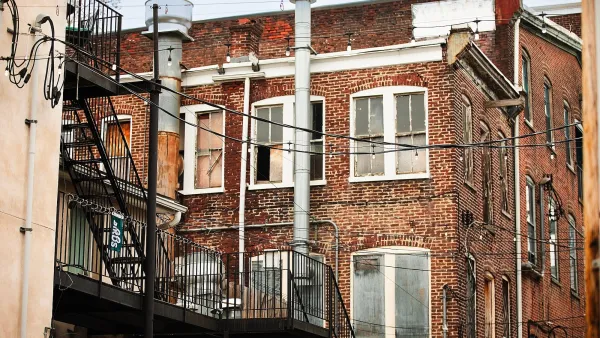
What Makes a Habitable Rental Home?
Almost every state in the U.S. requires that landlords maintain safe and livable residential units. This is often called a "warranty of habitability." In some places, there are laws that specify exactly what those requirements are; in others, the standards are less defined.
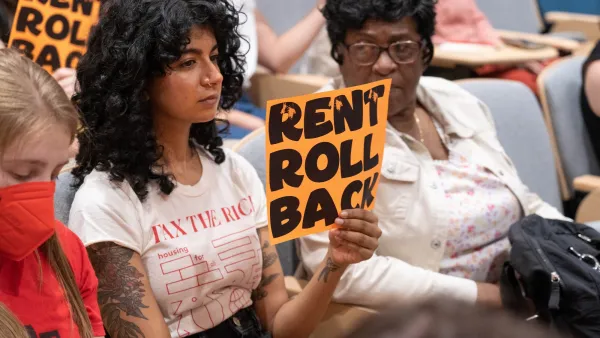
What Happened to ‘Renter’s Choice’ Legislation?
Years ago, officials in dozens of cities and states showed interest in passing legislation that required landlords to accept alternatives to the traditional lump-sum security deposit. Today, much of that momentum has diminished.
How New California Housing Laws Will Impact Renters
Laws going into effect this year will affect regulations around security deposits, credit checks, and even e-scooters.

Planetizen Federal Action Tracker
A weekly monitor of how Trump’s orders and actions are impacting planners and planning in America.

The state-sanctioned urbicide of Austin
People don’t kill cities. Freeways do.

US to reduce Colorado River water deliveries to Mexico
A new Colorado Treaty amendment reduces Mexico’s Colorado River water allocation by 250,000 acre feet.

Nation's most wind-powered state turns to coal as data centers increase energy demand
For the first time in decades, Iowa has increased its generation of coal power.

NYC cools commuters with city's first rain garden above a bus stop
New York City officials say the plants in the rain garden can absorb 16 gallons of rainwater during heavy storms.

Brightline West’s future may rely on $6 billion federal loan
The company has until Nov. 2 to make a $400 million equity investment into its proposed high-speed rail line.

FREE Course: Walkable City 1: Why Walkability?
After describing his path towards focusing on walkability as the essence of good planning, Jeff Speck marches through his five principal reasons for making more walkable places.
Reinventing Malls: Planning Alchemy—Turning Gray Fields Into Gold
The course focuses on the opportunities and imperatives that shape reinvention of mall sites.


Greater Baltimore Committee
Eagle County Government
Harvard University Graduate School of Design
The Architects Foundation
University of Cincinnati Online
The Pocatello Development Authority
The Urban Renewal Agency of the City of Pocatello
Journal of the American Planning Association