A survey of public transit users indicates riders want to see more tech features that improve their experience, such as trip planning and improved payment platforms.


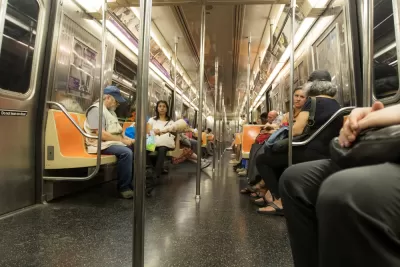
According to an article by Skip Descant, "[p]ublic transit riders in post-lockdown America want their buses and trains to arrive on time, with shorter wait times, and they want to be kept up to speed on crowding and cleanliness." While these might seem like basic expectations, the pandemic highlighted the gaps in transit service and, at the same time, accelerated the implementation of certain service improvements that riders will expect to continue in the post-COVID era.
A recent survey of 1,200 transit riders showed that most people "want apps or tech features to improve the transit experience. These can come in the form of real-time vehicle-crowding data, or technology that integrates trip planning across multiple modes and payment." The survey also showed that 40 percent of transit riders use two forms of transportation during their commute, while 20 percent use three forms of mobility, "making the case for better multimodal integration across transportation systems." Respondents also indicated a desire to see continued protocols to limit crowding.
"COVID-19 has shown itself to be a time of innovation across government sectors — some of it forced, while in other cases hastening trends already in place — and presents opportunities for better systems than before the pandemic, say observers." To help transit recover, transit agencies can use rider feedback on pandemic measures to inform their decisions about how to improve future service and provide "compelling options" that make it easier for commuters to ditch their cars.
FULL STORY: Transit Riders Expect Tech Improvements Post-COVID

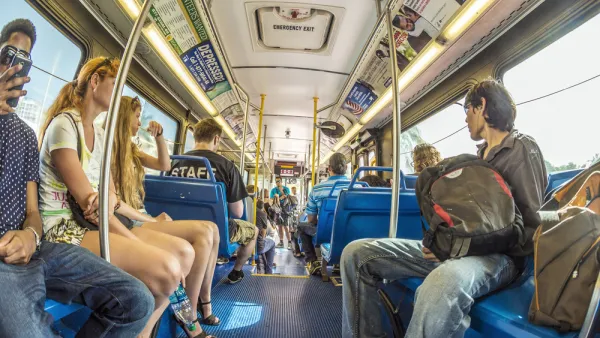
To Fight Climate Change, Support Public Transit
Electric cars may garner a lot of attention these days, but significantly reducing carbon emissions and urban congestion means investing in high-quality mass transit.
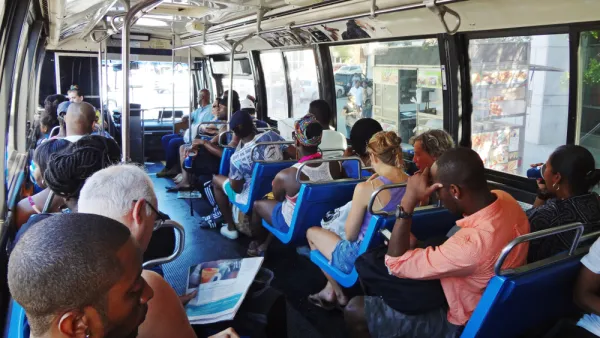
Transit Needs Service Changes, Now More Than Ever
As travel patterns and needs shift, transit agencies should look at service changes as a much-needed 'regular practice.'
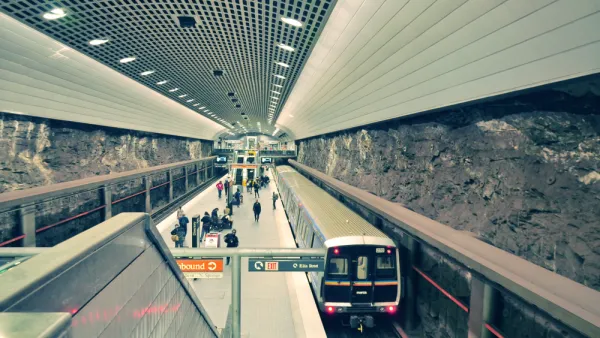
Atlanta Transit Agency Issues $1.3 Billion Budget
The Metropolitan Atlanta Rapid Transit Authority says it is ‘well-positioned’ to resume pre-pandemic operations and make capital improvements in the coming years.

Planetizen Federal Action Tracker
A weekly monitor of how Trump’s orders and actions are impacting planners and planning in America.

The state-sanctioned urbicide of Austin
People don’t kill cities. Freeways do.

US to reduce Colorado River water deliveries to Mexico
A new Colorado Treaty amendment reduces Mexico’s Colorado River water allocation by 250,000 acre feet.

5 New England states march closer to 800 megawatt wind energy project
Securing federal approval for the project may be complicated under the Trump administration, which has historically been hostile towards domestic wind power.

Baltimore to break ground on $50 million Transit Priority Project
The project will bring faster bus trips, safer streets and better bike connections to Baltimore.

Airbnb launches $250 million 'last-dollar financing' housing accelerator, makes first investment in Austin
The company will put $6.4 million towards affordable housing development in Texas’ capital.

FREE Course: Walkable City 1: Why Walkability?
After describing his path towards focusing on walkability as the essence of good planning, Jeff Speck marches through his five principal reasons for making more walkable places.
Reinventing Malls: Planning Alchemy—Turning Gray Fields Into Gold
The course focuses on the opportunities and imperatives that shape reinvention of mall sites.

Eagle County Government
Harvard University Graduate School of Design
Nashville Planning Department
The Architects Foundation
University of Cincinnati Online
The Pocatello Development Authority
The Urban Renewal Agency of the City of Pocatello
Journal of the American Planning Association