A pair of recent surveys attempt to shed light on the changing business and property management practices of landlords during the pandemic.


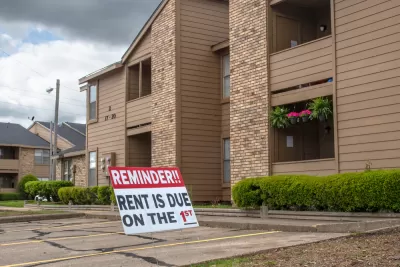
An article by Elizabeth Kneebone and Chris Herbert examines the uncertain surrounding the rental housing market, for both renters and landlords.
Here's how the two writers describe the uncertainty surrounding the intersecting economic hardships of these two groups:
While there is significant concern about whether these distressed renters will be able to stay stably housed, missed rental payments also have implications for the nation’s landlords. But much less is known about how property owners have fared and how they have responded to this significant shortfall in rent collections.
Enter a space of recent national surveys, which have provided information on the changing economic condition and business practices for rental property owners. Planetizen shared an article about the first survey, published by the Joint Center for Housing Studies of Harvard University, earlier in September. The second was published by the Terner Center for Housing Innovation at UC Berkeley and picked up by Planetizen in July.
Fast forward to a new study, "The Impact of the Pandemic on Landlords: Evidence from Two National Surveys"—published as part of the Housing Crisis Research Collaborative and written by Kneebone and Herbert along with Nathaniel Decker and Elijah de la Campa—which synthesizes the findings of the two previous studies.
"While distinct in certain respects, the two studies were coordinated to facilitate a comparison of results. Both surveys were designed to explore the pandemic’s impact across different types of landlords, properties, and rental markets by asking owners a series of questions about rental collection, profitability, and management practices, both pre- and post-pandemic," explain Kneebone and Herbert.
Despite their differences, the two surveys report consistent findings.
- "Roughly a third of landlords reported declines in rent collection during the pandemic, although smaller-scale landlords reported more substantial losses"
- "[L]andlords were more likely to grant concessions to tenants, defer maintenance, and reduce payments for debt and other expenses during the pandemic compared to a year earlier"
- "[B]oth studies found that only a relatively small share of landlords indicated they were likely to pursue evictions of tenants behind on rent."
- "Both surveys find that the financial stress from the pandemic has increased owners’ interest in selling their properties."
The source article provides a few more similarities between the survey findings as well as reporting a few subtle differences between the two.
FULL STORY: FINDINGS AND LESSONS FROM TWO NATIONAL SURVEYS OF LANDLORDS

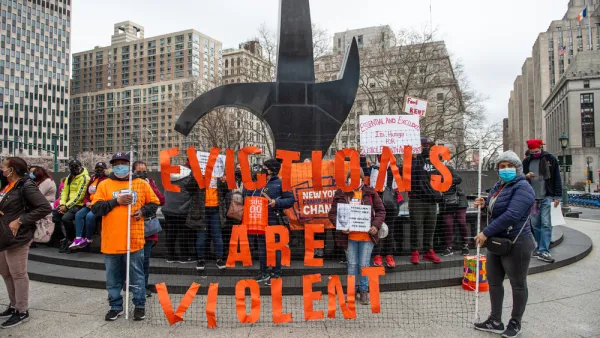
Emergency Rental Relief Gaining Momentum in Some States
Rental assistance spending in June surpassed the entire year's total so far, but there's still a long way to go.
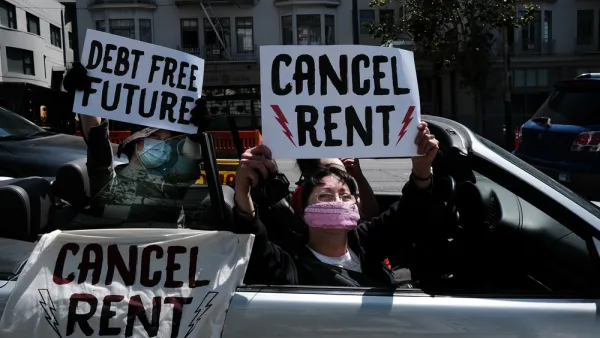
Survey Measures Consequences of the Pandemic for Small Landlords
A new survey reveals details about the financial crunch facing owners of small rental properties as tenants struggle to pay rent during the pandemic and emergency aid is slow to reach those in need.
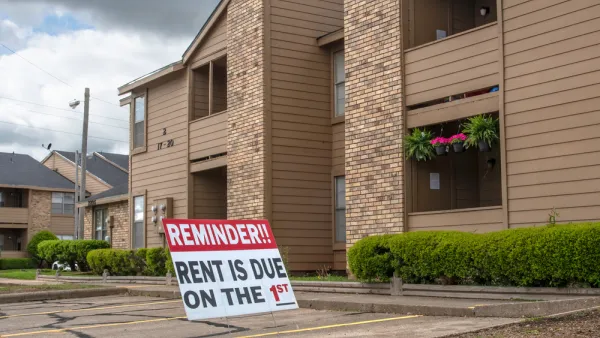
CDC's Eviction Moratorium Extended
The CDC's eviction moratorium will stay in place until at least June 30, 2021.

Planetizen Federal Action Tracker
A weekly monitor of how Trump’s orders and actions are impacting planners and planning in America.

The state-sanctioned urbicide of Austin
People don’t kill cities. Freeways do.

US to reduce Colorado River water deliveries to Mexico
A new Colorado Treaty amendment reduces Mexico’s Colorado River water allocation by 250,000 acre feet.

5 New England states march closer to 800 megawatt wind energy project
Securing federal approval for the project may be complicated under the Trump administration, which has historically been hostile towards domestic wind power.

Baltimore to break ground on $50 million Transit Priority Project
The project will bring faster bus trips, safer streets and better bike connections to Baltimore.

Airbnb launches $250 million 'last-dollar financing' housing accelerator, makes first investment in Austin
The company will put $6.4 million towards affordable housing development in Texas’ capital.

FREE Course: Walkable City 1: Why Walkability?
After describing his path towards focusing on walkability as the essence of good planning, Jeff Speck marches through his five principal reasons for making more walkable places.
Reinventing Malls: Planning Alchemy—Turning Gray Fields Into Gold
The course focuses on the opportunities and imperatives that shape reinvention of mall sites.

Eagle County Government
Harvard University Graduate School of Design
Nashville Planning Department
The Architects Foundation
University of Cincinnati Online
The Pocatello Development Authority
The Urban Renewal Agency of the City of Pocatello
Journal of the American Planning Association